


ALL roads led to Chinatown in Binondo, Manila, for the Chinese New Year. As it is when the world welcomes the New Year in the Western calendar, Chinese communities all over the world gathered together to usher in the Year of the Wood Sheep with much pomp and revelry. On New Year’s Eve yesterday, February 18, 2015, crowds gathered out in the streets of Chinatown, which is home to one of the oldest and largest Chinese communities in the world, for the countdown. Dragon and Lion dances, with their usual loud band music, took to the streets, and fireworks shot up in the air and filled the dark night sky with breath-taking torrents of light and color.
Today, February 19, 2015, New Year’s Day in the Lunar Calendar, which is followed by the Chinese people all over the world, the revelry continued. It was one festive community-wide street celebration that lasted the whole day, with all the streets of Chinatown filled with crowds of merry-makers, most of whom were in red, which is believed by the Chinese to be a lucky color, and some were even dressed in cheongsams to be in character. Red paper lanterns lined the streets, some even in the shape of a pineapple, which, again, is a favorite lucky charm of the Chinese community. Several Dragon and Lion dances took place in different corners of Chinatown, rivaled only by fire dancers who decided to add a little Western touch to the Chinese celebration.
My husband and I took to the streets of Chinatown today (February 19, 2015), just like a lot of people, both Chinese and Filipino, with a sprinkling of foreign tourists who looked like they were enjoying themselves, to join in the celebration and not just to personally witness what it was like but also to record it in digital images.

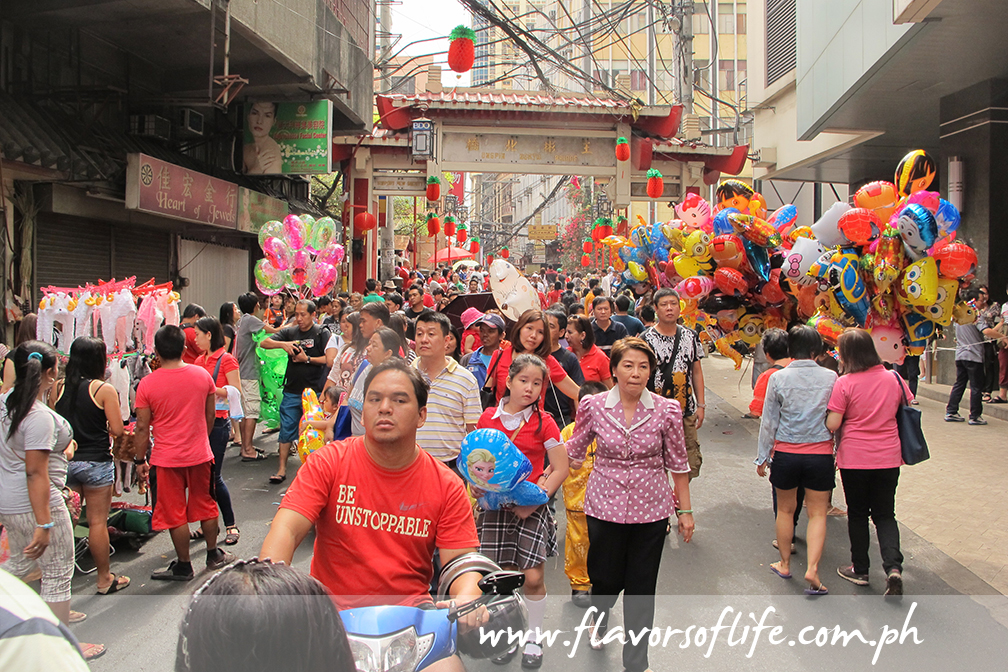
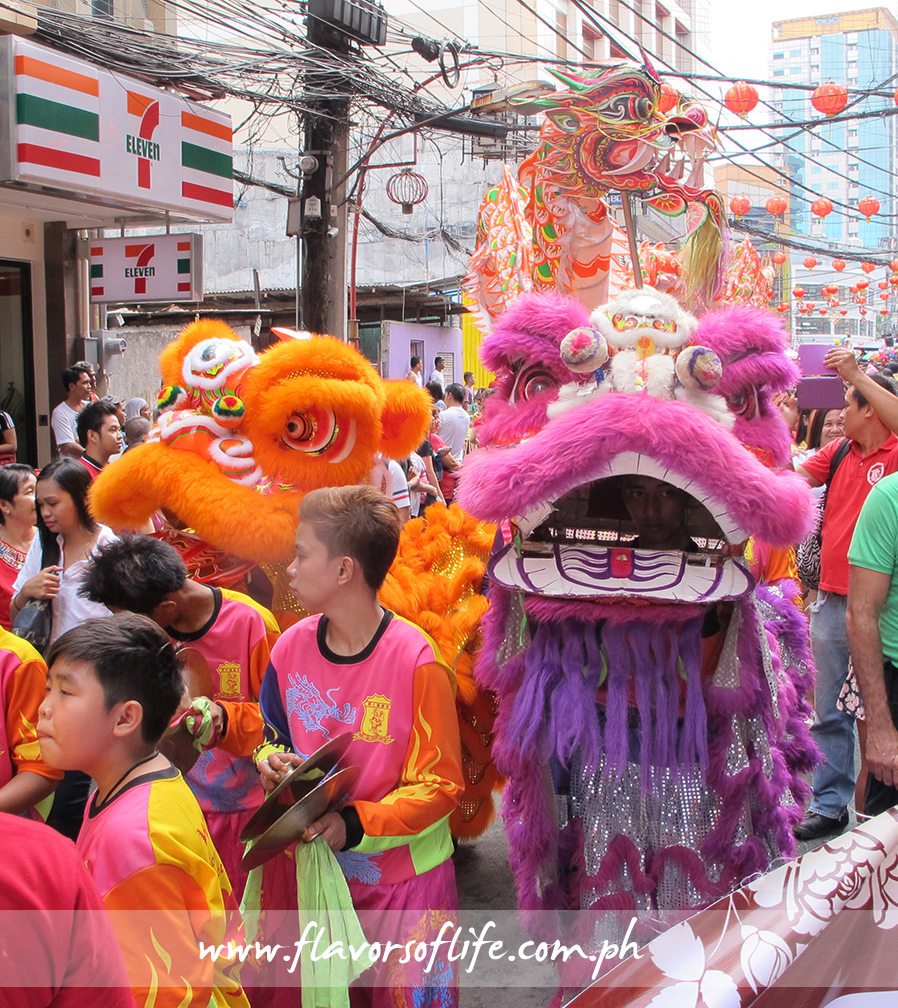

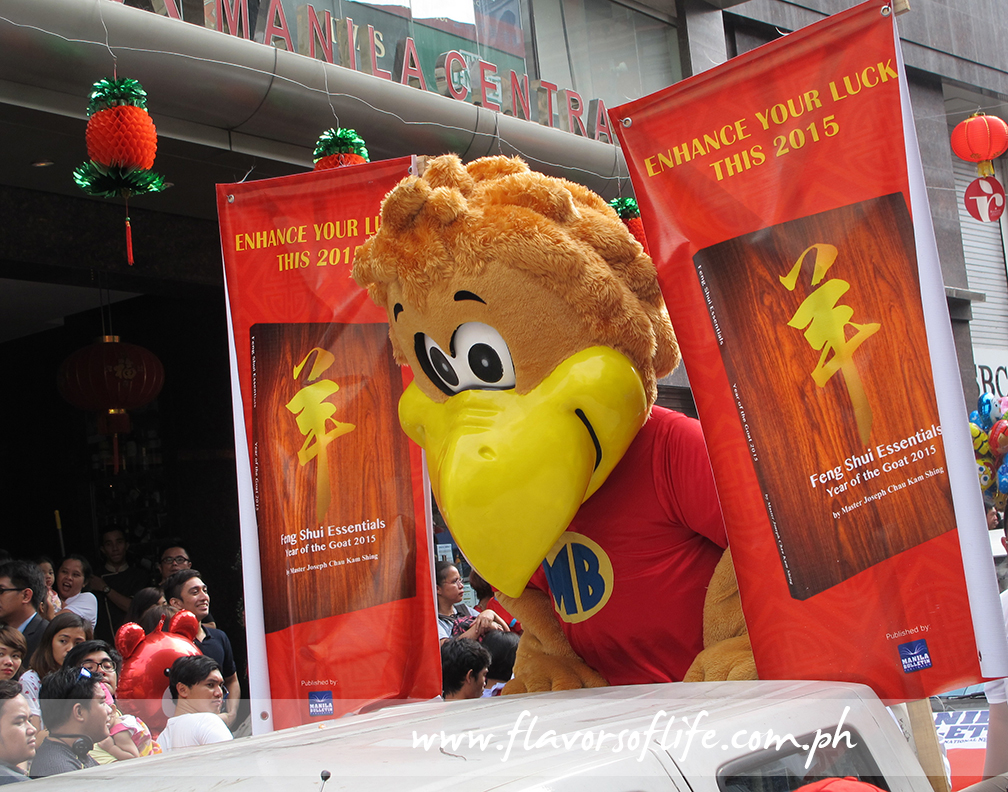
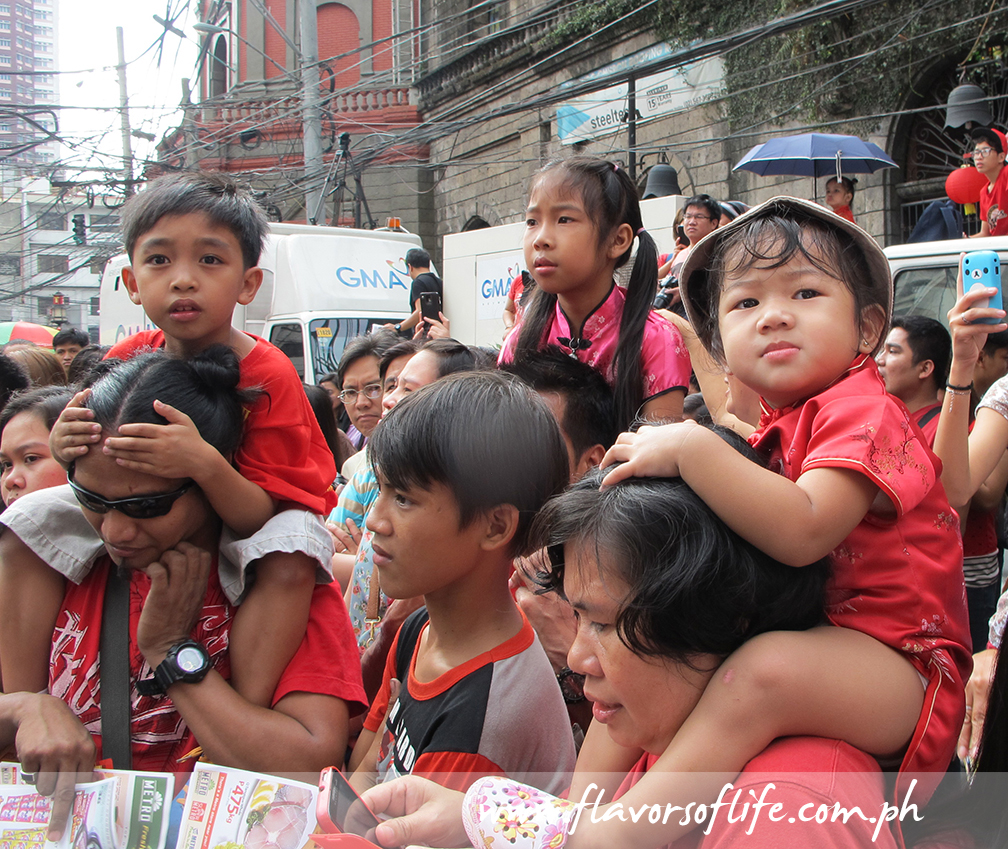
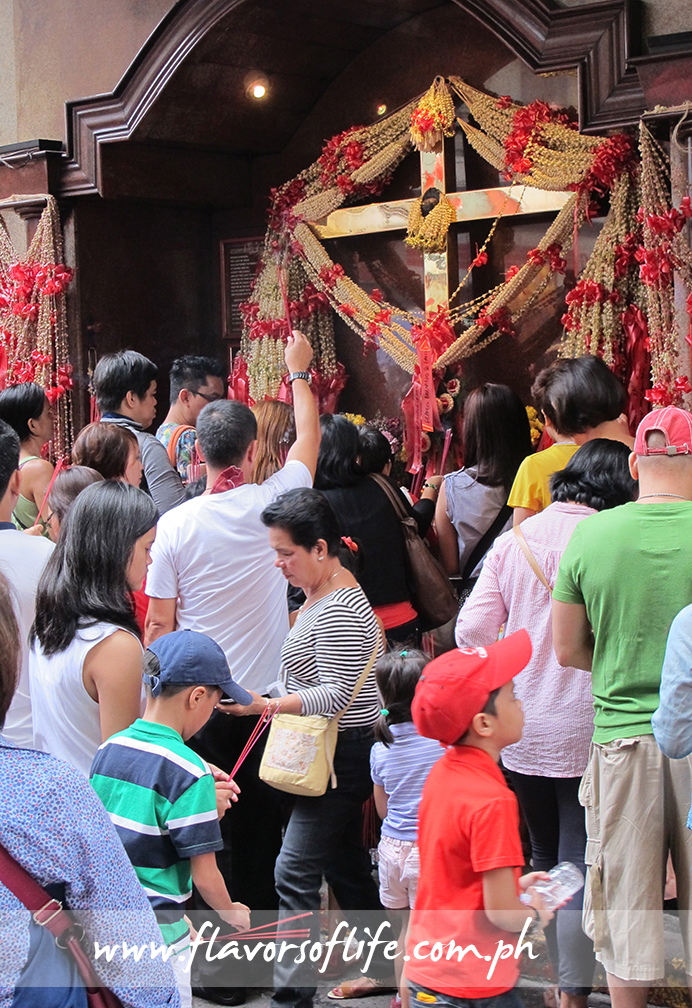

The highlight of the Chinese New Year celebration was the grand street parade that took place in the afternoon. Schools and business establishments in the area participated in the grand parade, so with Filipino-Chinese chambers of commerce and industry and charitable institutions. Contingents dressed up in festive style—some in Chinese costumes, others in red attires—and walked down the streets with banners in tow. Some were in motorbikes; others in modern rickshaws powered not by people but by bicycles; and yet others were in floats (pick-up trucks) decked with flowers with candies, flowers and ballpens as giveaways. Sandwiched between contingents were Dragon and Lion dancers who went about their usual good-luck routines. Firecrackers were also lit up in certain portions of the grand street parade to create loud noise meant to ward off evil spirits and attract good luck and prosperity to come in.
The selfie nation that the Philippines was, the parade moved quite slowly because members of the crowd would often approach people and mascots in the parade to have their pictures taken. Some would, during lull moments in the parade, even take poles from the Dragon dance group members to pose for pictures.


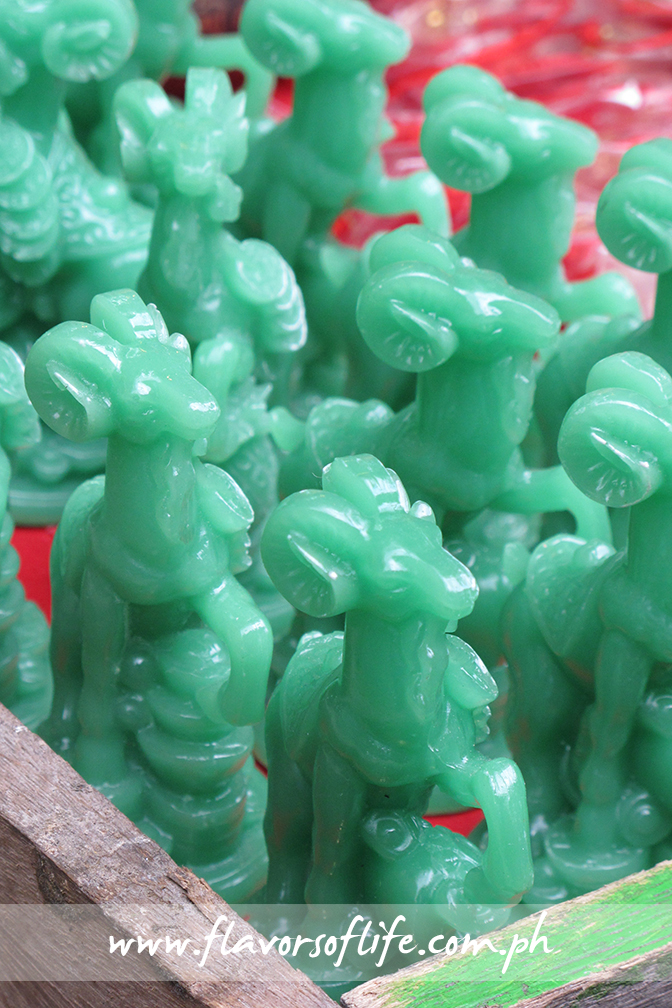


The sidewalks all over Chinatown were lined with vendors selling lucky charms mostly in the shape of a sheep, goat or ram in gold, jade color, glass or wood, as well as in the shapes of a dragon, pineapple, Chinese gold bar, Buddha or Chinese coins. A lot of them were tabletop décor charms, while others can be hung. Lucky charm bracelets incorporating a small sheep also commanded good patronage from the revelers. Even balloons being sold by ambulant vendors came in the shape of a white sheep or golden dragon. It was good business, too, for vendors of fresh fruits, particularly pineapple and oranges, which even had red ribbons on them. So with prosperity plants and, yes, colored chicks were also being sold on the sidewalks.


Aside from fruits, food items up for sale also lined the streets, including tikoy, which is a sticky rice cake symbolic of close ties between members of the family and loved ones. Tikoy, which is a traditional food item closely associated with the celebration of the Chinese New Year, now comes not just in white and brown variants (depending on the kind of sugar used) but also in a myriad of flavors such as ube, pandan, mango and strawberry. Other food items included suman (made of sticky rice and is similarly believed by Filipinos to keep families close knit), chestnuts roasting in giant vats, and huat ke (prosperity cakes made of camote or sweet potato). The usual street food, such as boiled corn, grilled corn on the cob, fish balls and squid balls, biko, chicharon, sugarcane, were of course ever present.
Let’s all hope that the Year of the Wood Sheep indeed brings us much blessings, prosperity and abundance. Kung Hei Fat Choy! Kiong Hee Huat Chai! Happy New Year!


