STRANDED in our house in Cainta since Sunday (August 18, 2013) as a result of the torrential Southwest monsoon rains that just wouldn’t let up. Was out for a few hours last Monday (August 19, 2013) to go to the office, but, boy, was I scared that I wouldn’t be able to get back home that evening! Thank God He heard my prayers. There was no traffic, no floods, on our way back, and the floodwaters in the church area of our subdivision (the lowest point, which is unfortunately strategically located right in the middle of the main road, where everyone must pass going in and out of the subdivision) were only gutter-deep. By the grace of God, my husband Raff and I were able to get home safe and sound. He has also kept us and our home flood-free through these past few days, and I just had to keep myself productively busy by writing articles for FLAVORS Magazine and this blog of mine and cooking three meals a day. This is one of the dishes that I whipped up. After fishing out a pack of boneless milkfish fillet from my freezer, I thought it best to do something simple but delicious. It’s very easy to prepare, and I’m sharing the recipe with you. I served it with two store-bought dips to make it more exciting – sweet chili sauce and plum sauce.
1 pack Sarangani Bay Prime Bangus Fillet (500 grams)
salt and pepper to taste
1 cup all purpose flour
1-2 eggs, beaten
1-1/2 cups Japanese breadcrumbs
dried basil
dried oregano
cooking oil for frying
Del Monte Sweet Chili Sauce
Pantai Plum Sauce*
1. Defrost bangus back fillets and slice into fingers or sticks. Include the skin if desired, but it can also be removed.
2. Season bangus fingers lightly with salt and pepper.
3. Dredge fish fingers in all purpose flour, dip completely in beaten egg, and coat with Japanese breadcrumbs that has been seasoned with dried basil and oregano.
4. Fry until crisp and golden brown.
5. Remove and set aside on paper towels to drain off excess oil.
6. Serve with sweet chili sauce and plum sauce (*plum sauce, a product of Thailand, is available in ready-to-use bottled form in the Asian foods section of major supermarkets).
HAVE you ever tasted mooncake that’s green tea flavored? Or one that’s studded with nuts? Maybe a mooncake with rum wine? Or, even better, a mooncake that has both chocolate and Grand Marnier in it? How about mooncakes that take on pastel shades of green, yellow, pink, peach and lavender?
Growing up in a Chinese family, I have been eating mooncakes since I was a kid. My family, like other Chinese families and clans, celebrate the Mind-Autumn Moon Festival by gathering together to play a dice game called Pua Tiong Chiu, sharing a sumptuous meal together, and giving each other a mooncake. Mooncakes are also given to friends, both Chinese and non-Chinese, to share the happy occasion of the Moon Festival, which takes place on the 15th day of the eighth month of the Chinese lunar calendar. The mooncake symbolizes longevity and harmony, and, as such, has become the popular pastry associated with the Mid-Autumn Moon Festival, just as the tikoy is given away during Chinese New Year.
Back then, though, the variations of mooncake that you can have are limited to white lotus seed paste or black sesame seed paste, with one or two salted egg yolks. All of them are oven-baked, so that they come wrapped in a golden brown pastry.
Mandarin Oriental Manila’s director of food and beverage Peter Pysk and Executive Chinese Chef Hann Furn Chen showing the mooncake boxes available this year
Now, the choices of flavor are endless, and if you happen to visit Mandarin Oriental Manila for your mooncake, you will be having 16 flavors to choose from. Yes, 16 flavors! Mandarin Oriental Manila’s Executive Chinese Chef Hann Furn Chen has just unveiled the 16 variants of his homemade mooncakes, which will be on sale starting Monday, August 19, 2013, until September 19, 2013, at the hotel’s Mooncake Booth at the MO Lounge of the hotel as well as at the first level of Power Plant Mall, Rockwell Center, Makati, from September 1 to 19, 2013.
Among the 16 flavors of mooncakes that are available at the Mandarin Oriental Manila are eight traditional Prime Oven-Baked variants and eight contemporary Snow Skin variants.
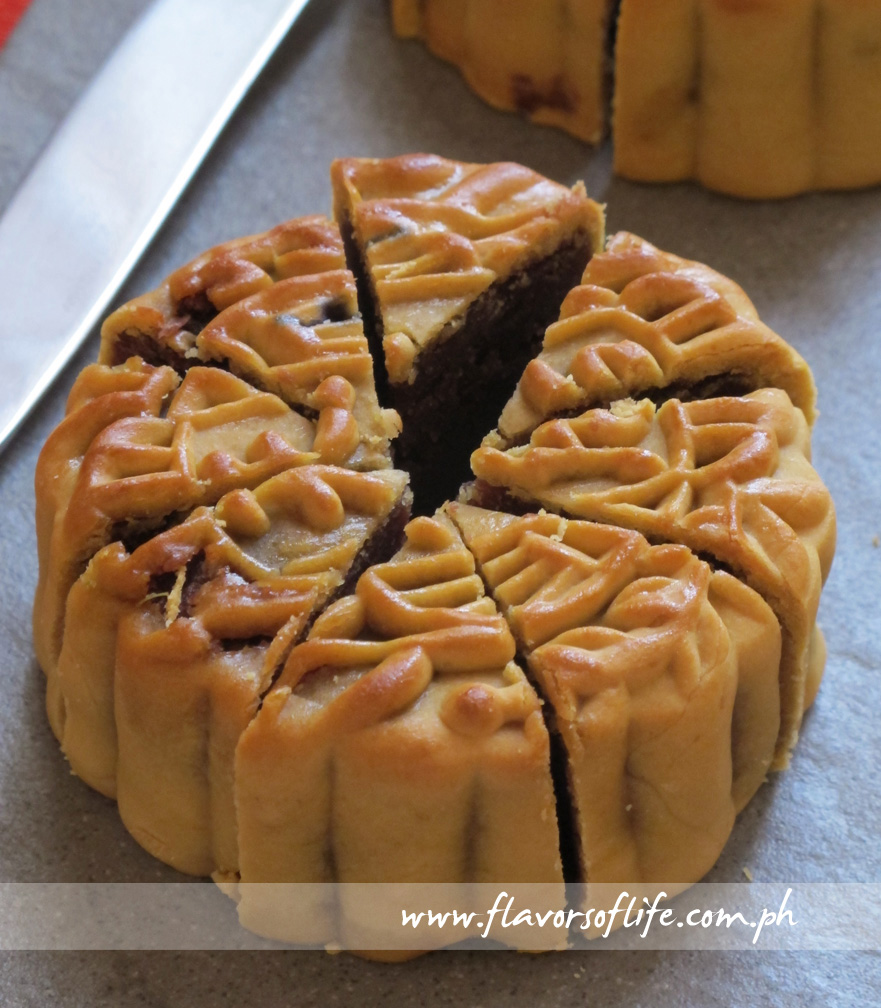
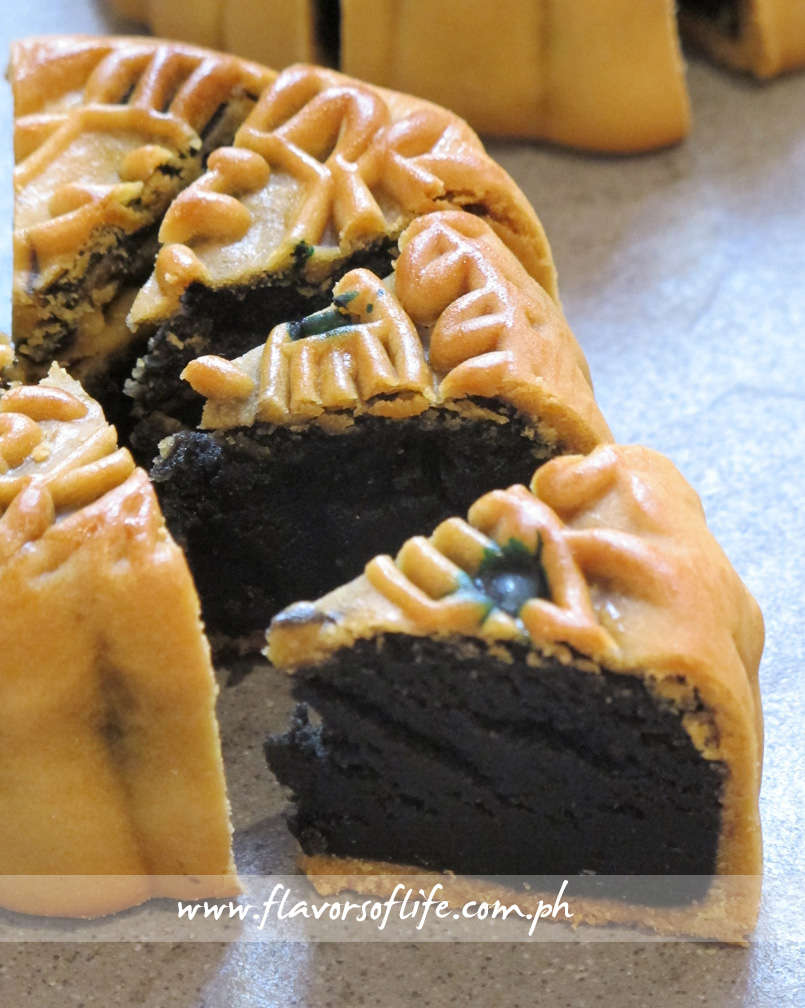
The Prime Oven Baked variants are Prime Red Bean Paste with Melon Seeds, White Lotus Seed Paste with Osmanthus Flower, Green Tea Flavor Lotus Paste with Salted Egg Yolk, White Lotus Seed Paste with Double Salted Egg Yolk, Mixed Assorted Nuts, Imported Chestnut Paste with Pine Nuts, Black Sesame Seed Paste with Sunflower Seeds, and Homemade Milk Custard Paste with Salted Egg Yolk. On the outside, they all look the same, since they are wrapped in a golden brown oven-baked skin.
Prime Oven Baked – Prime Red Bean Paste with Melon Seeds
Prime Oven Baked – White Lotus Seed Paste with Osmanthus Flower
Prime Oven Baked – Green Tea Flavor Lotus Paste with Salted Egg Yolk
Prime Oven Baked – White Lotus Seed Paste with Double Salted Egg Yolk
Prime Oven Baked – Imported Chestnut Paste with Pine Nuts
Prime Oven Baked – Black Sesame Seed Paste with Sunflower Seeds
Prime Oven Baked – Homemade Milk Custard Paste with Salted Egg Yolk
Prime Oven Baked – Mixed Assorted Nuts
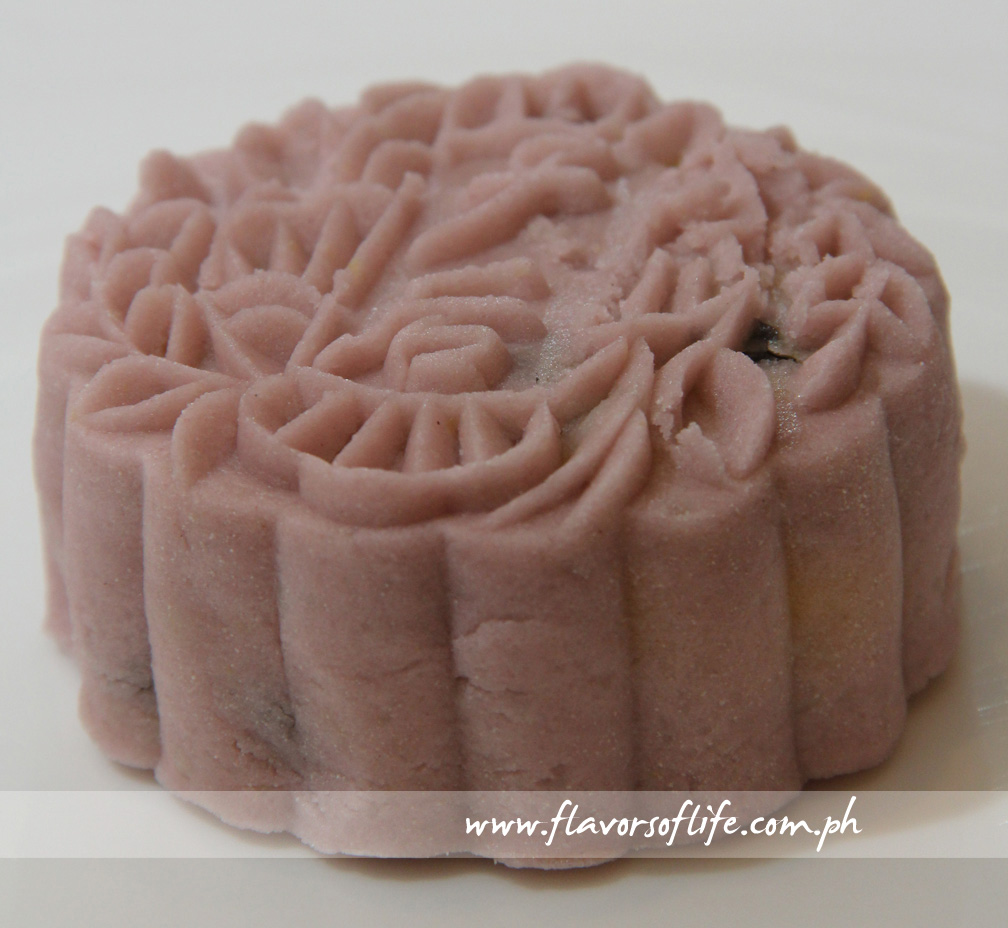
The Prime Snow Skin (non-baked) mooncakes, which are interestingly colored in light, pastel shades, are Imported White Lotus Seed Paste with Osmanthus Flower (wrapped in a peach-colored snow skin), Imported Green Tea Flavor Lotus Paste with Salted Egg Yolk (yellowish with green specks), Black Sesame Seed Paste with Sunflower Seeds (mint green), Milk Custard Paste with Raisins (lavender), Imported White Lotus Seed Paste with Salted Egg Yolk (off-white), White Lotus Paste and Grand Marnier Chocolate (light gray), Chestnut Paste with Pine Nuts (yellow), and Lotus Seed Paste with Rum Wine (pink).
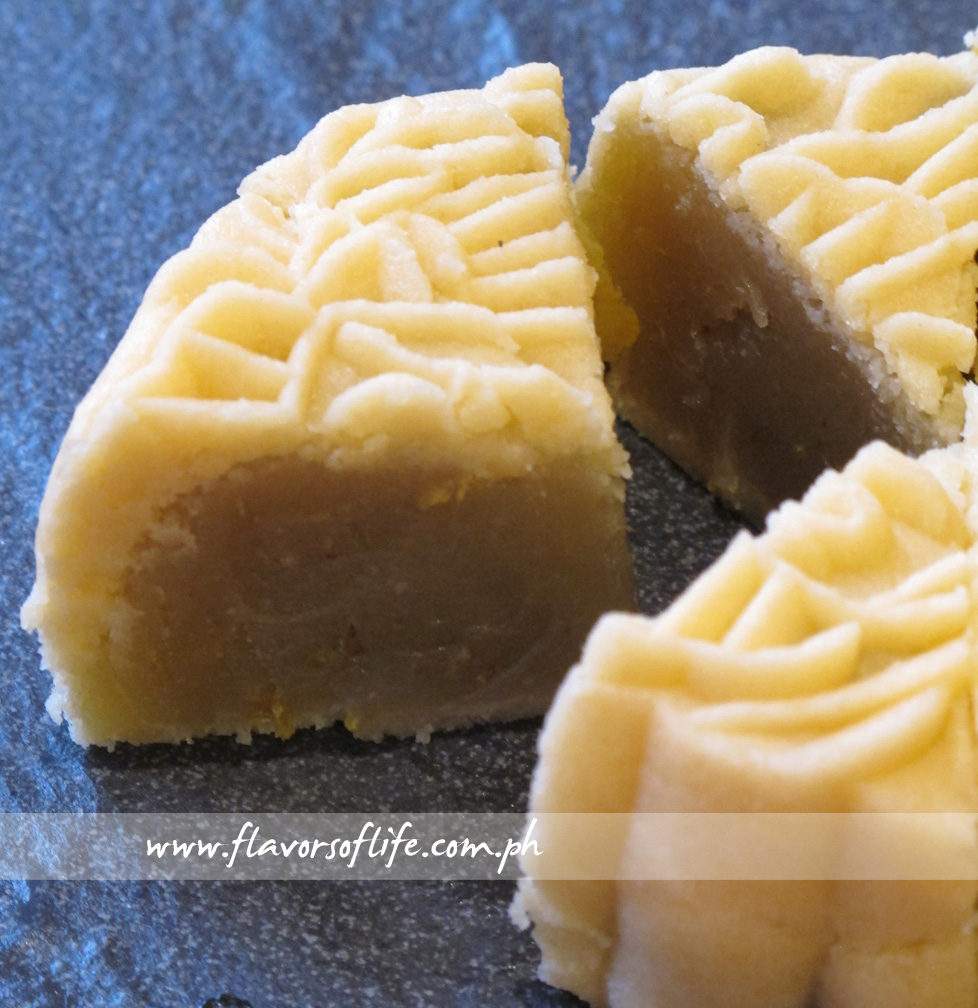
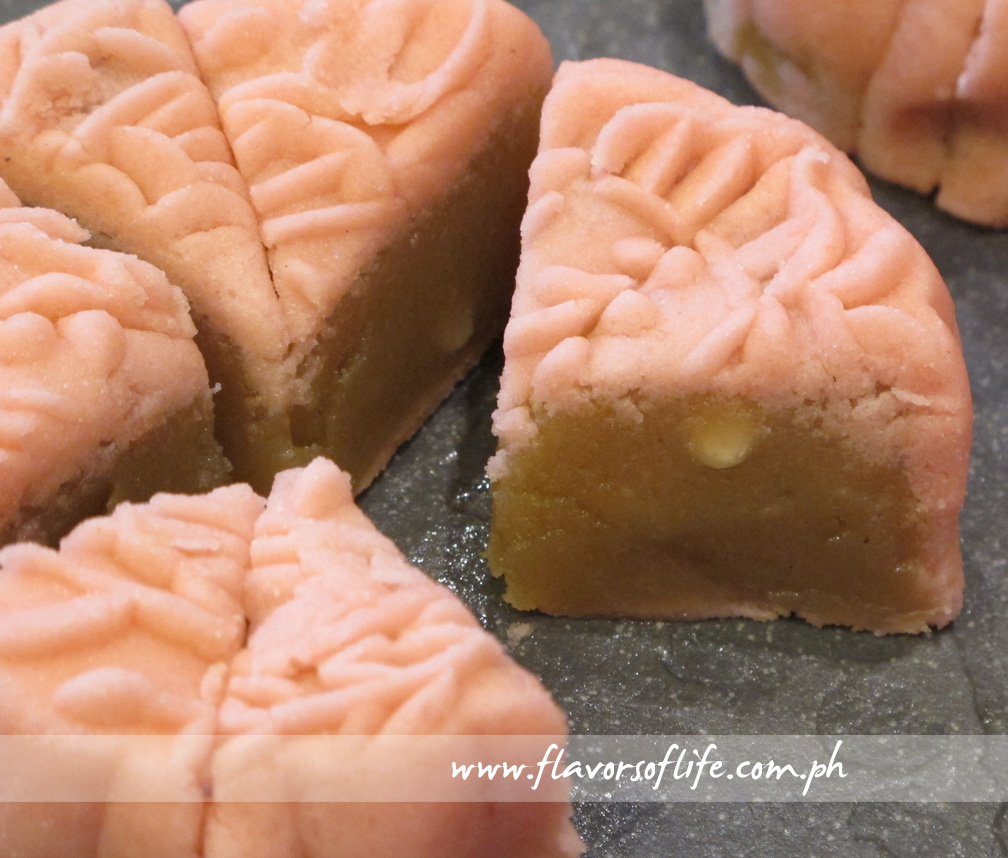
Prime Snow Skin – Imported White Lotus Seed Paste with Osmanthus Flower
Cross-section of the Imported White Lotus Seed Paste with Osmanthus Flower Mooncake
Prime Snow Skin – Imported Green Tea Flavor Lotus Paste with Salted Egg Yolk
Prime Snow Skin – Black Sesame Seed Paste with Sunflower Seeds
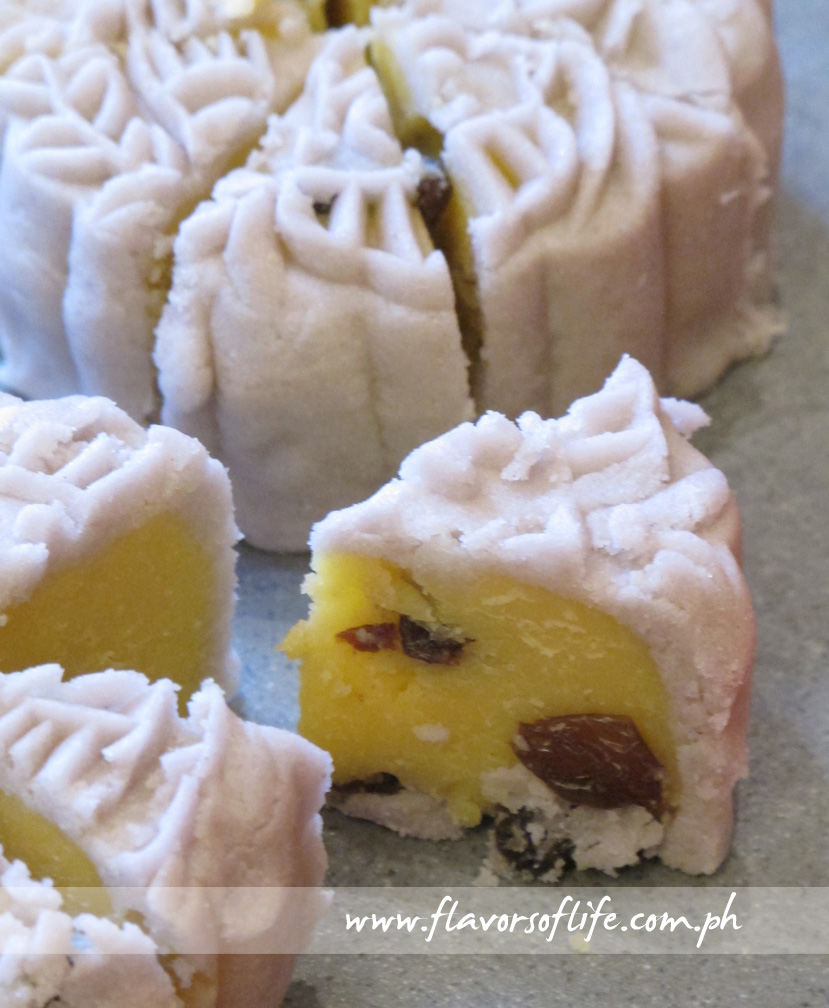
Prime Snow Skin – Milk Custard Paste with Raisins
It’s raisins galore inside the Milk Custard Paste with Raisins Mooncake
Prime Snow Skin – Imported White Lotus Seed Paste with Salted Egg Yolk
Prime Snow Skin – White Lotus Paste and Grand Marnier Chocolate
The chocolate-y ‘surprise’ that’s inside the White Lotus Paste and Grand Marnier Chocolate Mooncake
Prime Snow Skin – Chestnut Paste with Pine Nuts
Prime Snow Skin – Lotus Seed Paste with Rum Wine
Made fresh daily, all 16 variants come in large and mini mooncakes, packaged in four opulent, custom-designed MO mooncake boxes that are both elegant and functional – the Oriental Luxurious (four large mooncakes and a tasting pouch each of traditional Chinese Green Tea and Jasmine Tea in a decorative jewelry box) at Php1,888 per box; the Mandarin Deluxe (eight mini mooncakes and a tasting pouch each of traditional Chinese Green Tea and Jasmine Tea in a decorative jewelry box) at Php1,488; Tin Hau Happiness (box of four mini mooncakes) at Php788; and Tin Hau Festival (box of one large mooncake) at Php588.
Mandarin Oriental Manila’s mooncakes are available in four packages, clockwise from top left: Tin Hau Festival, Tin Hau Happiness, Mandarin Deluxe and Oriental Luxurious
Exactly what variants of mooncakes go into the gift box is your choice, as all 16 mooncake variants have been priced uniformly.
Mooncake orders are now being accepted via telephone numbers 0917-8353663 or 750-8888 extension 2633, although pickup at the hotel’s MO lounge begins on Monday, August 19, 2013. For a minimum purchase of Php20,000, complimentary delivery is offered to select destinations within Makati, Mandaluyong, Manila and Quezon City. For orders of 30 or more Oriental Luxurious and Mandarin Deluxe boxes, a special discount of 20% will be extended.
Now, you don’t just get to enjoy 16 variants of mooncakes at Mandarin Oriental Manila. You also get to share them with family and friends through gift-giving this mooncake season.
(Mandarin Oriental Manila is located at Makati Ave. corner Paseo de Roxas, Makati City, with telephone number 750-8888.)
IF you’re craving for delicious, authentic Singaporean food, then you can swing by Dusit Thani Manila and indulge in what you’re craving for at the hotel’s Basix All-Day Dining Restaurant. But you better do it this week because Swing By Singapore, Dusit’s Singaporean food festival, is ongoing until Sunday, August 18, 2013, only. So if you delay any further, you will miss the chance to partake of food prepared in the true Singaporean hawker cooking style.
Dusit Thani Manila’s executive chef Christian Werdenberg and Singaporean guest chef Paul Then Seh Chon
Jetting in to take charge of the Dusit Thani Manila kitchen for the week-long Singaporean food festival with his team of Singaporean guest chefs is Chef Paul Then Seh Chon, who is backed by over 30 years of experience in the culinary industry and who carries on the advocacy of keeping Singaporean cuisine nostalgic of the good old days and keeping Singaporean hawker cooking traditions alive. I got a chance to meet Chef Paul last Monday (August 12, 2013), when he was introduced by Dusit Thani Manila’s executive chef Christian Werdenberg at the end of a media lunch held to give members of the local food media an opportunity to sample the Singaporean cooking of Chef Paul and his team.
Our lunch last Monday started with a platter of cold appetizers Achar with Roasted Peanuts (pickled vegetables), Prawn Mango Kerabu (prawn and mango salad) and Tauhu Goreng (deep-fried tofu with bean sprouts, cucumber and peanut sauce). I liked the Prawn Mango Kerabu most.
Appetizer platter, clockwise from top: Achar with Roasted Peanuts, Tauhu Goreng and Prawn Mango Kerabu
Bak Kut Teh
Singapore Laksa
Chicken Rice in tasting portion
Next came individually portioned Bak Kut Teh, or pork rib soup cooked with Chinese herbs and spices, as well as Singapore Laksa in a bowl and Chicken Rice in a tasting portion. Served family style were Singapore Chili Crab, Satay (grilled meat skewers with peanut sauce), Sayur Iodeh (a popular vegetable dish cooked in coconut milk) and Pork Belly with Preserved Soya Beans (Singaporean pork belly stew). A special deep-fried bread, usually called Mantao, was served along with the Singapore Chili Crab. It’s meant to be eaten by being torn apart by hand and dipped in the rich and flavorful sauce, just like Singaporeans do.
Singapore Chili Crab
Fried Mantao to dip into the sauce of the Singapore Chili Crab
Sayur Iodeh
Pork Belly with Preserved Soya Beans
To end the meal on a sweet note, a dessert sampler platter was served to each of us for a taste of Almond Beancurd, Mango Pudding, Black Glutinous Rice and Sesame Rice Balls.
Singapore Sling, Singapore’s signature cocktail, was also served
The dessert platter, from top: Almond Beancurd, Mango Pudding, Black Glutinous Rice and Sesame Rice Balls
For the duration of the Swing By Singapore food promotion, though, there are more Singaporean dishes featured on the buffet spread, including Nasi Lemak, Nasi Goreng, Char Kway Teow and Assorted Nonya Kuehs for dessert. Nonya Kuehs are small and colorful cakes and delicacies traditionally prepared by Nonyas (*what Singaporeans call Peranakan women, Peranakans being descendants of early Chinese immigrants who settled in Singapore and intermarried with local Malays).
Held in partnership with Cebu Pacific, Swing By Singapore is priced at Php1,450 net per person for the lunch buffet and Php1,650 net per person for the dinner buffet. Aside from the Singaporean dishes featured on the buffet spread as well as countless other international dishes, the lunch and dinner buffets also come with unlimited beverages, including softdrinks, chilled juices and local beers.
Remember: You have only until Sunday, August 18, 2013, to enjoy Dusit Thani Manila’s Swing By Singapore food festival.
(Dusit Thani Manila is located at Ayala Center, Makati City. For inquiries and reservations, call telephone number 238-8888.)
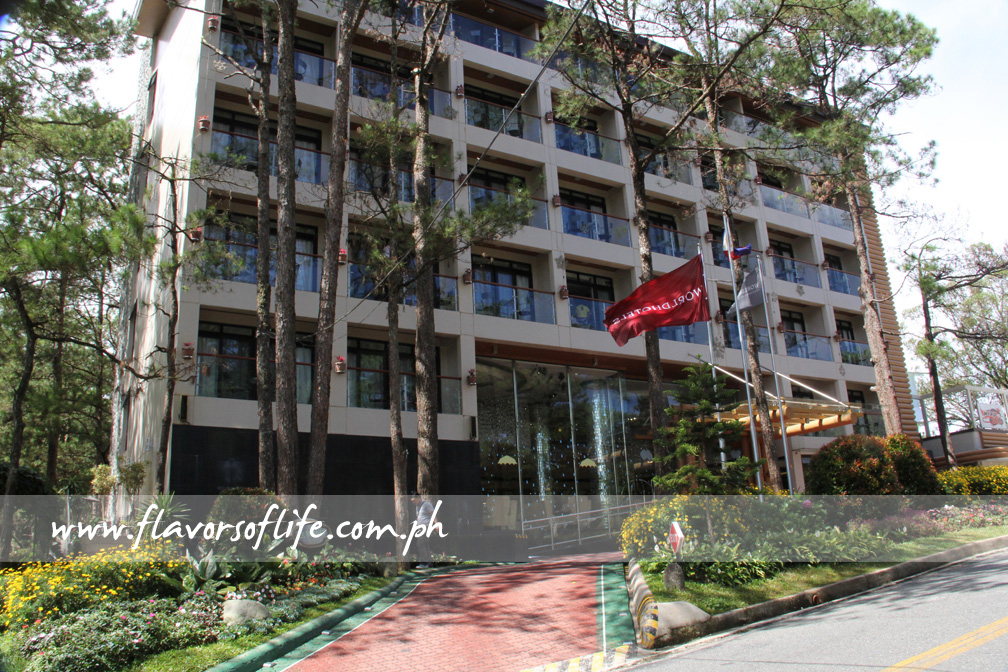
Le Monet Hotel stands right beside The Filling Station just half a kilometer away from the Camp John Hay entrance
BAGUIO occupies a special place in my heart. It is my childhood vacation place. When I was a kid, my sisters (I have four older sisters) and I used to spend our summer vacations in Tayug, Pangasinan, where our maternal grandparents owned and managed a hardware store. Our cousins would be there, too, and our Tayug-based aunt would often take us up to Baguio, where we would often stay for a few days. That’s where and how I learned to speak Ilocano, although my Ilocano pales in comparison to my older sisters and cousins.
‘Tis why I welcome every opportunity to be able to visit Baguio, and, just last month (July 2013), I got a chance to go up to Baguio again, this time for a three-day stay at the new and chic Le Monet Hotel inside Camp John Hay. I was excited when the invitation came from Le Monet’s public relations manager Ana Mendoza, because I had been to Le Monet for dinner last year (2012), around August or September, and the hotel had left quite an impression on me despite seeing only the lobby and the cocktail venue that evening. So I cleared my schedule for that weekend, and my husband Raff and I joined Ana on an early morning trip up to the Summer Capital of the Philippines.
Facade of the new luxury hotel in Baguio
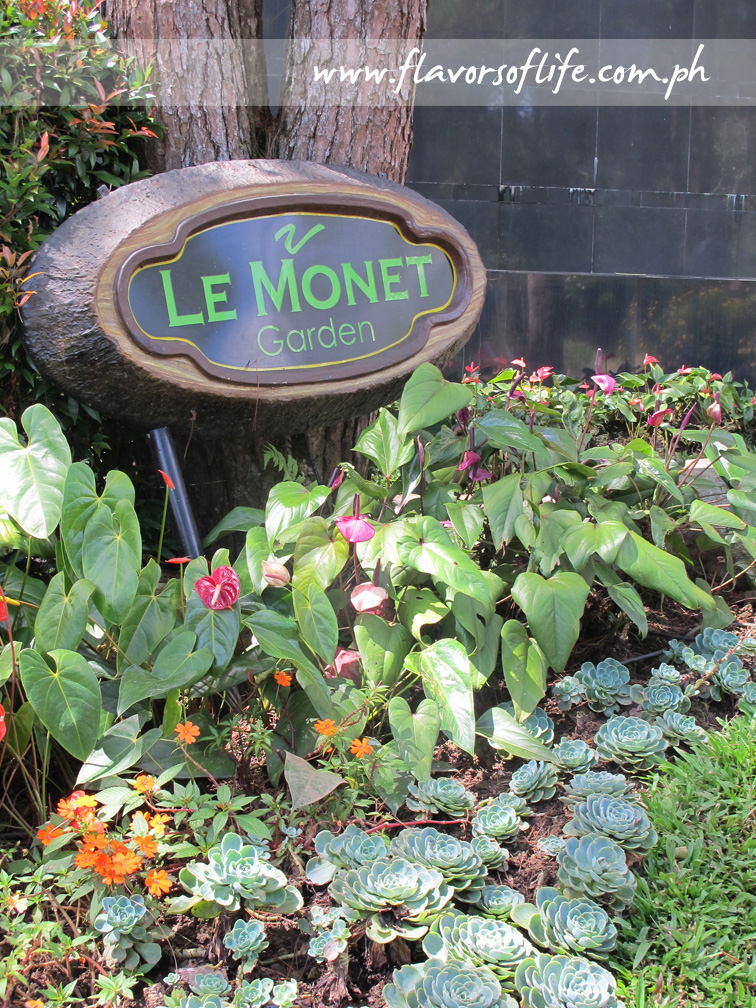
The entrance to the lovely pocket garden where guests can take a leisurely walk at any time of the day
“Green” arches crowning the pathways in the garden
Yes, you can marvel at the flowers and even stop to smell them, too!
Le Monet Hotel, which is quite new, is named after French impressionist painter Claude Monet, just as its sister hotel in Quezon City, Hotel Rembrandt, has been named after Dutch painter Rembrandt Harmenszoon van Rijn. It is a six-storey luxury hotel that stands right beside The Filling Station, just half a kilometer away from the entrance to Camp John Hay. Right in front of it is the picnic area of Camp John Hay, which has preserved the towering pine trees and greens throughout its vast property. Le Monet blends right into the green environment around it, even building a beautiful Le Monet Garden on one side of the hotel facade, where guests can take a relaxing, very leisurely walk down the pathway to the pocket gardens at the back at any time of the day. Here, you have the luxury of really being able to stop to smell the flowers, of which there are plenty and in bright, beautiful colors, too.
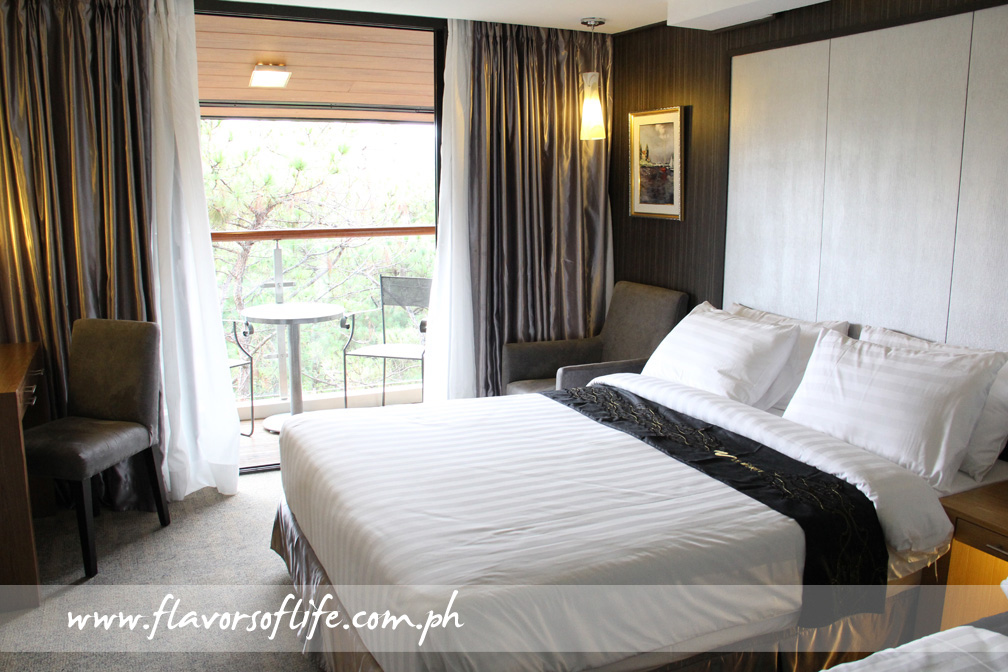
Cozy and luxurious Deluxe Room at Le Monet Hotel fronting Camp John Hay’s picnic area
Dresser cum work table
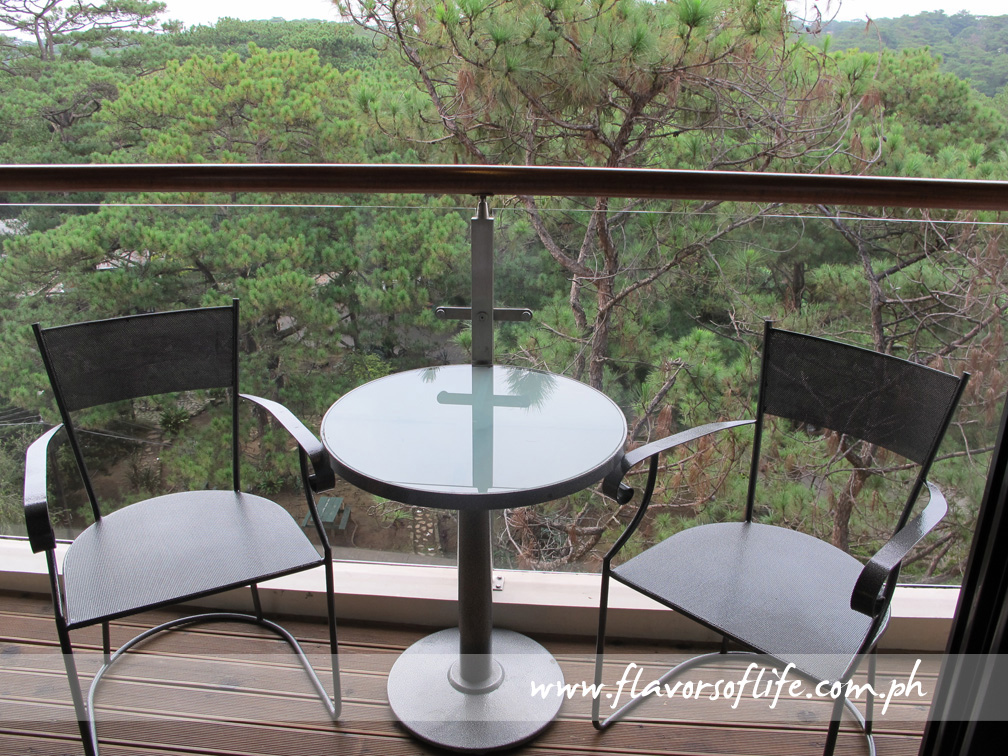
The veranda of our Deluxe Room on the fifth floor, overlooking Camp John Hay’s picnic area
The signature of luxury on the bed
DAY 1: SETTLING IN
Reaching Le Monet Hotel by around 4:00 p.m., we got to check into our room, a Deluxe Room on the fifth floor, right away. We proceeded to our room, where we found two Queen size beds with a flat-screen TV and a dresser cum work table near the window. The window turned out to be sliding doors leading out to the veranda, where Raff and I sat on the chairs to relax, watch cars and people pass by in front of us, and feast our eyes on the rolling terrain of the picnic grove in front of us. The sight of the greens was very comforting. It, in tandem with the cool breeze that you enjoy only in Baguio, relaxed me and made me feel right at home.
The two of us sat there for a long time, enjoying the view that you don’t get to see much of in the metro, until dusk began to fall and it was time to wash up and prepare for dinner.
The bathroom was an extremely pleasant surprise. There was no bathtub, thank goodness, only a glass-enclosed shower area, and the toilet was out of this world. It had a heated toilet seat with digital temperature control, kind of like reminding you that you’re in Baguio, and there was a small, flat-screen TV with remote control right in front of the toilet. Talk about luxury!
Le Monet Hotel’s exquisite lobby
The interactive grill station at the Dinelli Gourmet Café during dinner
Chicken and pork satay, served with peanut sauce and sambal sauce
Dinner began with a soup called GM’s Favorite
Cebu Lechon was at the carving station
Dinner was at the Dinelli Goumet Café at the lobby. Ana was already at the table when we arrived, and together, we had a most satisfying dinner under the grand chandelier of dangling crystals that glowed like diamonds in the sky. They were, according to Ana, just glass, although they looked like Swarovski crystals – and behaved like Swarovskis, too!
Vietnamese Salad Roll
Thai Mango Salad
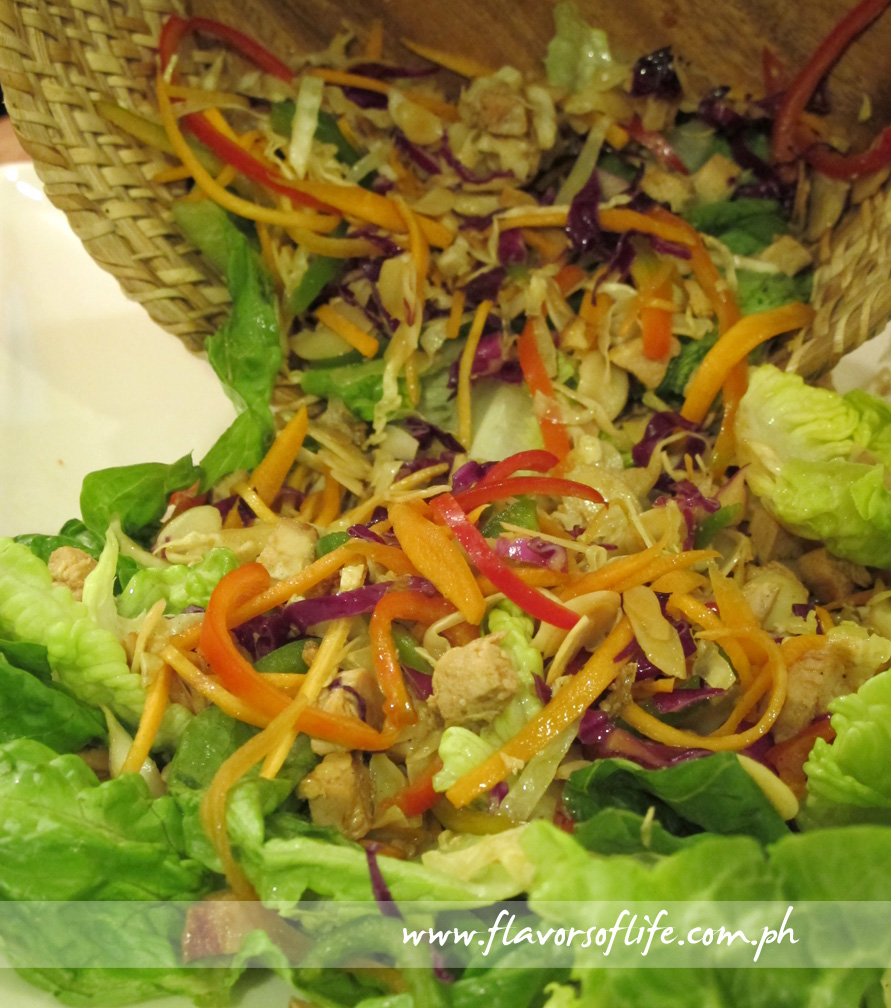
Grilled Chicken Almond Salad
Assorted sushis and makis
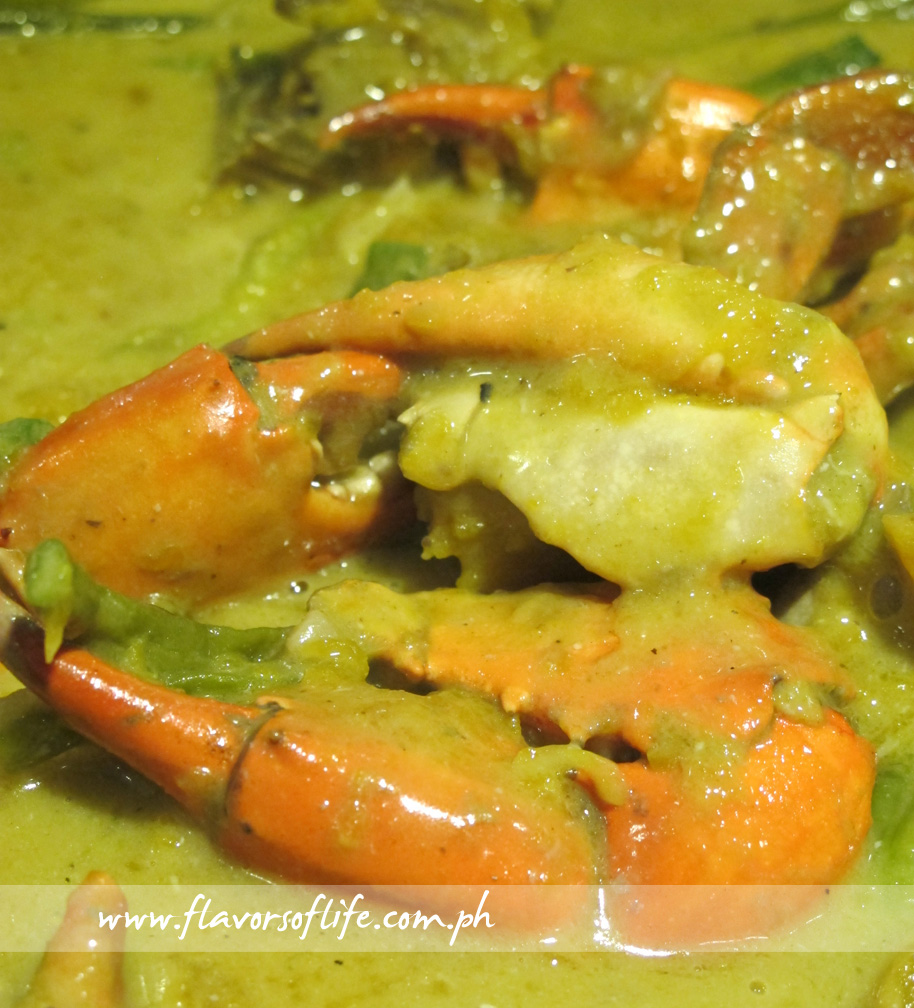
Ginataang Seafood
Thai Fish Skewers
Chinese Style Fried Chicken
There was a buffet setup for dinner, and, although the space for the buffet spread was quite limited, it was teeming with delicious eats. There were a number of salads to choose from, including Thai Mango Salad and Grilled Chicken Almond Salad, to highlight the fresh produce that is abundant in Baguio. Appetizers included assorted sushis and makis and Vietnamese Salad Roll (better known as Vietnamese Fresh Spring Roll). A whole Cebu Lechon sat on the carvery, with skewers of Chicken and Pork Satay being cooked a la minute at the interactive grill station. Rows of chafing dishes offered quite a number of delightful hot dishes, including Ginataang Seafood, Thai Fish Skewers and Chinese Style Fried Chicken.
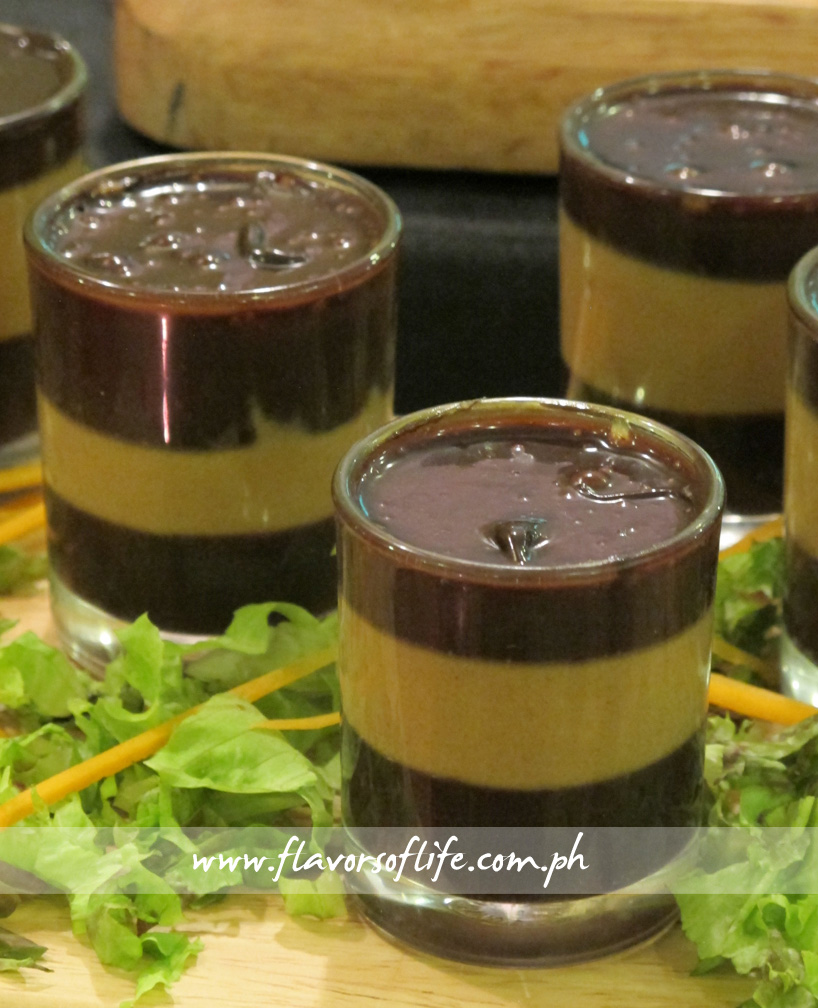
Choco Peanut Mousse
Almond Lychee
The dessert spread was equally impressive. Aside from fresh fruit slices, it had Choco Peanut Mousse in terrines, Ana’s favorite, and the lighter Almond Lychee.
It was back to the room for us after dinner. We hurried up to catch My Husband’s Lover on TV for the first time. People in the publishing industry had been raving about it, but Raff and I never got a chance to catch it since we work till late in the evening and don’t get to go home in time for it, so we were definitely very curious about it. This was our chance to catch it, and the soap opera with the innovative, controversial topic didn’t disappoint.
After My Husband’s Lover, Raff switched channels to cable TV, and I worked on a few articles on my laptop as he watched. Since we had a long day, waking up early in the morning for the trip to Baguio, Raff and I decided to call it a day earlier than usual, looking forward to the Eggs Benedict that Ana said Le Monet serves for breakfast.
DAY 2 – A BUSY DAY
We were up early the next morning and jump-started our full day ahead with a hearty breakfast at Dinelli. The place was full. Luckily, we were able to find a vacant table, and Raff and I settled back on the huge chairs with a tall backrest and first enjoyed a cup of freshly brewed coffee before doing the rounds of the breakfast buffet spread. When Ana arrived and joined us at the table, she immediately ordered Eggs Benedict for each of us.
Le Monet Hotel’s signature Eggs Benedict for breakfast
Salad Platter of Cherry Tomatoes, Shredded Lettuce and Salted Eggs
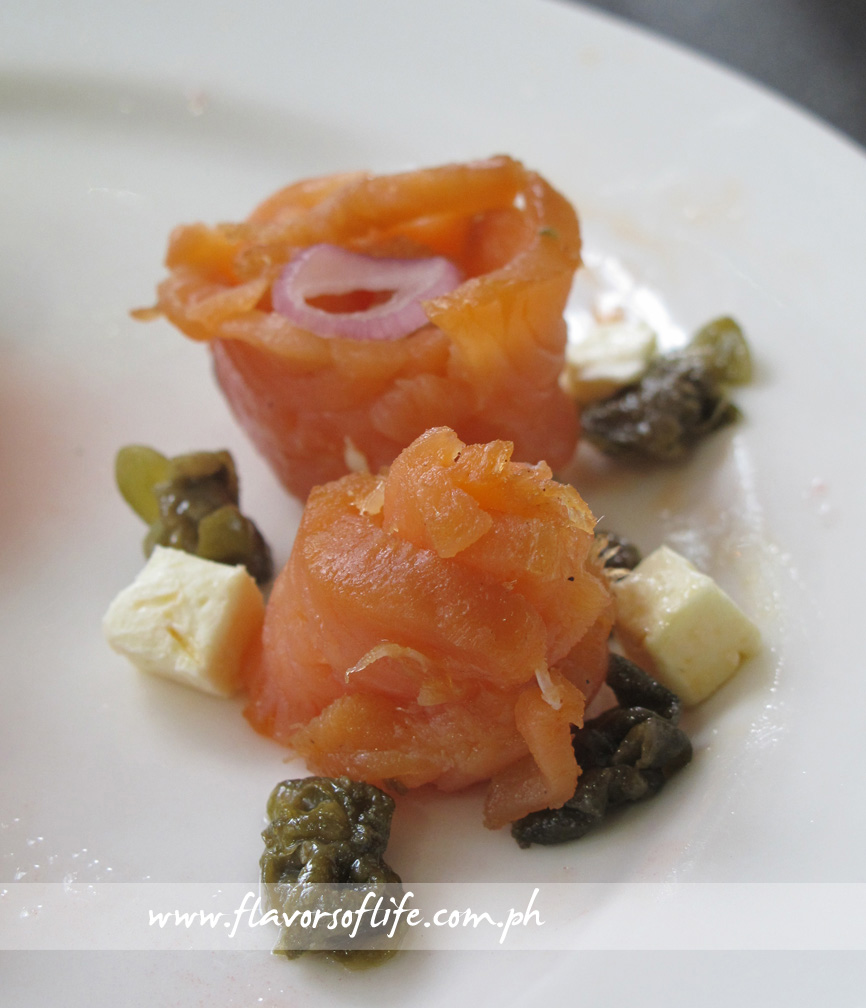
Smoked Salmon with Capers and Cream Cheese
Crispy Espada Fish
Talbos ng Sayote, Talbos ng Kamote and Tomato Salad
Le Monet’s egg station does more than just Sunny-Side Ups and Omelettes. It also assembles hearty Eggs Benedict (soft-poached egg layered with bacon and asparagus spears on a freshly baked biscuit then topped with freshly made Hollandaise sauce and a sprinkling of chopped parsley and paprika). Le Monet is the only hotel in Baguio that serves Eggs Benedict as part of its breakfast buffet, so a lot of walk-in guests do come to the hotel for breakfast. It’s one of the innovations and special offerings introduced by Le Monet’s corporate chef Robby Goco (of Cyma fame), and it became an instant hit.
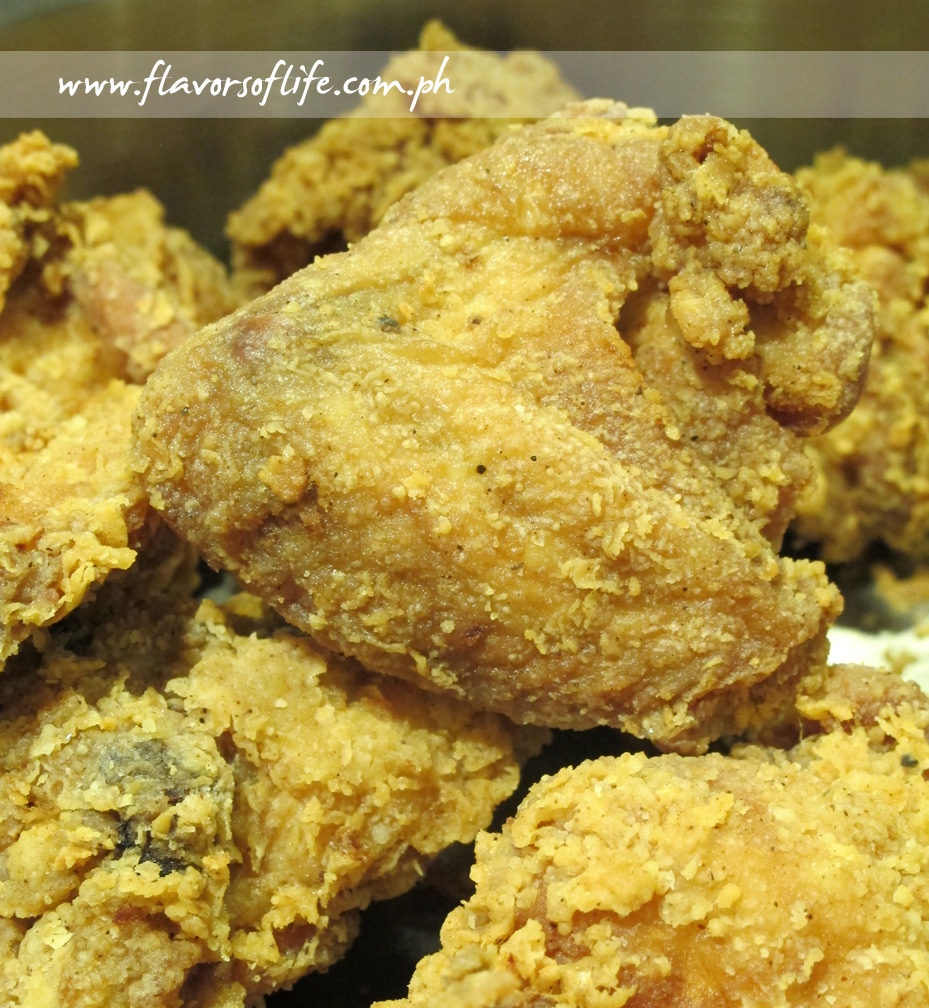
Aside from the Eggs Benedict, Chef Robby also made sure there’s Buttermilk Pancakes (freshly made from scratch using buttermilk from Lipa), French Toast, and freshly baked Biscuits served with Gravy, Fried Chicken and Country Potatoes on the buffet for that all-American breakfast fare.
First having a platter of fresh fruits from the buffet before enjoying my Eggs Benedict, I also assembled a breakfast sampler platter of my own that had a little Longganisa Fried Rice with Crispy Espada Fish and Smoked Salmon that had been painstakingly rolled up and served with capers, cream cheese and shallots. Ana also had a platter of steamed talbos ng sayote (sayote tops) and talbos ng kamote (kamote tops) with salted egg, cherry tomatoes and onion rings served at the table.
The buffet spread likewise included fresh garden salads, herbed butter, lots of breads, and hot dishes like tapa, tocino and danggit, and desserts, as well, but there was no more room in our tummies for more.
After a sumptuous breakfast, the three of us got into our van and went out for a day about town. We stopped by a couple of places that Ana suggested we feature in FLAVORS Magazine and did quick shoots with them. We also dropped by the Good Shepherd store to buy a few bottles of strawberry jam to take back home to Manila as pasalubongs, and stopped by another store for a couple of Baguio’s famous Raisin Breads before hurrying back to Le Monet for a food shoot and late lunch with Chef Robby Goco. Chef Robby happened to be in Ilocos at that time and had, upon being informed by Ana of our request for a food shoot, decided to proceed to Baguio to personally be there for the shoot.
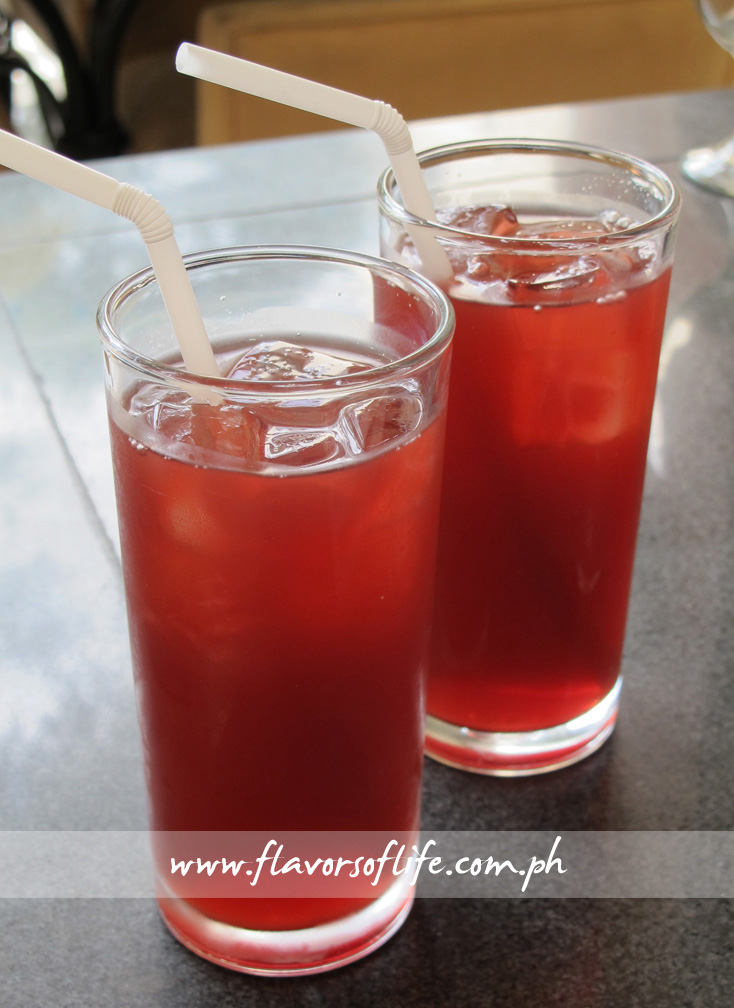
Red Iced Tea
Le Monet Salad
Fresh Fruit Platter
Lunch service was done by the time we got back to the hotel, so Dinelli was empty and quiet. We occupied a table and enjoyed Red Iced Tea as we waited for Chef Robby to arrive. Before long, he arrived with a cousin, and despite aching ribs (he had hurt himself when he went sand-boarding down the sand dunes of Ilocos and taken a fall), he had 10 plated dishes assembled by his kitchen staff for the shoot, and, after the shoot, sat down for a late lunch with us.
Growing up at the time when Baguio was at the peak of its popularity and spending summers of his childhood in the Summer Capital of the Philippines, Chef Robby knew Baguio like the back of his hands. He built his menu for Le Monet around this memory of the Baguio of old, when he and his family would go to the steakhouse and enjoy a huge, American style steak, so he designed the menu of Dinelli around this concept and put together a Steakhouse for Le Monet around his steakhouse memory of Baguio.
“I got the best meats for Le Monet’s steaks, such as Wagyu, USDA Prime, Aged and Kitayama beef, and since the eggs that we get here are real fresh, we do Eggs Benedict and other egg preparations for breakfast,” explains Chef Robby.
He also capitalizes on the fresh produce that is abundant in Baguio by laying out about six salads every day and serving fresh fruits and vegetables.
After a few hours in Baguio, Chef Robby was gone again. He was proceeding to La Union, where he would spend the night. Busy weekend for Chef Robby! As for us, we spent the rest of the afternoon (and early evening) in the room, with Raff watching TV and I working on a blog post for this blog of mine and some articles for the magazine. Ana took the time to go and see her brother, who was celebrating his birthday and who went up to Baguio with some members of his family so they could celebrate his birthday together.
Simple joys in my childhood vacation place – Baguio. I felt very peaceful and happy.
DAY 3: GOING BACK HOME
Our third day in Baguio began early in the morning. Raff and I woke up early and had breakfast at the lobby, where the setup had always been very casual and comfortable. Just like the morning before, the breakfast buffet spread this morning was once again very impressive.
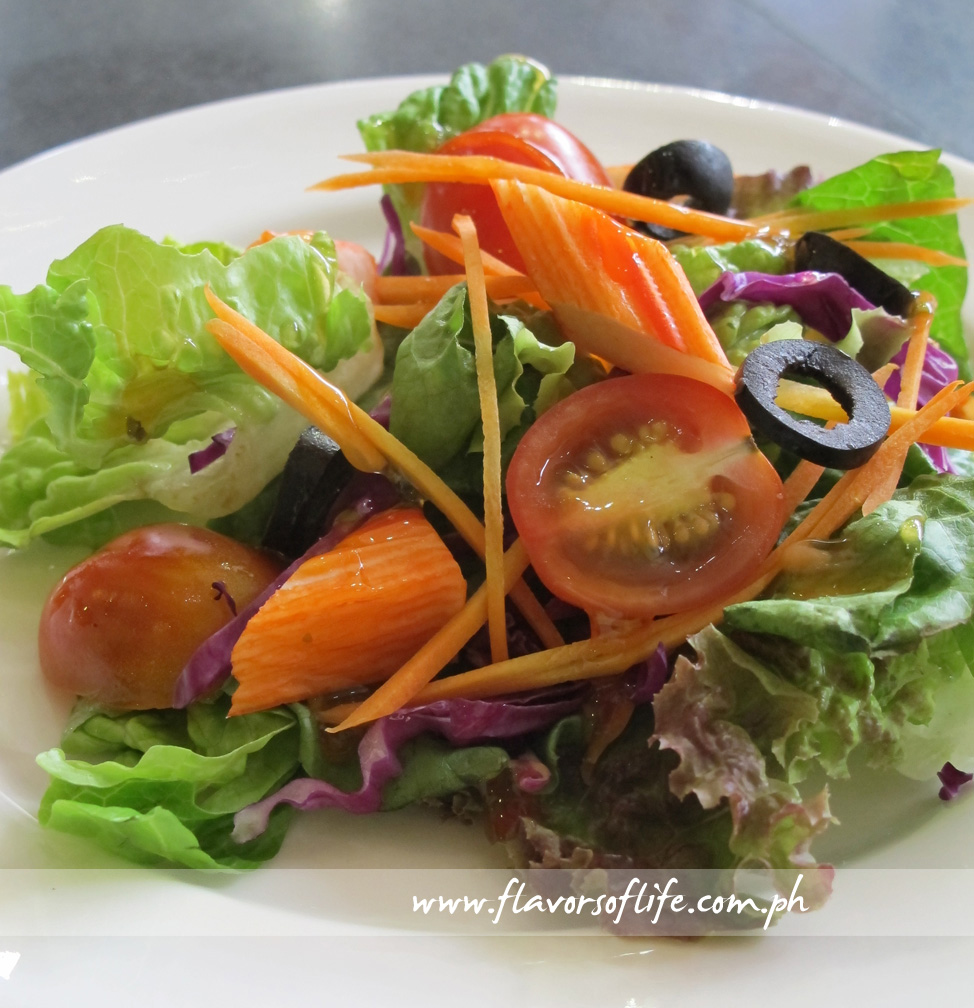
The Fresh Garden Salad I assembled for breakfast
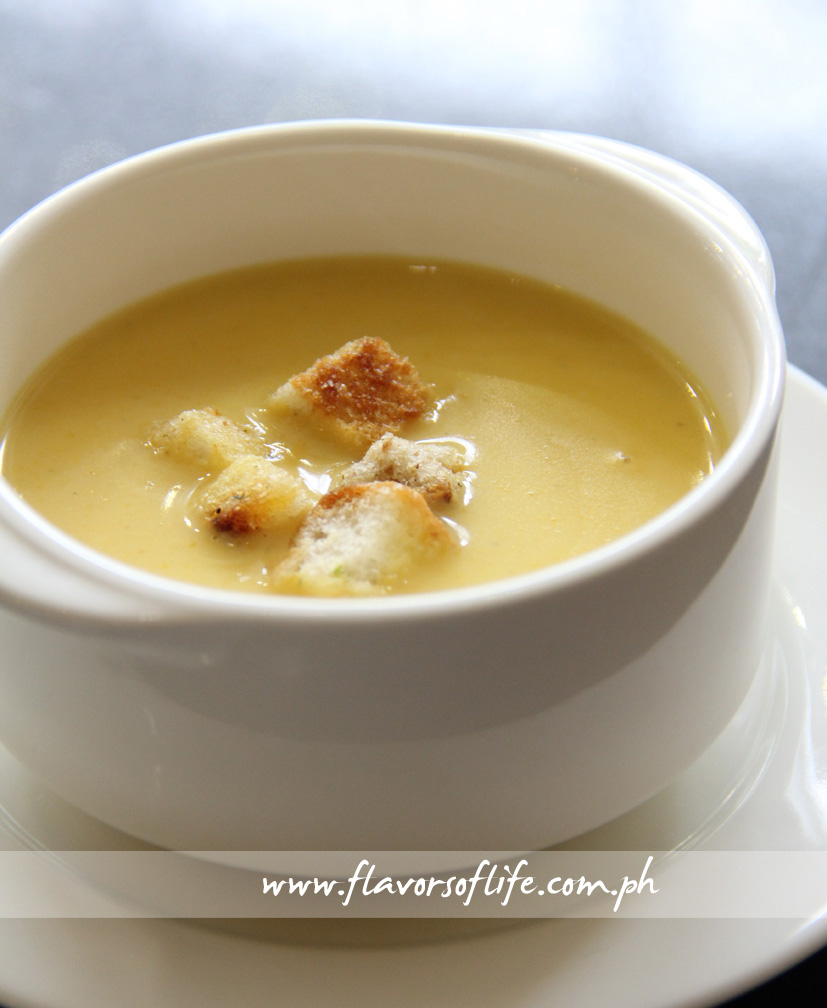
Cream of Pumpkin Soup with Croutons
Buttermilk Pancakes
I assembled a fresh garden salad with lettuce, cherry tomatoes, shredded carrots, red cabbage and black olives with crabsticks to savor the fresh produce of Baguio for the last time before heading back to the concrete jungle that is Metro Manila. I also had a bowl of Cream of Pumpkin Soup and got croutons from the salad bar to top it with. Delicious! Then I assembled a stack of Buttermilk Pancakes topped with butter and syrup, which Raff and I shared. We’re supposed to have a hearty breakfast, because we would be traveling back to Manila after a quick stop at the Baguio Market. The trip back down would take about four or five hours, so it would be best to travel on a full stomach.
Halfway through breakfast, Ana joined us, and we left together for the market afterwards. Ana wasn’t going to join us on our trip back to Manila, because she had guests coming up to Baguio the following day, so there would just be Raff and I plus the driver in the van back down. But Ana would take us to the market, because she knew where to find the best bargains. And, boy, she really did!
We made our way through the aisles and corridors of the Baguio Market, and though my original plan was to buy only carrots and lettuce and nothing more, I ended up with a lot more than originally intended. I bought marinated baby bangus in packs of seven for Php55 per pack, then we inched through the crowd to get to the area at the back called the Hangar, and I had a feast with all the fresh vegetables there, ending up with talbos ng sayote at Php13 per bunch, carrots at Php20 per kilogram, lettuce at Php40 per kilo, cucumber at Php15, and Baguio beans at Php25, saba and latundan bananas at Php50. Awesome!
Raff and I both had Baked Salmon with Miso Glaze for lunch before leaving for Manila
We spent such a long time in the market that when we got back to the hotel, it was almost lunchtime. Ana said we should have a quick lunch first before leaving so we’d have energy for the trip back to Manila.. So we packed our stuff, had a quick lunch at Dinelli with Ana, then said our thank-yous and good-byes and got on our way.
Settling back in my corner of the van as it got on its way, I chose to enjoy the view down the mountainous terrain of Kennon Road. It was comforting to look at the pine trees, the Lion’s Head, the greens of the Baguio of my childhood, although the mountainsides are now punctuated with mass housing areas and Session Road is now a crowded metro center. I would still keep coming back to Baguio – especially now that I’ve found a new home in Le Monet.
Philippine Airlines flies high with its new Airbus A321 plane (Photo courtesy of Philippine Airlines)
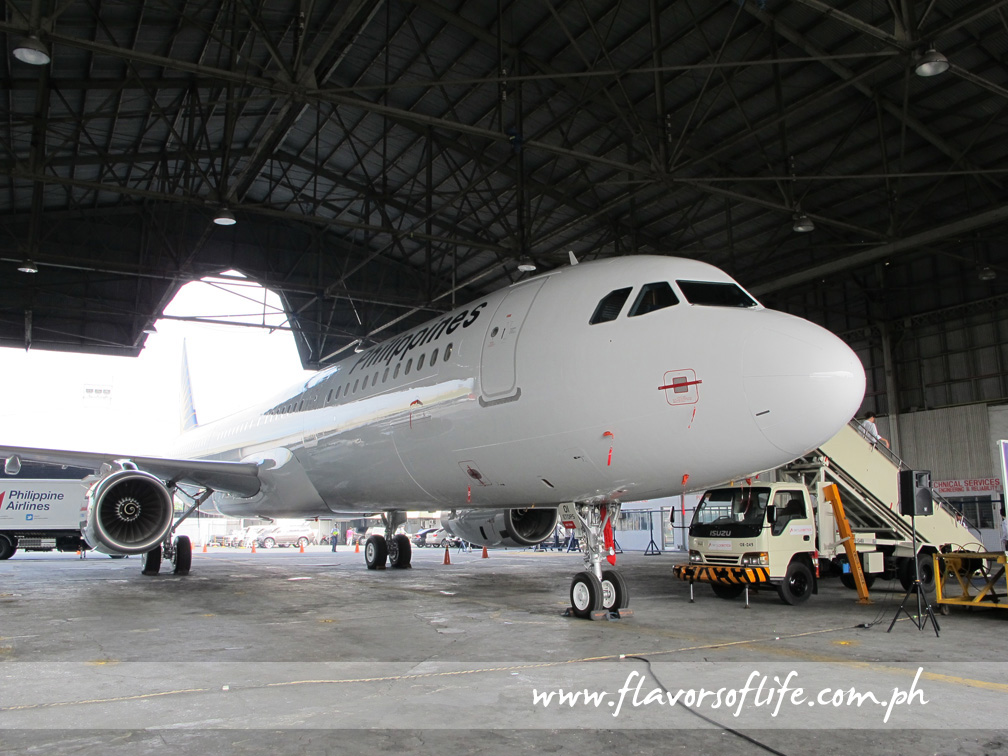
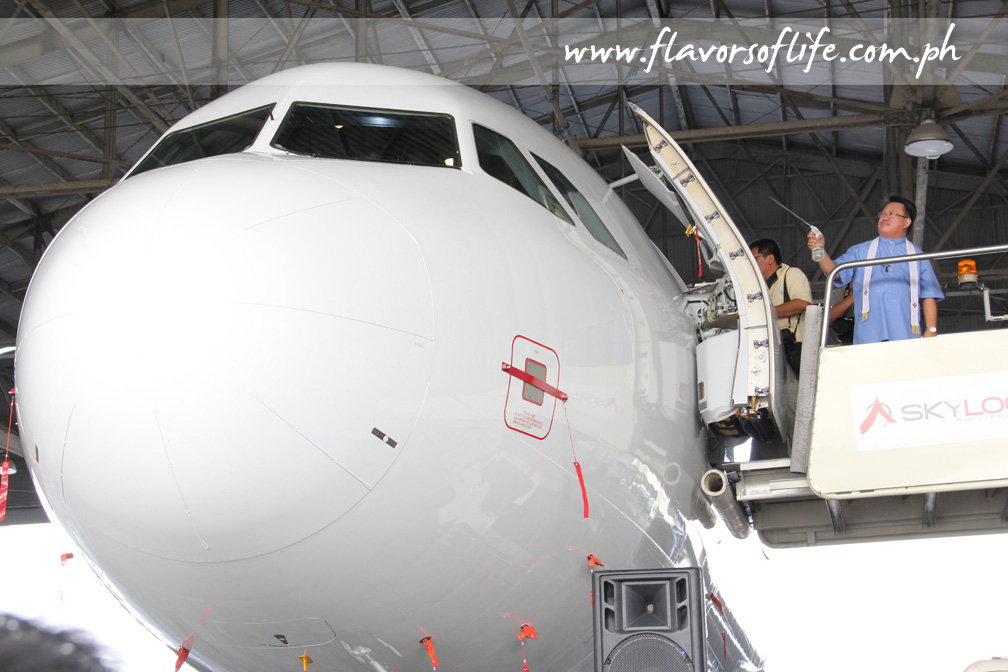
PHILIPPINE Airlines (PAL), the Philippines’ air flag carrier, is the first airline company in the country to have a state-of-the-art Airbus A321-200 plane in its fleet, and its first Airbus 321 plane has arrived in Manila. Flown in by Captain Roland Narciso from Finkenwerder Airport in Hamburg, Germany, the site of Airbus’ A320-series final assembly line, the brand-new plane was blessed by Fr. Mario Bije at the PAL Express R1 Hangar along Andrews Ave., Pasay City, this morning (August 8, 2013).
PAL’s first Airbus A321 parked at the PAL Express R1 Hangar in Pasay City this morning
Fr. Mario Bije blessing the entire aircraft, from the engines and landing gears to the cockpit and passenger seats this morning
The crew waving to the crowd…
The arrival of the new Airbus A321 plane heralds an exciting new era for PAL, as it puts in motion the fleet renewal program of the airline company which was set almost a year ago. PAL had signed an order with Airbus for 55 aircrafts, totaling $7 billion and considered as the largest aircraft purchase in Philippine history. The order was for 45 single-aisle A321s and 10 wide-body A330-300s, but PAL has since ordered 10 additional A330-300s, thus raising the total orders to a record 65 aircrafts.
PAL’s head of Philippine sales Salvador Britanico Jr.
The A321 plane, which is regarded as one of the most modern and safest airplanes, will be deployed by PAL on high-density domestic routes such as Manila-Cebu and Manila-Davao as well as regional routes like Manila-Singapore, Manila-Hong Kong and Manila-Bangkok. It shall be alternating with the smaller Airbus A320 on such routes.
“The advantage of the Airbus A321 plane is that, since it has a maximum capacity of 199 passengers, it will allow us to fly more passengers to our destinations for the same cost,” explains PAL’s head of Philippine sales, Salvador Britanico Jr.
The Airbus A321 features a tri-class cabin – 12 Business Class seats, 18 Premium Economy seats and 169 Regular Economy seats with ergonomically configured and designed seats.
Business Class seats offer the ultimate in comfort (Photo courtesy of Philippine Airlines)
Business Class seats, which are two in a row on each side of the single-aisle aircraft, offer a comfortable pitch of 37 inches along with an ergonomic design that provides greater knee and leg room to go with an articulating bottom support. Each seat also features a 120-degree recline, six-way adjustable headrest, extendable leg rest, universal sockets and USB ports.
The Premium Economy seats are three in a row on each side but still very comfortable
The Premium Economy seats, which are a new PAL product, have “slim line” seats that feature a 34-inch pitch, under-seat storage, four-way adjustable headrest and articulating bottom where the seat pan slides forward while the back reclines. This novel design optimizes passenger space and makes passengers feel more comfortable during a flight.
Each A321 offers a total of 169 Regular Economy seats per flight
Regular Economy seats offer the same comforts at a pitch of 30 inches.
Captain Roland Narciso flew in PAL’s first Airbus A321 from airbus’ final assembly line in Hamburg, Germany; here being presented by PAL spokesperson Cielo Villaluna
Described as the most efficient single-aisle jetliner ever built, the twin-engine Airbus A321 has a stretched fuselage, measuring 146 feet, which is nearly 23 feet longer than the A320, enabling it to accommodate not just more passengers but also more cargo. Its length and cabin width of 12 feet and 1-inch also make the aircraft the longest and widest among all single-aisle aircrafts flying today, thus enhancing passenger comfort. Aside from its technical superiority over other aircrafts, the A321 also has a pleasant, cozy and comfy interior design that’s unmistakably Filipino, with the front of the cabin swathed in buoyant beige from the carpet to the seat covers and curtains to the laminates, although the seats in the Regular Economy class are wrapped in blue.
While the inaugural flight of the first Airbus A321 aircraft of PAL is still being determined, the second A321 plane is expected to arrive next Friday, August 16, 2013, followed by the delivery of the airline’s first A330-300 HGW (High Gross Weight) plane by the end of September this year. Delivery of the rest of the aircrafts being acquired by PAL from Airbus will be staggered into 12 aircrafts by the end of 2013, 17 in 2014, 15 in 2015, 10 in 2016, two in 2017, four in 2018 and four in 2019.
Appetizer platter served for brunch
Basil and Sun-dried Tomato Fritatta and Grilled Chicken Sausage for the main meal
The arrival of PAL’s first Airbus A321 thus kicks off the airline company’s short-range fleet renewal program. At the simple blessing ceremony this morning (August 8, 2013), PAL management also treated guests, including members of media, to a hearty brunch on board the aircraft to sample the exquisite dining experience being offered by PAL. Having worked with a number of renowned chefs in the country to come up with sumptuous inflight meals and redefine inflight dining altogether, both for short-range and long-haul flights, PAL offered guests with a choice of Basil and Sun-dried Tomato Fritatta and Grilled Chicken Sausage (by Chef Clifton Lyles) or Beef Adobo Flakes (by Chef Fernando Aracama) for the main course during meal service – but not before everyone was first served an appetizer platter of cheese, smoked salmon, cottage cheese, smoked chicken slices and wedges of boiled egg with coffee or juice.
Boarding passes for our Business Class seats
This morning’s “full flight” on board the new Airbus A321
PAL’s SVP for operations Ismael Augusto Gozon
Just like passengers in a regular flight, guests were issued boarding passes complete with assigned seats after the short and simple blessing of the aircraft. After everyone shall “boarded” the plane, PAL officials, led by SVP for airline operations Ismael Augusto Gozon and head of Philippine sales Salvador Britanico Jr., as well as spokesperson Cielo Villaluna, took to the plane’s central address system and talked about not just the features of the new A321 and its significance to PAL’s fleet renewal program but also about the company’s other development plans for the future.

 STRANDED in our house in Cainta since Sunday (August 18, 2013) as a result of the torrential Southwest monsoon rains that just wouldn’t let up. Was out for a few hours last Monday (August 19, 2013) to go to the office, but, boy, was I scared that I wouldn’t be able to get back home that evening! Thank God He heard my prayers. There was no traffic, no floods, on our way back, and the floodwaters in the church area of our subdivision (the lowest point, which is unfortunately strategically located right in the middle of the main road, where everyone must pass going in and out of the subdivision) were only gutter-deep. By the grace of God, my husband Raff and I were able to get home safe and sound. He has also kept us and our home flood-free through these past few days, and I just had to keep myself productively busy by writing articles for FLAVORS Magazine and this blog of mine and cooking three meals a day. This is one of the dishes that I whipped up. After fishing out a pack of boneless milkfish fillet from my freezer, I thought it best to do something simple but delicious. It’s very easy to prepare, and I’m sharing the recipe with you. I served it with two store-bought dips to make it more exciting – sweet chili sauce and plum sauce.