


I HAVE attended a lot of wine dinners in the past, and tasting wine-and-food pairings have become a regular part of my job. But seldom do I get invitations to attend a lambanog degustation, and lambanog-and-food pairings are certainly not a normal thing for me. So, although yesterday (August 26, 2013) was National Heroes’ Day and therefore a holiday, and it was also the day when the Million People March for the nation to express its anti-pork barrel sentiments was taking place at Luneta Park, I said yes to Mama Sita Foundation’s Lambanog Dinner at Café Ysabel in San Juan last night.

It was lambanog galore last night as Mama Sita Foundation and The Cultural Heritage Studies Program of the Department of Sociology and Anthropology of the Ateneo de Manila University presented Mga Kuwentong Pagkain: Our Lambanog Heritage (Celebrating Tayabas). The event actually celebrates the lambanog of Tayabas, Quezon, which is being studied by the class of anthropologist Dr. Fernando Zialcita, and Mama Sita Foundation’s support for the project is its way of helping to promote Philippine culinary heritage, of which the lambanog is a big part of.
Also expressing support for the Ateneo Anthropology class’s lambanog project were Café Ysabel’s renowned chef Gene Gonzalez, who came up with flavorful culinary creations to go with lambanog-based drinks to underscore the lambanog’s versatility, outstanding flavor and high quality; as well as Tayabas Mayor Faustino ‘Dondi’ Alandy-Silang, who was personally present to share information about Tayabas’ specialty product, the lambanog.
Before dinner was served, the Ateneo students first made presentations on why Tayabas is the ideal home of the lambanog, how lambanog is processed, and how the Ateneo class headed by Dr. Zialcita is helping to brand and package lambanog to make it more attractive to the contemporary market.
FACTS ABOUT LAMBANOG
“Lambanog is a liquor, not a wine,” Dr. Zialcita clarifies.
Lambanog, which forms part of all celebrations in Tayabas, Quezon, is made from the sap of the flower of the coconut tree. Local men collect this sap through a bamboo container called tukil, which, when full, undergoes a fermentation process that lasts for three to four days and then a process of distillation to remove impurities from it.
In Tayabas, the traditional process of distillation is utilized, with ipa (rice husks) used to boil the fermented sap and water from Mt. Banahaw used to speed up the cooling of the vapor afterwards.
Lambanog, which is considered organic, has a high alcohol content that sometimes reaches up to 80%, but, unlike other alcoholic drinks, it does not leave a hangover. So even if one gets drunk on lambanog, he wakes up with a clear mind the next morning.
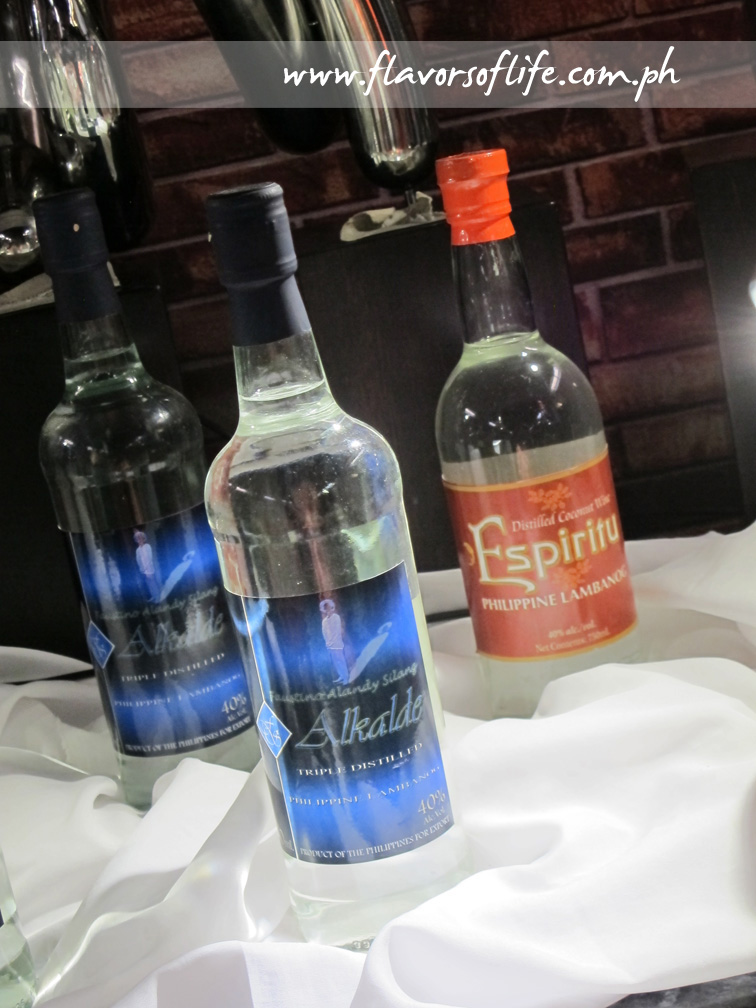
While most lambanogs on sale in the market are single distilled lambanogs, Tayabas now also produces a triple distilled lambanog called Alkalde, which has been commissioned by Tayabas Mayor Faustino Alandy-Silang. This is now available, but only in Tayabas, because the distillation process is such that any lambanog distillery would find it difficult to produce triple distilled lambanog in big volumes.
Tayabas, which is the lambanog capital of the Philippines, is home to about 14 distilleries, one of the largest of which is Mallari Distillery, which the Ateneo Anthropology class approached for their study and research on lambanog.
LAMBANOG AND FOOD PAIRING

“Lambanog is a young, reckless fascination for me. I discovered it a long time ago when my group of karate practitioners were in Tayabas and we wanted to taste what the place had to offer. We had a demi-jug of lambanog but, the next morning, I woke up with no hangover. I was so impressed by the purity of the spirit,” says Chef Gene.
Last night (August 26, 2013), at Café Ysabel, Chef Gene Gonzalez presented the dishes that he concocted to pair with lambanog-based drinks. The menu for the five-course dinner was designed to find balance between the rich flavors of updated Filipino classic dishes and the robust essences of distilled lambanog.
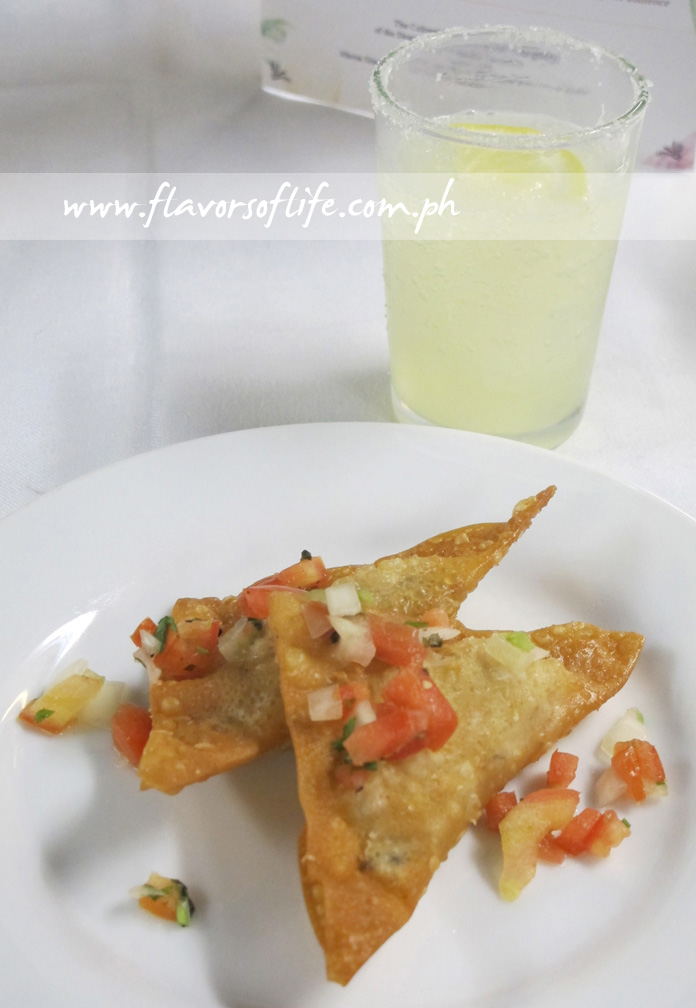
First course was Smoked Fish Wantons paired with Magdalena, a Café Ysabel version of the classic Margarita mix used for tequila, using lambanog and lime juice. The subtle flavors of the tinapa filling and the crispiness of the fried wanton went very well with Margarita, which was my favorite out of all lambanog-based drinks served last night.

Then came Bulcachong with Sotanghon (a rich and flavorful Davao soup stew with chunks of beef, a small sweet corn wheel and glass noodles) paired with a cold Watermelon Sorbet with Lambanog. It was a small scoop of watermelon sorbet in a small dessert bowl with lambanog poured over it. The Bulcachong was lovely. It was so rich and flavorful that it was like a cross between a soup and a stew, and the corn and sotanghon went very well with the beef. Although I’m not a big meat eater, I ate a piece of meat with the sotanghon and the corn and was satisfied. The Watermelon Sorbet with Lambanog effectively washed it down and cleansed the palate for the next course.
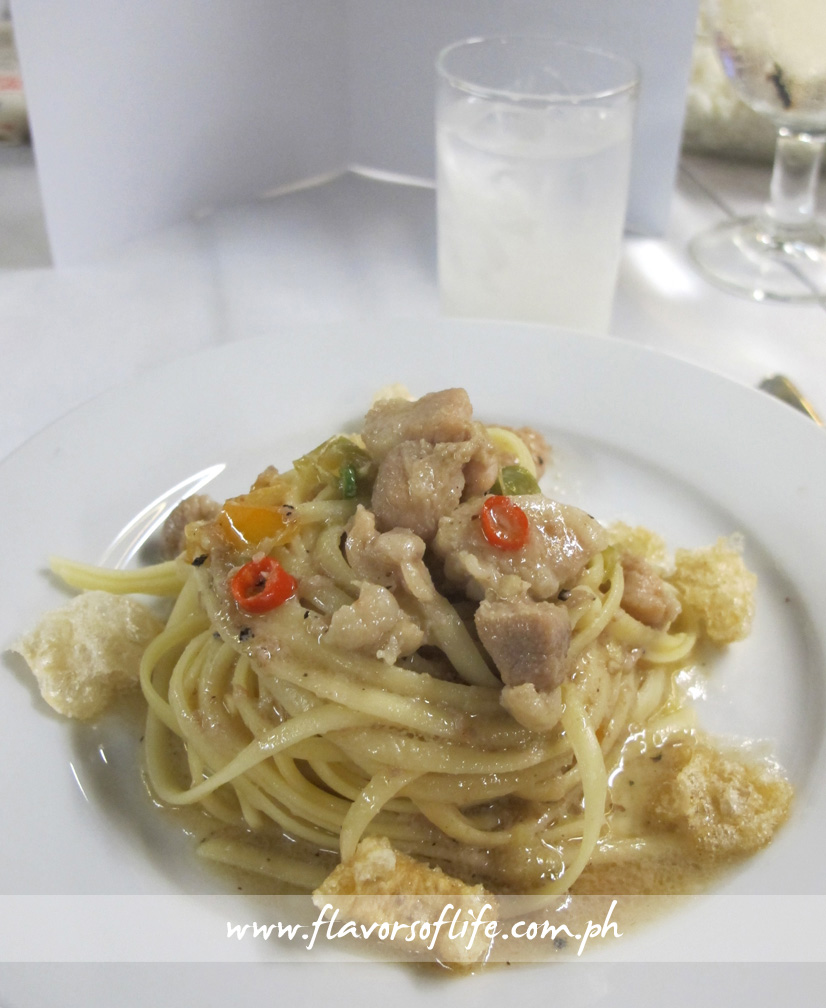
Third pair came in the form of Bicol Express Pasta and Lambatonic. The pasta was a hefty portion, generously topped with pork and chicharon for flavor and crunch, but the pasta tossed in the sauce alone was already awesome as it was. Served with it was Lambatonic, which is a purist lambanog in buko juice. The Lambatonic also easily became a favorite, although media colleague and good friend Marlon Aldenese, who was seated beside me, found the alcohol a bit too strong.
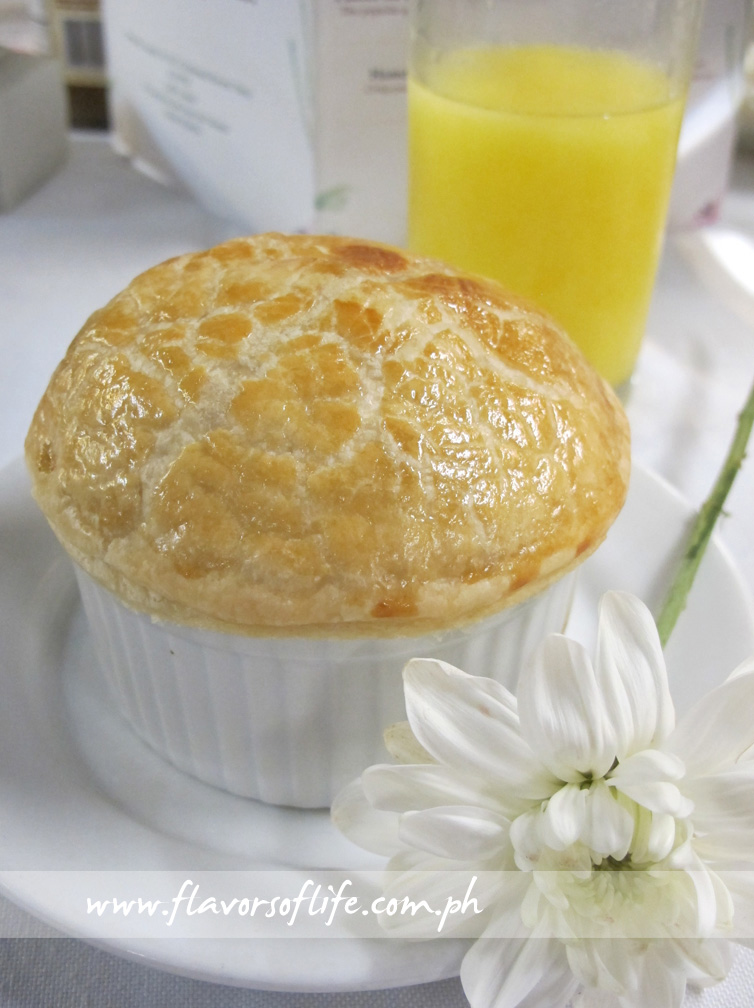
For the fourth food-and-lambanog pairing, the waiters laid out a scrumptious Pastel na Kalderetang Kambing (the traditional spicy goat stew presented in a soufflé bowl and baked with a pastel crust on top. I’ve always loved Café Ysabel’s pastel crust, which is great with whatever stew that they opt to present with a pastel crust in generous individual portions. This was matched with zesty Lambanog with Calamansi and Daiquiri.

For the fifth and final course, we had Lechon na Hamonado (crisp pork skin with hamonado) with Manila Sunrise, which is mango juice with lambanog and calamansi juice with grenadine to add color and texture to the concoction.
THE ART OF TAGAYAN
After dinner, which everyone enjoyed, Tayabas Mayor Faustino Alandy-Silang gamely talked about the nuances of the Tagayan tradition in his hometown. Groups of men and women sit down to share a round of lambanog together, with the aim of not getting drunk but enjoying each other’s company and respecting each other’s capacity for alcoholic intake.

In a classic Tayabasin Tagayan, he says, there is a tanggero who “manages” the tagayan and serves the drinks, and only one shot glass is passed around. The round of drinking begins with the tanggero offering a shot of lambanog to either the person on his left or the one of his right, and then it goes around. Certain dialogues are uttered, such as “Na-ay po” when he offers the shotglass and “Pakinabangan po” as the response from the person accepting the drink. For a lady who wants to skip her turn, she says “Titimtiman ko na lang po” and touches the tip of the shotglass to her lips without having to take a sip. A gentleman in the group must be quick to say “Sasakupin na po kita” to rescue the lady, wait for her to pass the shotglass to him with a “Salamat po,” and then look for her lip mark on the shotglass and drink the lambanog from there. If the lady intends to drink half of the shot, she can say “Kalahati lang po” instead of “Titimtiman ko na lang po” and the gentleman who comes to her rescue will say “Sasakupin ko na po. Alin po ang sa iyo, ang ibabaw or ang ilalim?” If she says “Ang ibabaw,” she drinks first; but if she says “Ang ilalim,” the gentleman drinks first.
Mayor Faustino Alandy-Silang’s demonstration, especially of the dialogues involved in classic Tayabasin Tagayan, elicited amused laughter from the audience, even as an actual tagayan took place at his table as part of his demonstration, and everyone went home happy afterwards.
A FOOD STORY COMPETITION
Last night’s Lambanog Degustation also served as the formal launch of Mama Sita’s Mga Kuwentong Pagkain food story writing competition, which is now on its second year.

“Mama Sita’s enterprising spirit and her absolute love for Filipino cuisine are the inspirations behind Mga Kuwentong Pagkain. This project actually consists of food presentations and demos of indigenous Filipino foods, as well as a food story writing contest. Through this, Mama Sita Foundation aims to chronicle and preserve oru rich and diverse culinary culture, as well as celebrate Teresita ‘Mama Sita’ Reyes’ passion for Filipino food and cooking,” says Cecille Nepomuceno, information officer of Kusina ni Mama Sita.
She adds: “The contest is open to all those who want to share their memorable encounters with food and dining.”
Food story entries can be emailed to mgakuwentongpagkain@gmail.com or snail-mailed to Kusina ni Mama Sita, 131E F. Manalo St., San Juan, Metro Manila, Philippines 1500.


