


DAY 2 of our Isabela food tour last May (2014) was a full day of nonstop eating. The media group – me and my husband Raff, Angelo Comsti, Ige Ramos, Tata Mapa, Nana Caragay, Paul Jeffric del Rosario and Pam Santos – bonded over food from breakfast to dinner with lots of snacks in between.
The day began with breakfast at Isabela Governor Bojie Dy’s residence in Cauayan City, where we had a buffet of Isabela’s famous longganisa with fried sunny side up eggs, hotdogs and garlic rice set before us. We were still raving about the flavorful and garlicky longganisa when in came Aling Belen Recometa Holgado into the dining room.
LUCRATIVE LONGGANISA BUSINESS
Aling Belen, it turned out, was the brains behind the delicious longganisa that we were raving about. In her typical shrill but animated manner of speaking, which amused us, Aling Belen related that she had been making longganisa in Isabela since 1970. She had just graduated from college then, and she experimented with ingredient combinations before she got the perfect formula for her famous longganisa. She started making small batches of 2 to 3 kilogram longganisas. Business was good and soon she was making 10 to 20 kilograms. Her longganisa, she says, became so popular in the province that people would look for her brand and not settle for anybody else’s. The Dy family was among those who patronized her longganisa and promoted it to friends and guests alike. These days, Governor Bojie Dy would sometimes order 200 to 220 kilograms of longganisa to give away to friends whenever there’s a special occasion.


Her longganisa business, Aling Belen proudly stressed, was responsible for sending her six children to school. Her eldest is an electrical engineer, her second finished management and marketing, her third works as an X-ray technician, her fourth helps her out in her longganisa business, her fifth studied Marine Engineering at the Philippine Maritime Institute, and her sixth and youngest took up Hotel and Restaurant Management at the Far Eastern University.
The secret to her longganisa, she said, is the personal touch that she puts into it. She personally picks and purchases the meat that she uses in making her longganisa. She looks for a certain percentage of lean meat and fat ratio in her meat and does not compromise on its quality. She also observes proper hygiene and cleanliness whenever she makes her longganisa and personally grinds it using her own grinder.
She had come over to the Governor’s house that morning not only to deliver the longganisas ordered by Francis Faustino ‘Kiko’ Dy, the eldest son of Governor Bojie Dy, barangay captain of San Fabian, Echague, Isabela, president of the Association of Barangay Captains (ABC) in the province, and our media group’s host for our four-day Isabela food tour. She was also asked to conduct a demo on how she makes her longganisa for the group to photograph, and she obliged.
So we settled in the garden after breakfast and she did the demo there. Besides quality meat, Aling Belen also added other flavorful ingredients into her longganisa, including garlic, soy sauce, salt, pepper and sugar. After mixing them by hand in a bowl, she transferred the mixture into a stuffer, which helped her mechanically stuff cleaned pig’s intestines with the mixture before tying them into segments with a kitchen twine.
Aling Belen’s longganisas contain no preservatives or food color, and she sells them in a stall in the Cauayan City Market for Php280 per kilogram of both the classic and the spicy variants of her longganisa. Her stall is called Aling Belen Special Longganisa and Tocino.
The best way to cook her longganisa, she said, is to boil them in a little water, cover then continue to boil. When the longganisa turns dry, add a little oil, and when it bubbles up, poke a hole in it with the pointed end of a knife and continue to cook over low fire until done.
After her demo, our group embarked on the next leg of the food tour, but passed by Aling Belen’s house cum longganisa factory to take a peek at its operations. Then it was off to Congressman Rodito Albano III’s resthouse/ranch in Ballacayo, San Pablo, for a taste of Pancit Cabagan. San Pablo was the next town to Cabagan, where the Albanos, one of the most respected families or clans in Isabela, were originally from. The famous noodle dish of Isabela, called the Pancit Cabagan, was said to have been ‘invented’ by the Albanos. So it was only fitting that we got to see how Pancit Cabagan was being prepared in the Albano household and taste it afterwards.
ORIGINAL PANCIT CABAGAN
The resthouse/ranch of Congressman Rodito (representing the First District of Isabela) sat atop a sprawling hilly property. The main house had a Mediterranean look and feel to it, while around it stood a native pavilion and an interesting cogon-covered igloo-like hut. Standing on the spacious porch at the back of the house, one could see a breath-taking view of the Cordillera Mountain Ranges to the West and the Sierra Madre Mountain Ranges to the east, with Cagayan Valley in full view before them. San Pablo stood very close to Tuguegarao, Cagayan, so it was quite a ride from Cauayan City, but the view and the food that was to come a bit later were worth it.
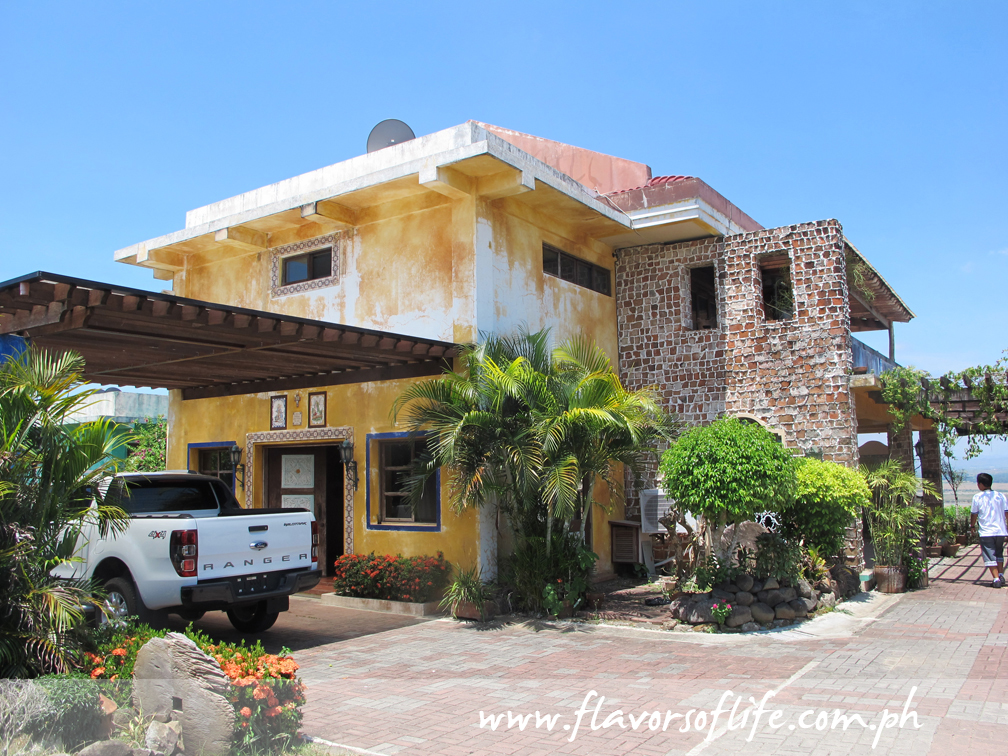


Congressman Rodito’s staff went to work, and one of them, Martell Angoluan, conducted an impromptu cooking demo on how to prepare the Albanos’ famous Pancit Cabagan, and the group recorded it step by step. Pancit Cabagan is very similar to the traditional Pancit Canton, although it makes use of a special miki noodle manufactured locally. The noodle dish was cooked with chopped garlic, onion, pork precooked in soy sauce, fish sauce, soup stock, carrot strips and shredded cabbage. Then it was topped with chopped lechon kawali for extra flavour, texture and crunch, and boiled quail and chicken eggs. It’s best eaten with a Pinakurat suka (vinegar) and calamansi juice dip on the side.


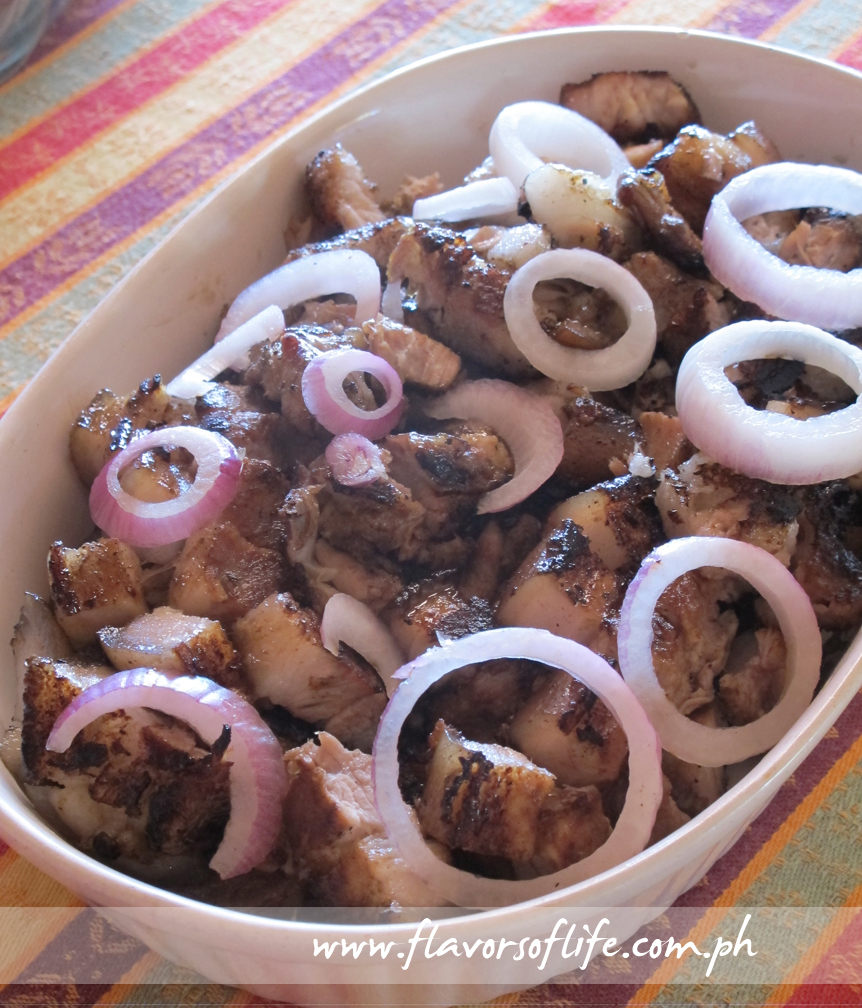
After the demo, it was time for lunch, which had everyone feasting on not just the Pancit Cabagan but also on Adobo Isabelleno, Crispy Fried Tilapia (St. Peter’s fish) and Inihaw na Baboy (grilled pork) by the scenic porch.
TWO HISTORIC CHURCHES
From Congressman Rodito Albano III’s place in San Pablo, the group made quick stops at two historic churches, the Roman Catholic Church of San Pablo, Isabela, and the Church of Tumauini near Ilagan City.

Built in 1624, the Roman Catholic Church of San Pablo is the oldest church in Isabela, and its bell tower is the tallest in Cagayan Valley.

The Church of Tumauini was dedicated to patron saint San Matias in 1707 and became a regular parish in 1751. The church of stone with a unique cylindrical bell tower is the only one of its kind in the Philippines. It was partly damaged during World War II and was rebuilt by the faithful of Tumauini. It is now a National Historical Landmark.
KAKANINS GALORE!
From historical churches, our Isabela food tour took us to Ilagan City to get up close and personal with some of the famous kakanins (native delicacies) of Isabela. We dropped in on Felicidad Baggo’s home, whose backyard served as the family’s kakanin-making facility. We caught them making Binallay, Inatata and Bibingkang Kanin.


While Bibingkang Kanin turned out to be familiar to everyone, Binallay and Inatata took a little time to get to know. Both are types of suman, or glutinous rice rolls wrapped in banana leaves then cooked in steamers until done.


Binallay is pure ground glutinous rice mixed with water, soaked for two hours, kneaded into small balls like siopao, wrapped in banana leaves into slightly flat, rectangular sumans, then steamed until done. Aling Felicidad said Binallay is eaten with laro, or a sweet latik sauce. She also showed us the proper way to eat it, which was to spread laro on a small plate, then tearing the banana leaf covering the Binallay in small strips one at a time, then laying the Binallay on the laro and getting forkfuls of it.


Inatata is also a type of suman made from cooked whole glutinous rice, lightly sweetened, and then wrapped in banana leaves into small cylinders before being steamed. The curious thing about the Inatata is that, since they are small, they are tied into batches of 10 like ammunition belts of a machine gun.
Aling Felicidad sells her Binallay with a little plastic pouch of laro at Php10 per piece and her Inatata at Php25 per batch of 10, while each round pan of Bibingkang Kanin goes for Php160.
SEAFOOD AND ‘CARNERO’ DINNER
It was already dark by the time the group got back to the Governor’s Mansion in Ilagan City. We slipped into our rooms to wash up and get ready for dinner upon arrival, and then, after a few minutes, trickled out one by one to take a peek at the dinner prep work going on in the kitchen. We were having our dinner in the spacious dining room at the Governor’s Mansion enclosed by glass walls and doors.
I looked forward to dinner because it was a seafood dinner featuring the fresh , shellfish and fish of the coastal town of Palanan, Isabela.

By the time we got to the kitchen, Jeremiah ‘Maya’ Aggabao, the special cook of the Mayor of Palanan, was already prepping up the Binagen lobsters and Curacha. He was making Kiko’s Stew, a special soup dish with whole baby lobsters, Maya-Maya and Blue Marlin fish and squid cooked in fresh coconut water. The lobsters and Curacha were so plentiful that Maya decide to also make Steamed Lobsters, for which Angelo Comsti from our group made a delicious garlic butter sauce. Maya said he was also going to cook Dinengdeng for dinner so we would have vegetables to go with the seafood, while Kiko presented his family’s heirloom dish, Tim, a steamed egg dish topped with fried garlic.


Isabela’s Master Kusinero grand champion, Jay ‘Venus’ Castaneda, who had prepared our dinner on our first night in Isabela, was also around. This time, he had prepared a dessert, Rabong Corn Bibingka, a biko-type rice cake made from ground glutinous rice with labong (called rabong in Isabela, and referred to young bamboo shoots) and corn kernels. To remove the hint of bitterness from the labong, he had boiled it and then squeezed out its juice and then added sugar into it.


The Lechon Carnero (lamb lechon) that Kiko had ordered from Michael Marcelo from San Felipe, Isabela, had also already arrived. It’s one of the celebration dishes that the province of Isabela was truly proud of, and Kiko wanted the group to have a good taste of it. The whole Lechon Carnero was overwhelming, as it slowly came into view when Kiko removed the covering around it. He had the meat carved and chopped for everyone to enjoy as pica-pica before dinner.
While Maya was still busy cooking, Kiko and his business partner Jessica Gallegos asked the group if we wanted to take a short leisurely walk outside. They wanted us to see the Isabela Park that had been recently built right in front of the Provincial Capitol of Isabela. We all said yes, so we took a walk over to the park and marveled at the grand fountain, which had Queen Isabela at the center and all around it characters depicting important moments in the history of the province.


We took some photos, sent Paul’s drone up into the dark night sky and watched it hover up there for a while, and then started walking back to the Governor’s Mansion for dinner. The food was ready, and so we sat down for a long, leisurely dinner with Kiko and Jessica, feasting on the lobsters like there’s no tomorrow. In Manila, it’s seldom to see such plentiful lobsters laid out before you, and even if you see such a bounty, it would cost you an arm and a leg to be able to enjoy it.
We did a rundown of the next day’s itinerary before calling it a day. Tomorrow would be another full and flavorful day.
– to be continued –


