

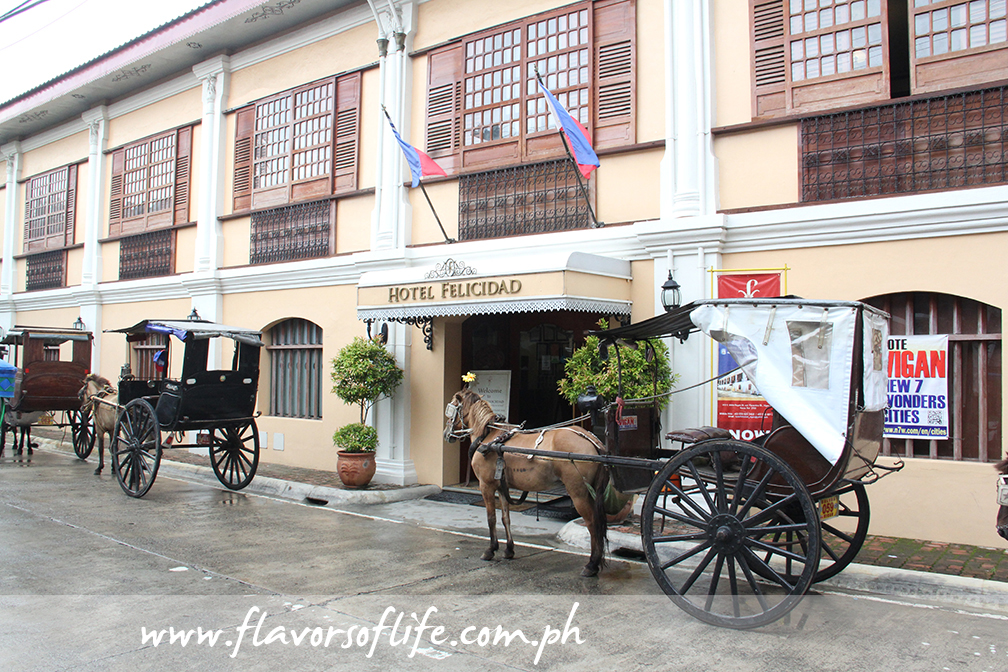
I HAVE always been fascinated with Vigan. I am awed by the fact that Vigan, acknowledged to be the third oldest Spanish settlement in the Philippines, has managed to preserve its turn-of-the-century colonial look and feel. The cobblestone pavements remain, and the old ancestral houses and buildings have stayed relatively untouched. Some of them have even been converted into museums, while others have been declared as heritage houses by the National Historical Institute. The core of the colonial architecture of the glorious era that it represents have been kept intact despite being converted into shophouses along the famous Calle Crisologo in the heart of Vigan.
Small wonder Vigan, the capital city of Ilocos Sur, is the only city in the Philippines inscribed in the list of UNESCO World Heritage Sites and Monuments and is now making a bid to make it to the New 7 Wonders-Cities of the World roster.
Two weeks ago, my husband Raff and I joined a rather big group of media people who embarked on a road trip to Vigan to discover – or rediscover – the delicious tastes and beautiful sights of the heritage city.
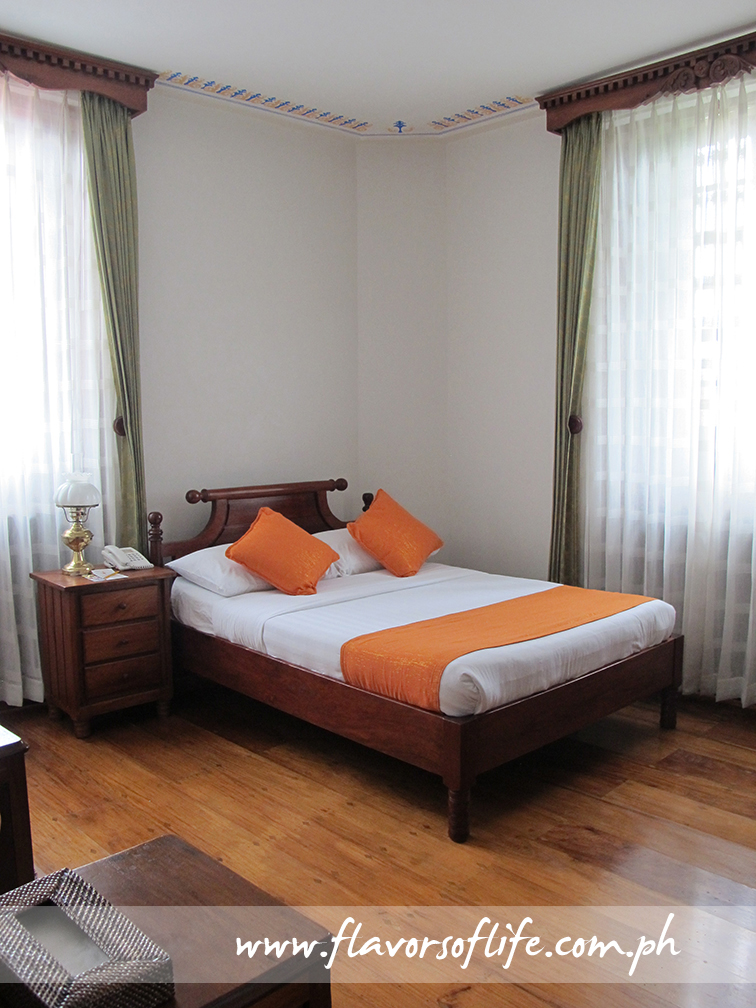
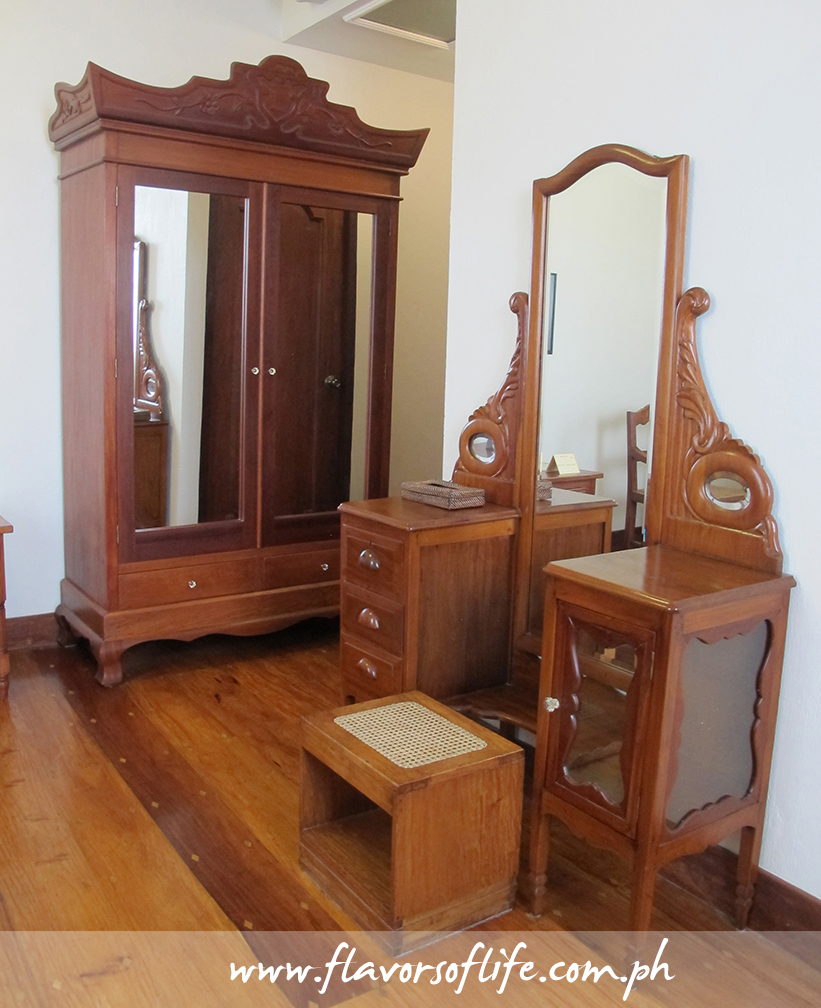
The road trip from Manila to Vigan took some eight hours, leaving our pick-up point in Quezon City at a little before 12 midnight to make it to Vigan in time for breakfast. We got to Hotel Felicidad, located at the corner of V. delos Reyes and Florentino Sts., which is just a stone’s throw away from the famous Calle Crisologo, at about 8:00 a.m., where a simple but awesome Ilocano breakfast buffet was waiting for us. We dug into the daing na bangus, Vigan longganisa, fried eggs, sliced tomatoes and rice, and washed down the tummy-filling breakfast with freshly brewed coffee, before proceeding to our rooms and taking a short nap. We stayed awake most of the night, since you really cannot sleep well in a seating position, and we all really needed a short but sweet shut-eye.
When we met up at the lobby a few hours later, we were all recharged. What a short nap can do for you!
CASA CARIDAD
It was time for lunch, and so we took a short trip to Casa Caridad, the residence of our host, Jose ‘Bonito’ Singson, who also happened to be the consultant of Hotel Felicidad. Casa Caridad, named after Singson’s mom, could be found right along V. delos Reyes St. and was just a short walking distance from Hotel Felicidad, our home for the next three days, but since it was raining hard as Typhoon Jose went beating hard in the North, the hotel shuttle took us there. In our succeeding stops at Casa Caridad, we would insist on talking a walk instead.

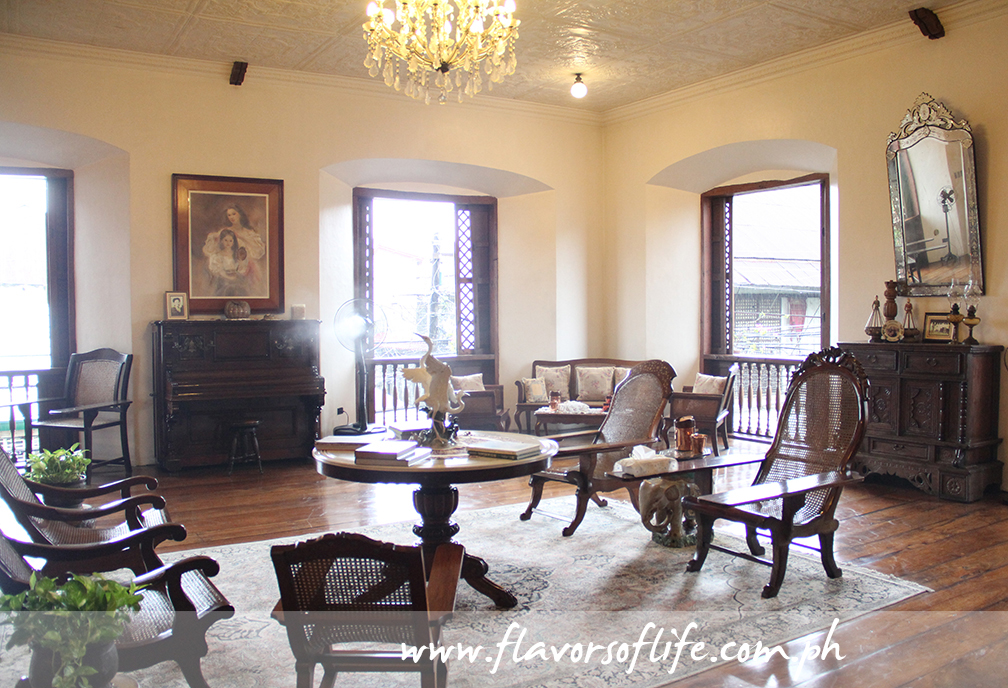


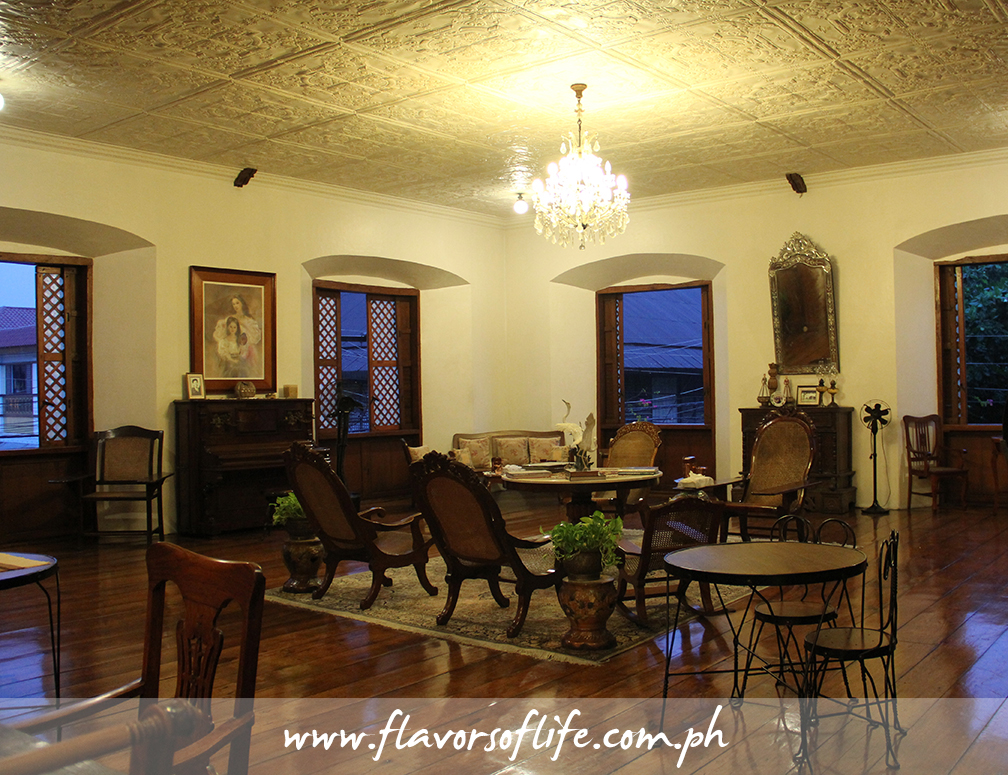
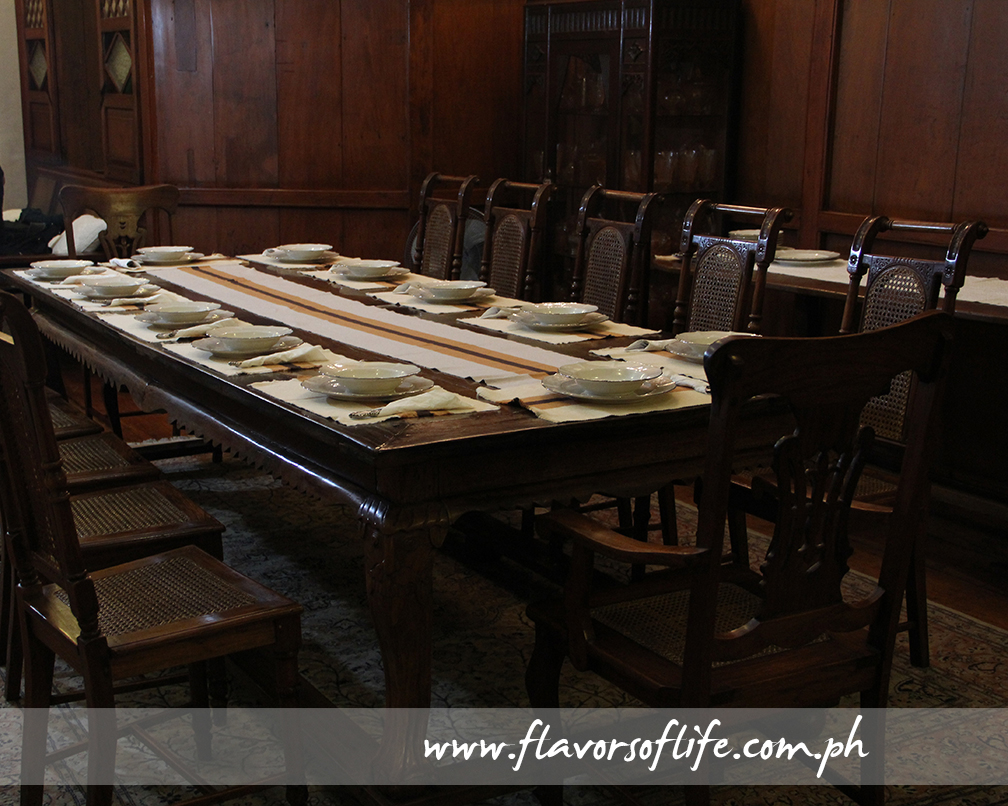
A typical ancestral house, Casa Caridad opened up to a courtyard, garage and storage area, and wide wooden staircase that led to the main house on the second floor. Our host met us downstairs and led us up to the main house, whose main hall, like other ancestral houses of its era, was a wide area with small receiving areas that stood next to each other. It led to the dining room, where a long wooden table with intricately carved wooden chairs was the centerpiece. Singson gave us a quick tour of the house, including an awesome kitchen with wood-burning stoves and a high ceiling.
We had a sumptuous lunch of Ar-arosep Salad (fresh seaweed with tomatoes), Poque-Poque (an eggplant dish with tomatoes, onion and egg), Igado (a stew made with pork innards) and Bagnet (Ilocos’ famous crispy, deep-fried pork belly, twice cooked to a crispy and golden perfection). I’m not a big eggplant lover, but Poque-Poque is one Ilocano dish that I really love. I could have just that and rice, and be happy with my meal.
After lunch and pleasant conversation, our host sent us off on a city tour.
ST. PAUL CATHEDRAL
We made our first stop at St. Paul Cathedral, which stood right in the heart of the city, fronting Plaza Salcedo and Plaza Burgos. Both the Vigan City Hall and the Ilocos Sur Provincial Capitol, as well as the Archbishop’s Palace and Museo Nueva Segovia, are just in the vicinity.


Also known as the Cathedral of Vigan, the church was built in 1641 and became a cathedral in 1758 when the seat of the Diocese of Nueva Segovia was transferred from Lal-lo, Cagayan, to Vigan, Ilocos Sur. The two side altars in the cathedral are dedicated to Apo Nazareno on the north side and Apo Birhen del Rosario on the south side. Juices of trees, molasses and egg whites were used to put the structure together, and the original materials, especially of the façade, still remain, although these have been paved with concrete so that the bricks are no longer exposed and erosion is therefore no longer a point of concern.
BALUARTE
From St. Paul Cathedral, we visited Baluarte, the home of our host’s brother, former Ilocos Sur Governor Luis ‘Chavit’ Singson, and is known as a private zoo and theme park that’s open to the public. Baluarte was a huge property, which a number of exotic animals now call home. It has, for its facade, huge dinosaur figures with the word BALUARTE spelled out. Deer and ostrichs freely graze in the vast and verdant fields, and there are donkeys, horses, tigers, birds and snakes, even crested serpent eagles, iguanas and Easter bearded dragons, to see while there.


Baluarte is named so because it is like a fort. The multi-level residential building where the former governor lives can be found towards the back of the property. It is circular in shape, and the only way to get from one place to another is through a private elevator, although there’s stairs as well.
PAGBURNAYAN
Next stop was Pagburnayan, a burnay-making factory owned by Fidel Go. The owner is also the master burnay artist, and in his hands, making the water containers out of clay seems so easy. Having mastered the art of making burnays or clay pots, Go obliged to our request for a burnay-making demo, where he shaped a big burnay out of Bantog clay from Barrio Bulala on a spinning pottery-making device.


Go began making burnays at age 22, taught the art of pottery by his father. He explained that getting the clay ready for burnay-making is a tedious four-hour kneading process by carabao before anything else. Contrary to popular belief that the thicker the clay pot is, the stronger and more sturdy it is, Go says that when it comes to burnay jars, thinner is actually more preferred because it lasts longer.
At Pagburnayan, Go and his staff does not have to make perfect burnay jars all the time. Sometimes they consciously make imperfect burnays because they will break them anyway. Yes, broken jars can still be sold, and they command a good price because salt makers and fishpond owners actually order broken burnays on a per kilogram basis because they use the broken jars to line the salt beds and the fishponds.
BACK TO CASA CARIDAD
After the burnay-making demo, the group headed back to Casa Caridad for dinner. After having bites of Okoy and Vigan Empanada, Singson’s trusted cook, whom he fondly called Manang Tita, allowed us into the kitchen, where we watched as she prepared two Ilocano heirloom dishes, Chicken Pipian and Vigan-style Arroz Caldo.


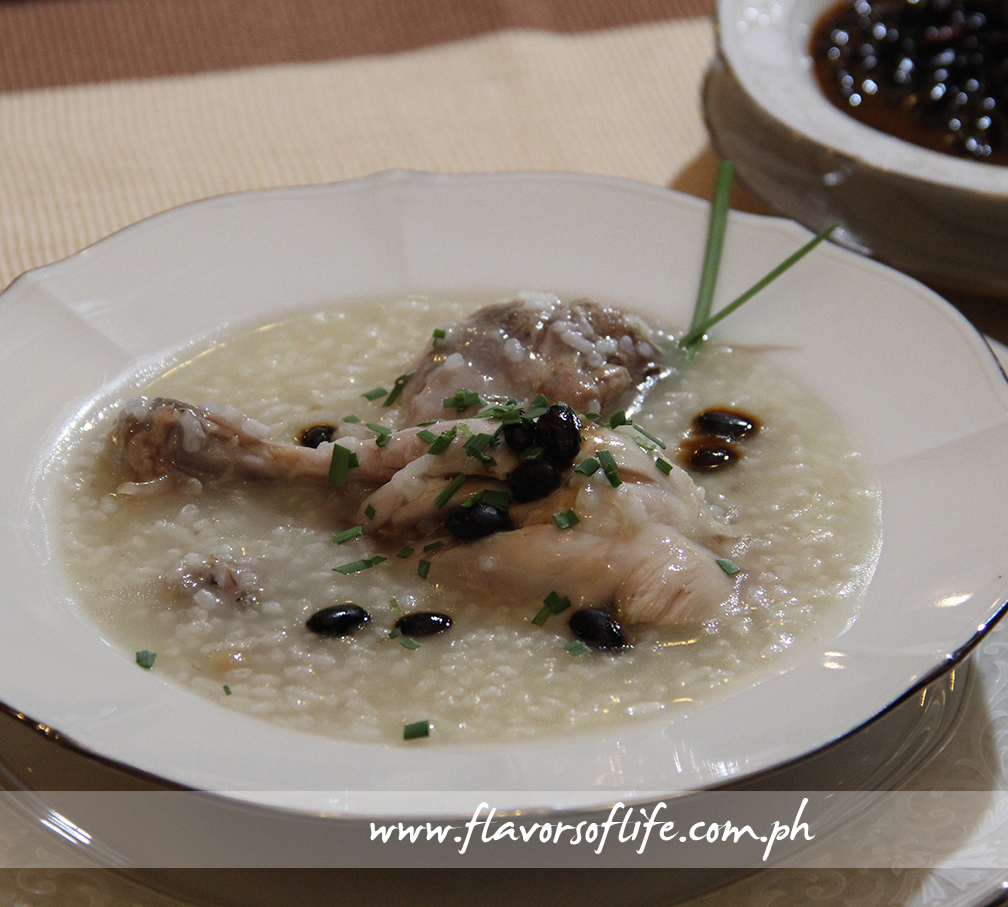
Chicken Pipian is a soup-y dish where the chicken is cooked in an achuete-colored sauce made with ground toasted rice, kamias and ginger, and what lends it extra flavor is the inclusion of a leafy ingredient called pasotes. Pasotes, known as epazote in Mexico, is used in a similar Mexican Pipian dish. Raff and I followed each step taken by Manang Tita and took digital shots for a feature in my Weekend Chef column in TV5’s online portal, www.interaksyon.com.
Vigan-style Arroz Caldo is quite like regular Arroz Caldo, but it is richer and thicker, and is served with a teaspoon of black beans on top.
Joining us for dinner was Vigan Mayor Eva Marie Medina, now on her third and final term as mayor of Vigan City. She shared with us Vigan’s efforts to make Filipinos aware of the heritage city’s bid to make it to the New 7 Wonders-Cities of the World list and encourage them to actually vote for Vigan. Voting, she said, could be done through international phone voting and through the Internet. She also talked about how Vigan is continuously developing new attractions to make the city more attractive to both foreign and local tourists.
After a good chat with the mayor, we called it a day. It was early to bed for a group that had very little sleep the night before but eager to wake up early the next day to discover – or rediscover – more tastes and sights that only Vigan could offer.
– To be continued –


