

TIME was when you could only take a tour of historical places to get a glimpse of important episodes in Philippine history. Now, you can also eat your way through Philippine history via Philippines on a Plate, a 10-course degustaćion offered by XO46 Heritage Bistro.

The brainchild of restaurant owners Andrew and Sandee Masigan, who spent the past year researching on food that played a big role in the nation’s history, Philippines on a Plate highlights the sophistication and complexity of Philippine cuisine from its roots 30,000 years ago to the present. It forms part of the couple’s continuing efforts to promote Philippine cuisine and make people realize that it has its place among the best in the world. It’s an advocacy that started five years ago, when the doors of the very first XO46 restaurant were opened to the dining public. Its name alone speaks tons about the couple’s advocacy—“the Philippines became liberated from American rule in 1946, and that’s when we became an extraordinary nation.”
Philippines on a Plate showcases the wide array of racial, situational and international influences that helped shape Philippine history, and begins the series of degustaćions at XO46 that will allow people to discover the nuances and uniqueness of Philippine cuisine. Research done prior to putting together the degustaćion menu unearthed recipes that have almost been forgotten. Now, with Philippines on a Plate, they have been revived and will no longer be forgotten.

FIRST COURSE: A ROUND-UP OF OUR FOOD HERITAGE. The Philippines on a Plate 10-course degustaćion begins with a quartet of appetizers served on a long rectangular plate. It is lined with Torta de Chorizo (which is of Spanish influence), Bihud Canapes (presenting caviar from Philippine mackerel served on a mini puff pastry tart), Pasag Yang Manok (an endemic chicken dish to Zamboanga and showing Indonesian influences), and Chinese Hakaw in Seafood Sauce (lobster meat dumpling served with a rich seafood sauce).
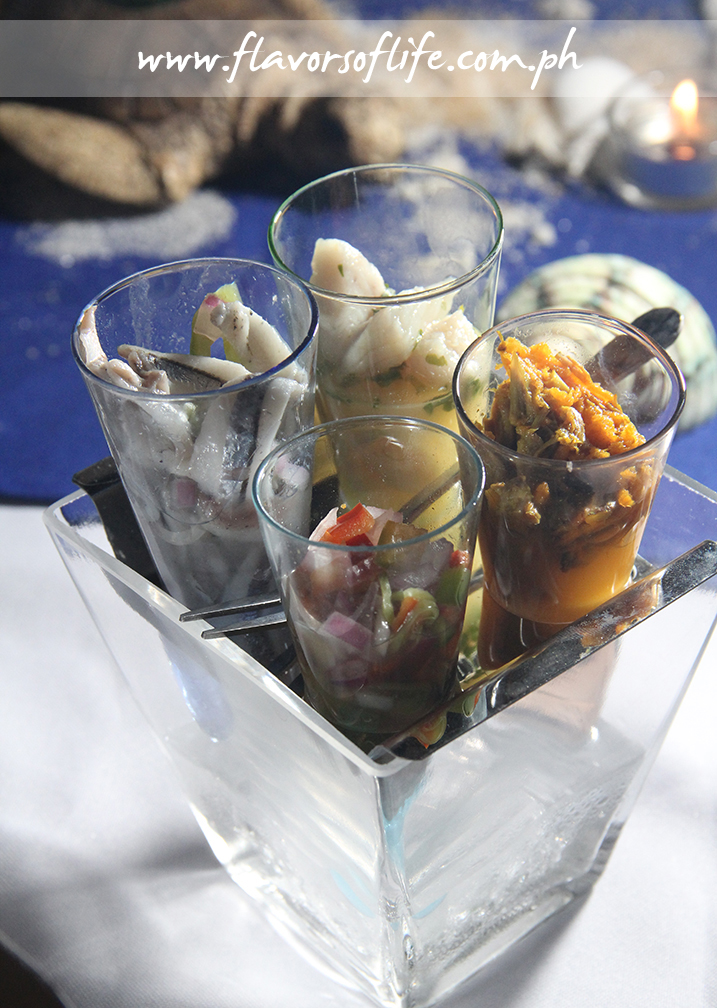
SECOND COURSE: KINILAW QUADRO. Another quartet of appetizers, this time in cone-shaped containers served in a square glass bowl with ice, this course goes back to the earliest years in Philippine history when the average Filipino’s diet was made up of whatever was found in the seas and everything that roamed the landscape and cooked them with acid. The Kinilaw Quadro consists of Kinilaw na Dilis (Pacific anchovy cooked in tuba or alcohol from coconut wine), Kinilaw na Tangigue (cubes of Philippine mackerel cooked in citrus juice and sea salt), Kinilaw na Kambing (fresh goat meat mixed with turmeric, sugar and palm vinegar), and Kinilaw na Tahong (mussel meat with vinegar and coconut milk).

THIRD COURSE: INIHAW NA KALABAW. Our forefathers had fish and crustaceans from the sea making up majority of their daily sustenance, but their protein was also supplied by deer, wild boar, wild cat, iguanas, locusts and carabao. They used open pit roasting and coconut husk was used as a burning agent. Carabao meat can be tough and chewy, but if you hit the right cut, according to Andrew, it can be very good and succulent. This Inihaw na Kalabaw, or Flame-charred Carabao, is served with a Forest Salad, called so because it is made up of ingredients that you find in Philippine forests. It’s mango, coconut and green beans mixed together, with their own natural juices providing the dressing.
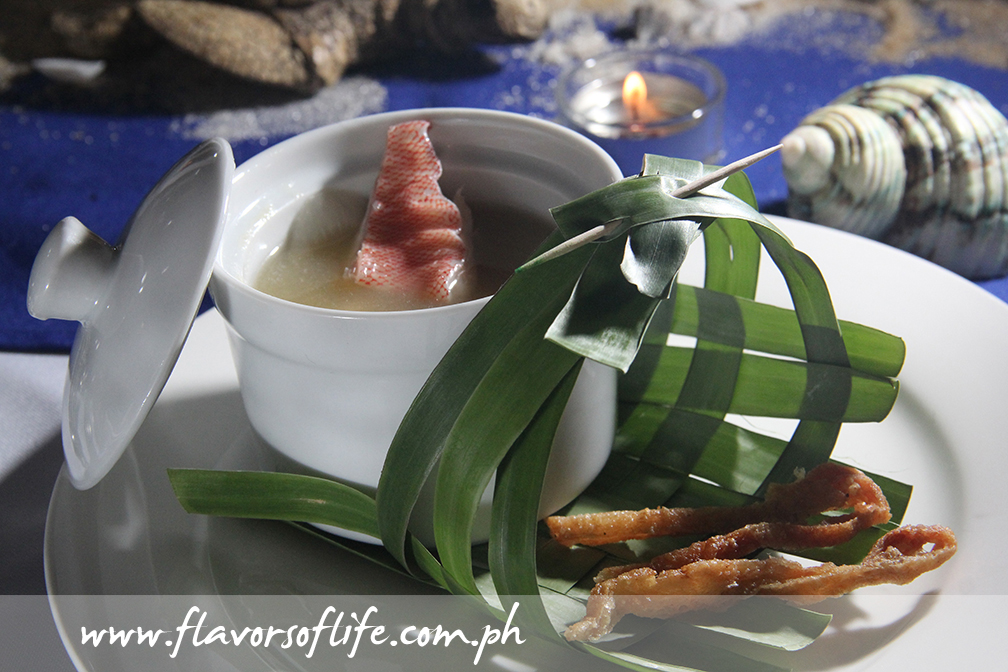
FOURTH COURSE: SINIGANG NA LAPU-LAPU SA MANGGA. Acid cooking endured 1,000 years of Philippines history, and this means sinigang, paksiw and kinilaw. This Sour Soup with Grouper, better known as Sinigang na Lapu-Lapu sa Mangga, has green mango as souring agent, although Filipinos also use guava, tamarind, siniguelas, dayap, santol and duhat as souring agents. This dish in the Philippines on a Plate menu is slow-cooked to extract the natural sourness of green mango, served with fish skin chicharon for crunch, and stylized to look as good as it tastes.

FIFTH COURSE: PATO TIM. Talk about duck, and the Chinese influence on Filipino cuisine will immediately come to the fore. This Inadobong Pato Tim, or Soy Duck with Mushroom Vermicelli, signifies ties with the Chinese. China and the Philippines have had trade relations since 3200 B.C., and it was Chinese traders who taught Filipinos how to raise ducks and cook them. Sandee’s research reveals that there has been a state visit by a Filipino chieftain to China as early as 1406. This duck dish is served with vermicelli flavored with sesame oil, salt and shiitake mushrooms.

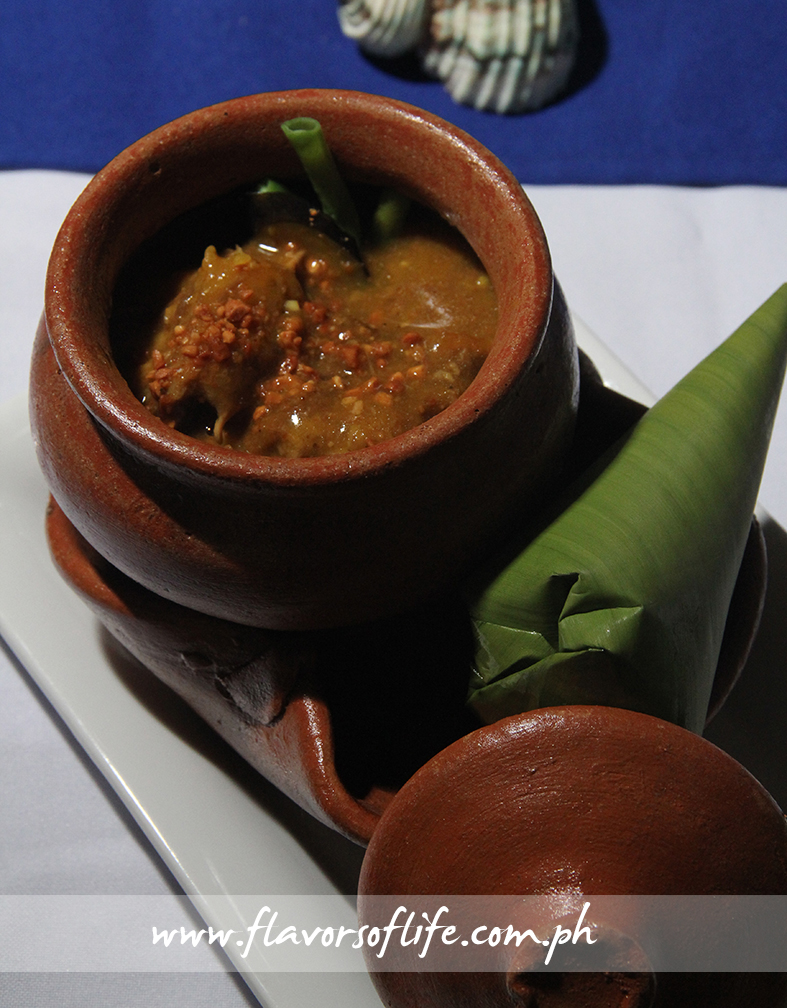
SIXTH COURSE: BINAGOONGANG BABOY-DAMO AT KARE-KARE. It’s simply Wild Boar with Fermented Shrimps and Vegetables in Peanut Sauce, but the dish is actually a bit complex. The Kare-Kare, served in a small clay pot, is prepared the Malaysian rendang way; while the rice is wrapped and cooked in a banana leaf cone with bagoong, whose Malaysian version is called belachan, strips of wild boar and fish sauce using Malaysian ketupat cooking technique.
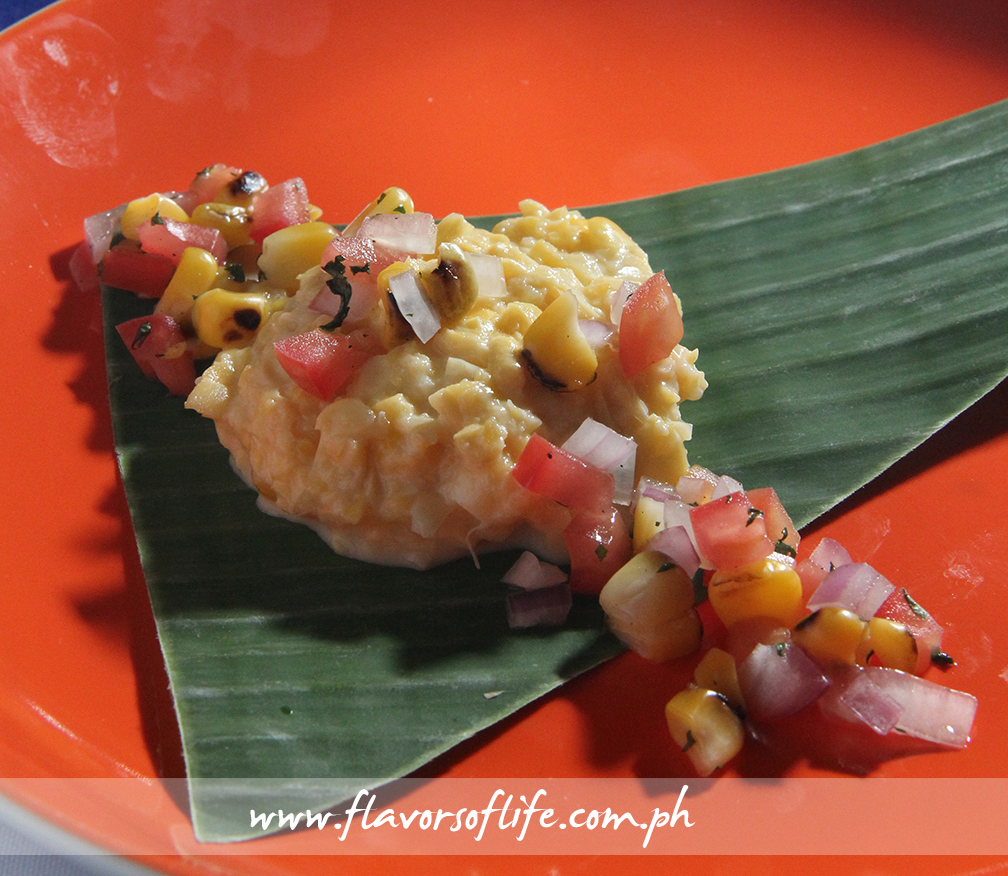
SEVENTH COURSE: ENSALADA DE MAIS. Now, this one, the Corn Mill Salad, is completely Mexican in nature. All the ingredients used in this dish—corn, tomatoes and onion—were originally grown in the Americas and made their way to other parts of the world, including the Philippines, through the Galleon Trade. So, what’s the Mexican connection to the Philippines in history?
“From 1521 to 1815, there has been only one true Spaniard who ruled the Philippines as governor. The rest were Mexicans. The journey to the Philippines took two years, and the term of a governor was only three years, so it was more practical for Spain to rule the Philippines by Nueva España, which was Mexico,” explains Andrew.
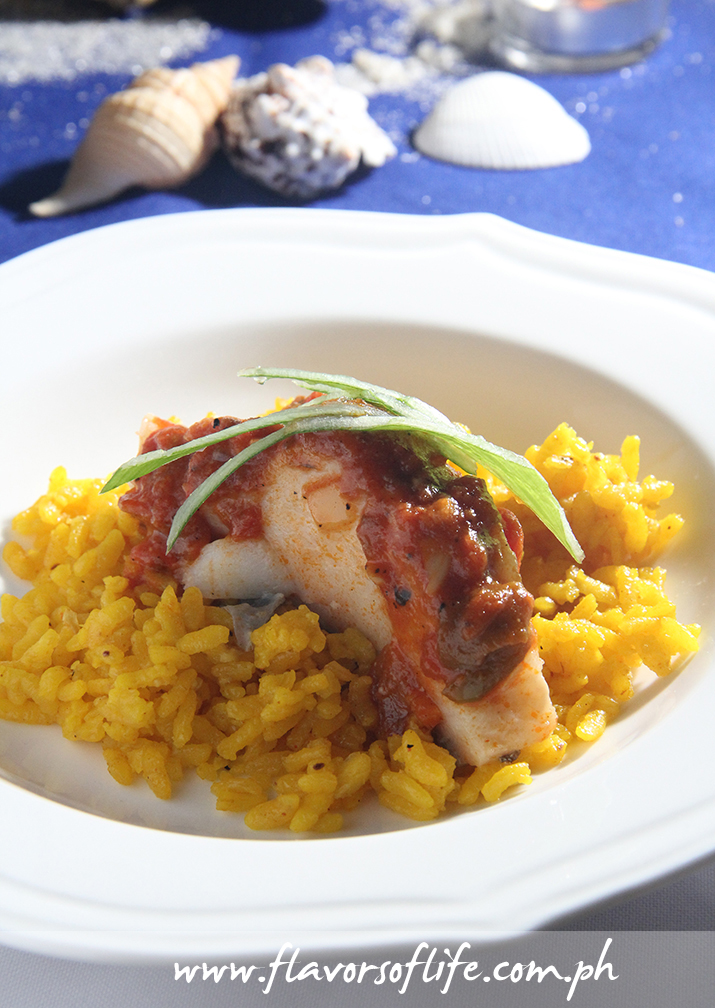
EIGHTH COURSE: BACALAO ESTOFADO Y ARROZ SAFFRON. This Salted White Cod and Saffron Rice takes diners back to the Spanish era. According to Andrew, among the many positive and negative things that Spain’s influence had on the Philippines, it gave us a sense of nationhood, rule of law (with the Civil Law based on basic Spanish law), discipline of science-based medicine, and food. Almost every Filipino dish starts with sautéeing garlic, onion and tomatoes, then comes the protein, which is a very Spanish thing. This salted white cod fish, which is definitely associated with Spanish cuisine, is served with saffron rice, better known as paella.
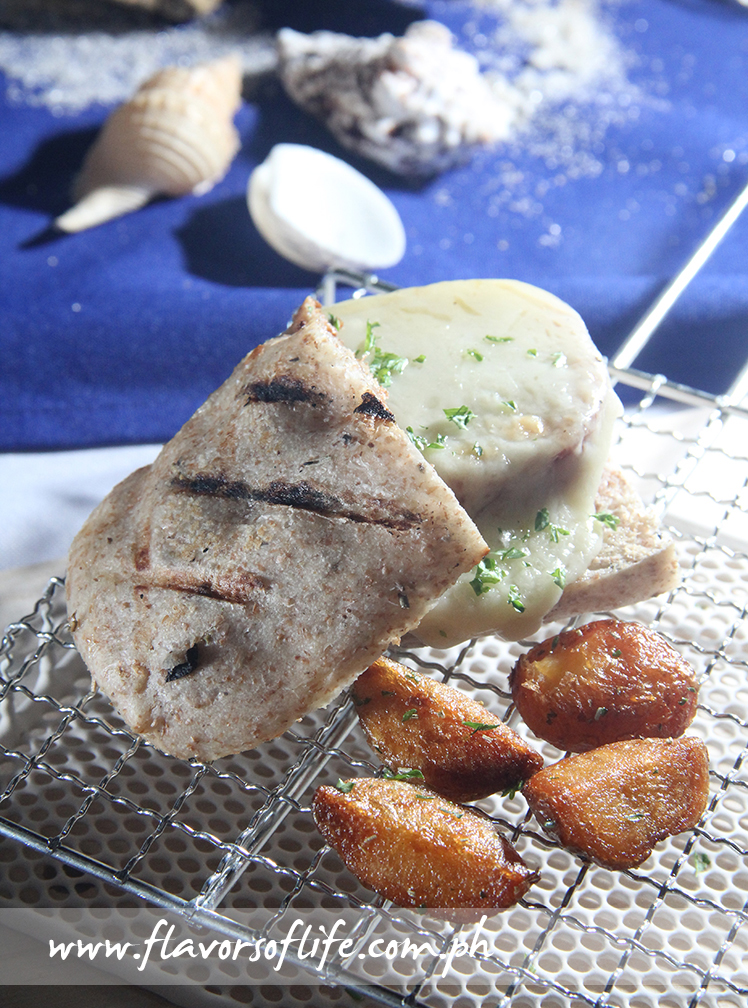
NINTH COURSE: GRILLED CHEESE WITH SPAM. America bought the Philippines from Spain for $50 million in a Buy One, Take Two deal that included Puerto Rico and Cuba. During its rule, which lasted until 1946, America gave the Philippines the concept of having three branches of government, the public school system which meant free education for all, and a love for canned food. Spam is one of them. So this course, which has a generous slice of Spam meat with melted grilled cheese covering it, served in a ciabatta sandwich with fried marble potatoes, is typical of what Filipinos loved to eat during the American period.
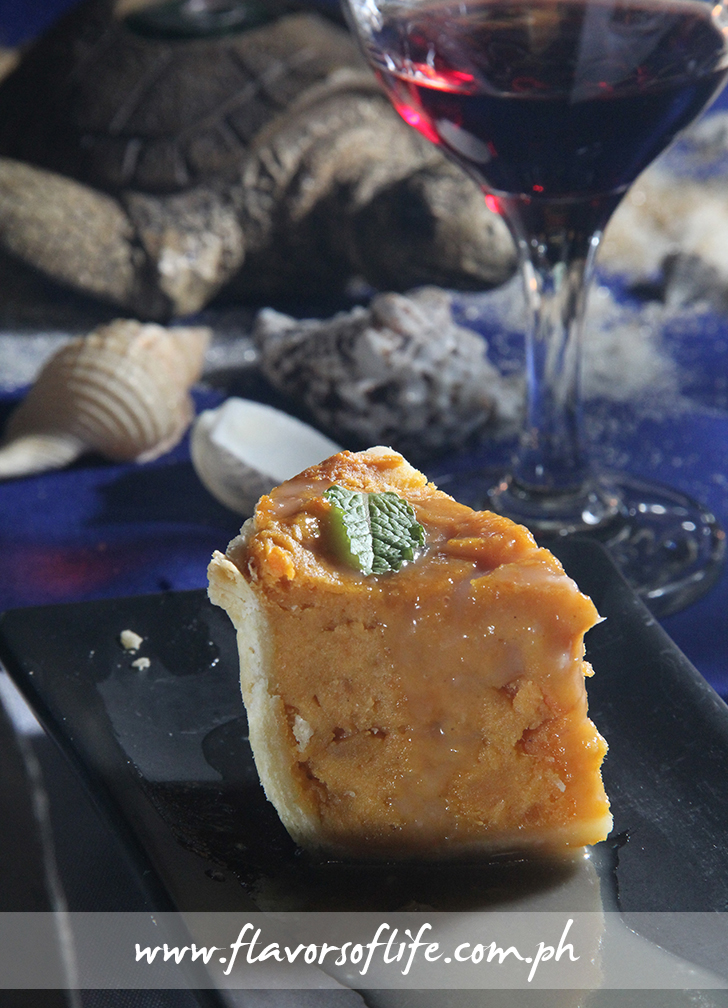
TENTH COURSE: SWEET POTATO PIE WITH COCONUT SAUCE. Through the years and despite all the foreign influences, Philippine cuisine has remained basically unchanged and resilient. On the contrary, dishes of foreign influences were Filipinized, and indigenous ingredients, such as camote or sweet potato, were used in recipes. The dessert in XO46’s Philippines on a Plate menu exemplifies this, as the slice of Sweet Potato Pie is bathed with coconut sauce and served with a scoop of mantecado ice cream. A fitting end to a hearty meal!

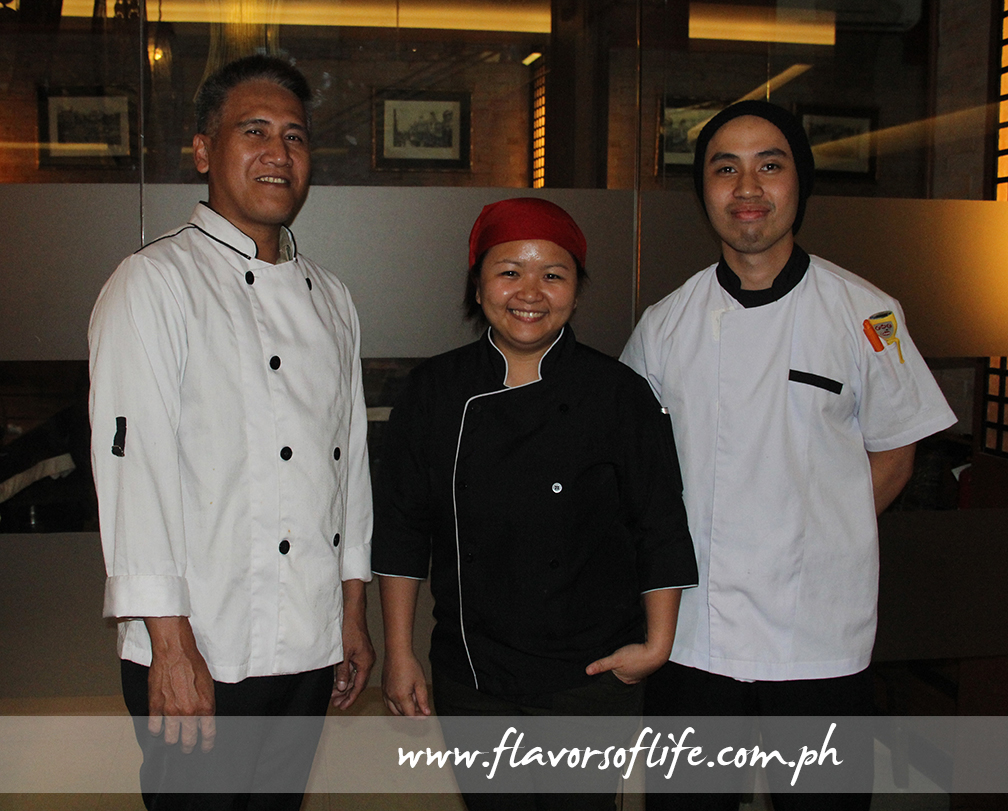
Diners can now enjoy the 10-course Philippines on a Plate degustaćion dinner at XO46 Heritage Bistro in Valero St., Salcedo Village, Makati City; Century Mall, also in Makati; and the recently opened Estancia Mall in Capitol Commons, Pasig City. There’s no minimum number of diners required, but prior reservations must be made. Prices for the degustaćion menu is Php3,200 for the 10-course meal per person and Php4,700 with wine pairings. And while Andrew and Sandee Masigan annotated each course as it was served during the launch dinner held at XO46 Heritage Bistro in Capitol Commons last March 10, 2015, for the regular service, annotation cards will be provided to diners to guide them along and help them better appreciate each course with its role in Philippine history.
“Through time, Filipino cuisine has kept its integrity and dynamism. It has been enriched based on everything we, as a people, have gone through. It is a reflection of who we are as a people. Now it’s time the world gets to be influenced by Filipino cuisine,” says Andrew.
He adds: “Each dish will tell you the story of our forefathers. The Philippines on a Plate degustaćion is a culinary journey that will take you back in time, an epoch in our history stretching back to the tribal times, all the way to the Spanish and American colonial periods. History never tasted better!”
(XO46 Heritage Bistro branches are located at Valero St., Salcedo Village, Makati City; with telephone numbers 553-6632 and 553-6635; Century City Mall, Makati City; with telephone number 556-8143; and Estancia Mall, Capitol Commons, Pasig City; with telephone number 532-1652.)


