ICE cream! It’s a comfort food that nobody gets to outgrow. Children love it, adults celebrate special occasions with it. Small wonder so many brands of ice cream, both local and foreign, have emerged in the market, offering not just the classic flavors of ice cream but also innovative, extremely creative flavors. Some of them incorporate cakes, cookies and desserts into the ice cream. Others make use of fresh fruits, nuts and other ingredients. Yet others have tried experimenting with herbs, spices and vegetables. Lighter versions, called gelatos, are also now available.
Ice cream is so popular and yummy that we simply cannot have enough of it.
Now comes another one, Baskin-Robbins, one of the world’s top ice cream brands, which recently opened its first Philippine store at the Upper Ground Floor of Central Square in Bonifacio Global City to serve Filipinos its well-loved ice cream flavors.
Double scoop of Maui Brownie Madness and Cotton Candy on cone
Gold Medal Ribbon Ice Cream
Mint Chocolate Chip Ice Cream and Milk Shake
Jamoca Almond Fudge in Sundae Cup
Very Berry Strawberry in Sundae Cup
Sundaes!
Caramelectric Cake
Ice Cream Cake
Kiss Cake
Baskin-Robbins offers 31 famous ice cream flavors, a wide range of custom ice cream cakes, frozen treats, shakes and other beverages, and ice cream sundaes. Ice cream lovers can simply have scoops served up on cones or in sundae cups, or order sundaes.
Expected to be certified hits are Maui Brownie Madness, Cotton Candy Ice Cream, Gold Medal Ribbon Ice Cream, Mint Chocolate Chip Ice Cream, Jamoca Almond Fudge Ice Cream, and Very Berry Strawberry, among others.
“We are privileged and honored to bring Baskin-Robbins to the Philippines and to partner with IceDream Inc. It took us many years to look for a partner who has the capability, vision, passion and drive and who strongly believes in the brand, and we saw that in this company,” says John Varghese, vice president for Dunkin’ Brands.
Varghese and other Baskin-Robbins international executives Marc DaSilva and Vico Lamar planed in for the launch to support its exclusive licensee in the Philippines, IceDream Inc. and to share the good news that the world-famous ice cream brand is set to open more shops across the Philippines in the months to come. IceDream Inc. is headed by Michael Dargani and Nameeta Dargani as president and vice president, respectively.
(Baskin-Robbins at Bonifacio Global City is open Mondays to Thursdays from 11:00 a.m. to 10:00 p.m. and Fridays to Sundays from 11:00 a.m. to 11:00 p.m.)
Beautiful Apo Island is a marine sanctuary and popular dive and snorkeling destination
DESPITE its scholarly vibe and university feel due to the strong presence of Silliman University, Dumaguete City in Negros Oriental also has a bold and adventurous spirit to it. This is owing to the fact that Dumaguete is surrounded by mountains and islands that promise adventures beyond the ordinary.
For mountain climbers and hikers who find triumph in conquering vertical limits, Mount Kanlaon, the Philippines’ largest active volcano and the highest mountain in the Visayas region, is within easy reach. Then there is a lesser known mountain, called Mount Talinis, that can be found some 20 kilometers from the city and offers a spectacular view of the southeastern peninsula of Negros Island and the volcano’s own picture-perfect forest scenery and volcanic lakes.
More well-known, however, are the dive spots, marine sanctuaries and dolphin and whale watching activities that are just waiting to be discovered. First on the list is Apo Island, one of the world’s best-known community-organized marine sanctuaries, which is just 25 kilometers south of Dumaguete City.
From where we were based, Sta. Monica Beach Club, during our recent visit to Dumaguete City, our media group — Tribune’s Earl Bracamonte, Manila Bulletin’s Ronald Jayme, Manila Standard’s Maan Pamaran, Philippine Star’s Lester Hallig, Manila Times’ Sheila Mañalac, View’s Glaiza Lee, my husband Raff and I — travelled by land to Malatapay, Dauin, Negros Oriental, with local tour guide Angelo Villanueva, then took a 30-minute motorized boat ride to Apo Island, which got its name from the Filipino word which means “grandchild.”
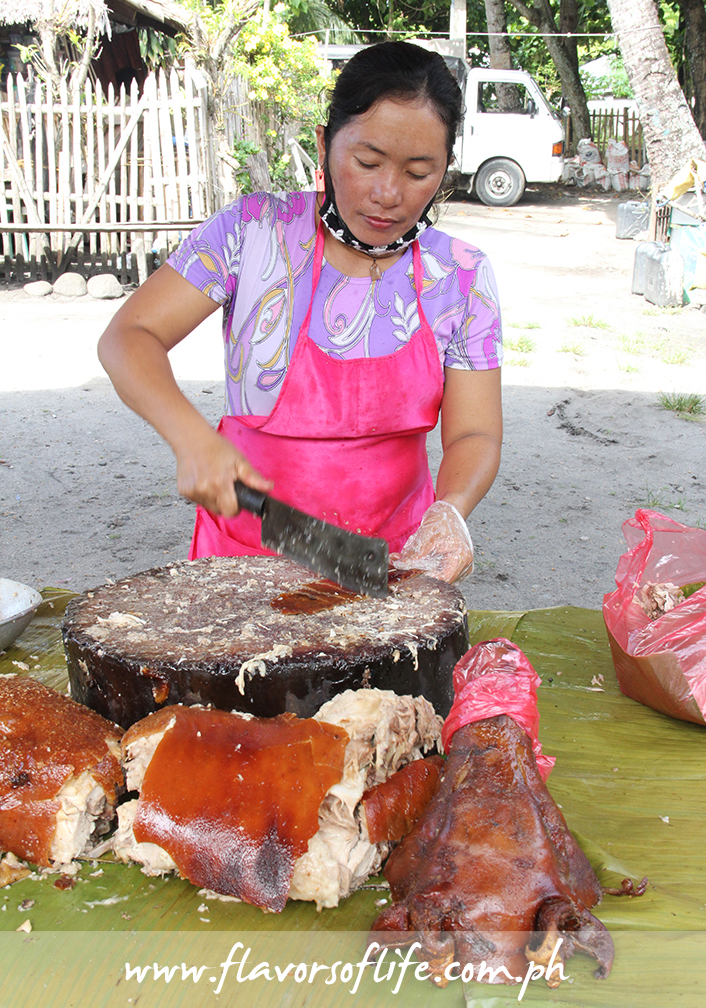
A vendor at Malatapay Market selling Lechon…
Lechon sold like hotcake at Malatapay Market
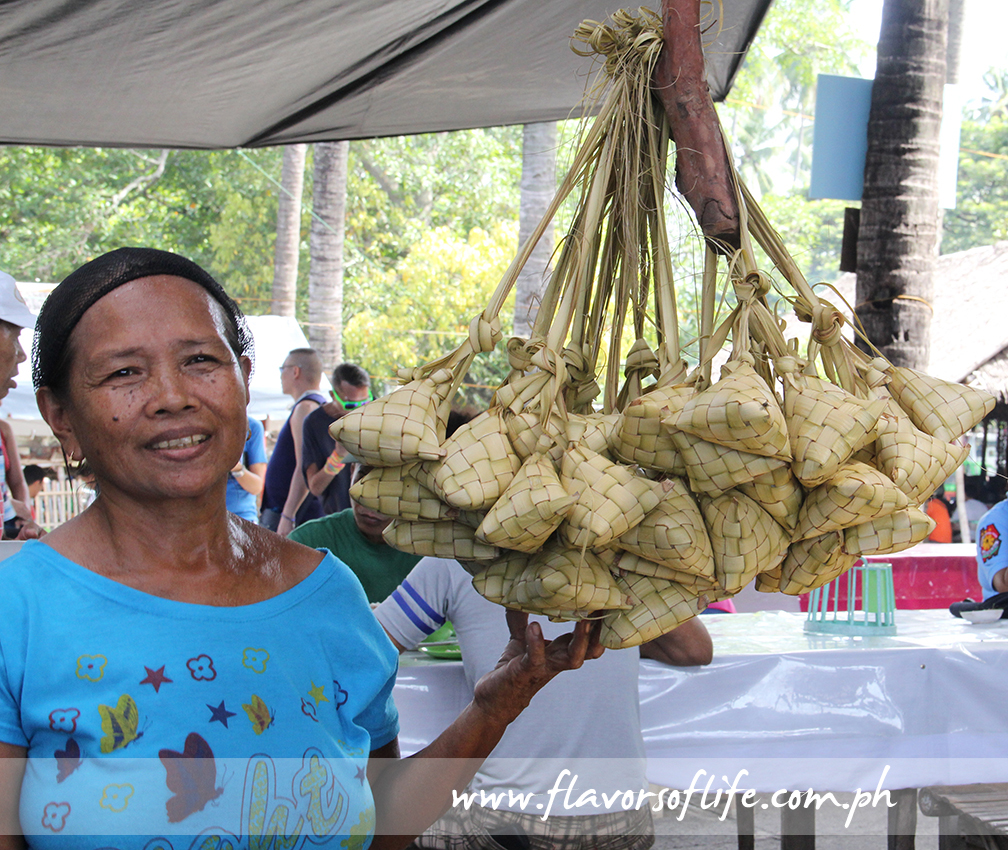
Puso rice for sale!
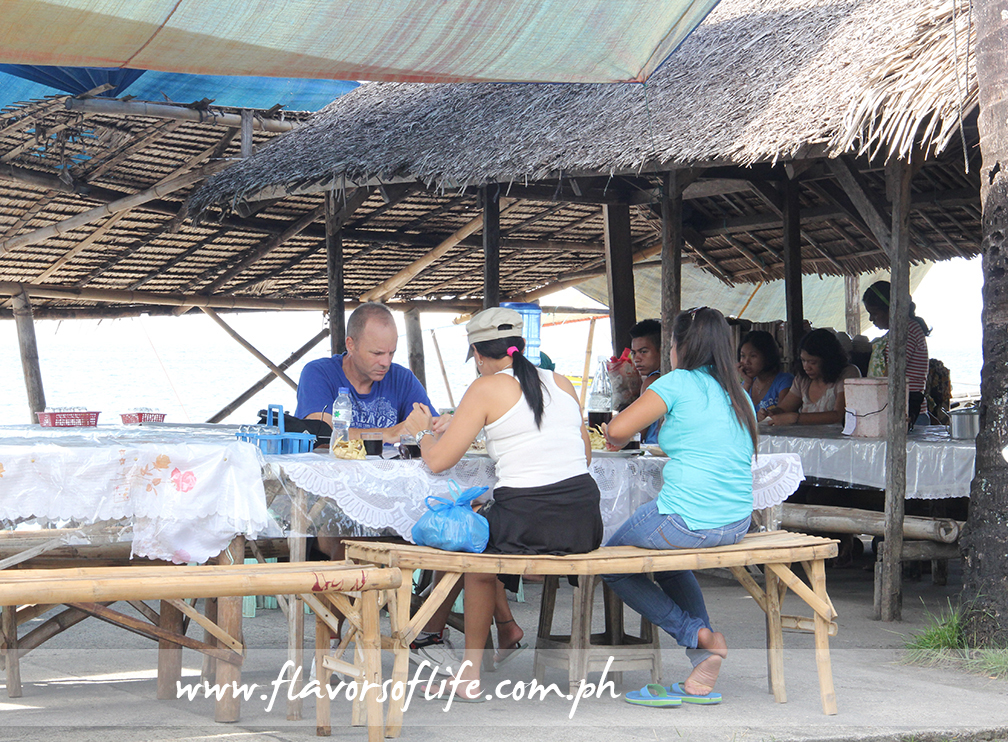
Dining area at Malatapay Market
Sinakol or corn rice
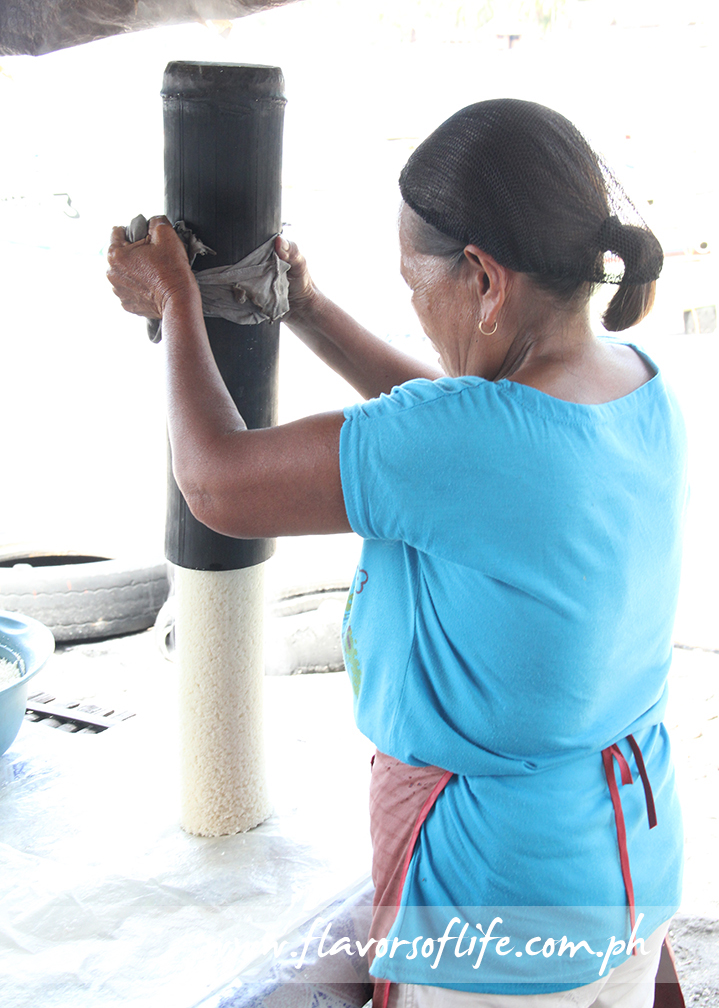
Making sinakol starts by putting ground corn mixture into a huge bamboo tube
The corn rice is allowed to cook in a wood-fired contraption until done
The corn rice is then carefully tapped out and sliced into segments with a string
The jump-off point to Apo Island in the municipality of Dauin is the Malatapay Market. It’s a local market where vendors of different types of merchandise, including cattle, turn out on certain days of the week to sell their ware. We were there on a Wednesday, market day, and the market was very much alive and vibrant at that time, with stalls lining the sidewalk selling everything from knives to clothes to kakanin.
While waiting for the boat to be ready to transport us to Apo Island, we ‘explored’ the market. Angelo bought a kilogram of Lechon, whose golden red, cracked skin and juicy lean meat beckoned to passers-by. Around the two Lechon vendors were al fresco dining areas, where one can just buy lechon and rice and sit down to have a real good meal on the spot. There are vendors selling Pusô, which is steamed rice cooked in an almost heart-shaped pouch made of buli (buri leaves). It is native to Cebu, a province which stands in close proximity to Negros Island. There is also Sinakol, which is ground corn steamed in huge bamboo tubes and then cut into segments and is eaten like rice. We even got the chance to watch the local ladies prepare Sinakol before it was time to board the motorized boat that would take us to Apo Island.
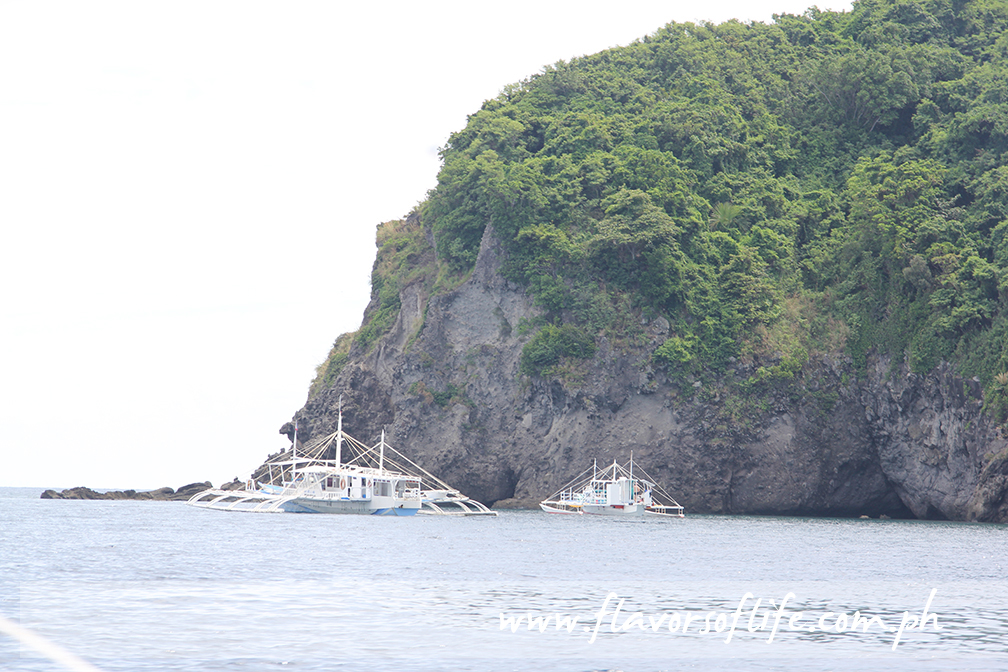
Apo Island from a distance
Nearer now…
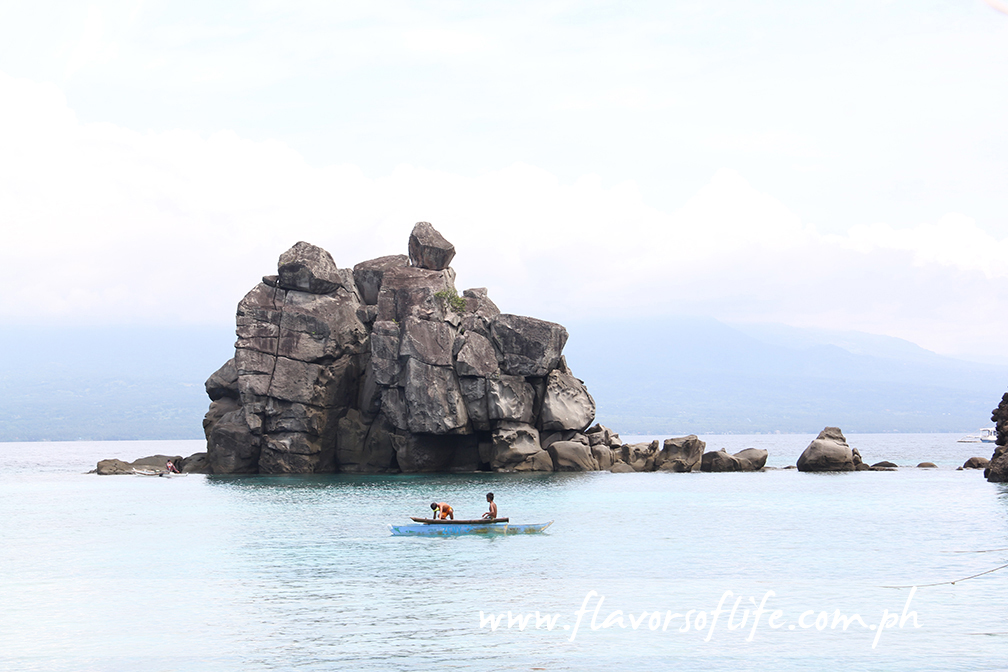
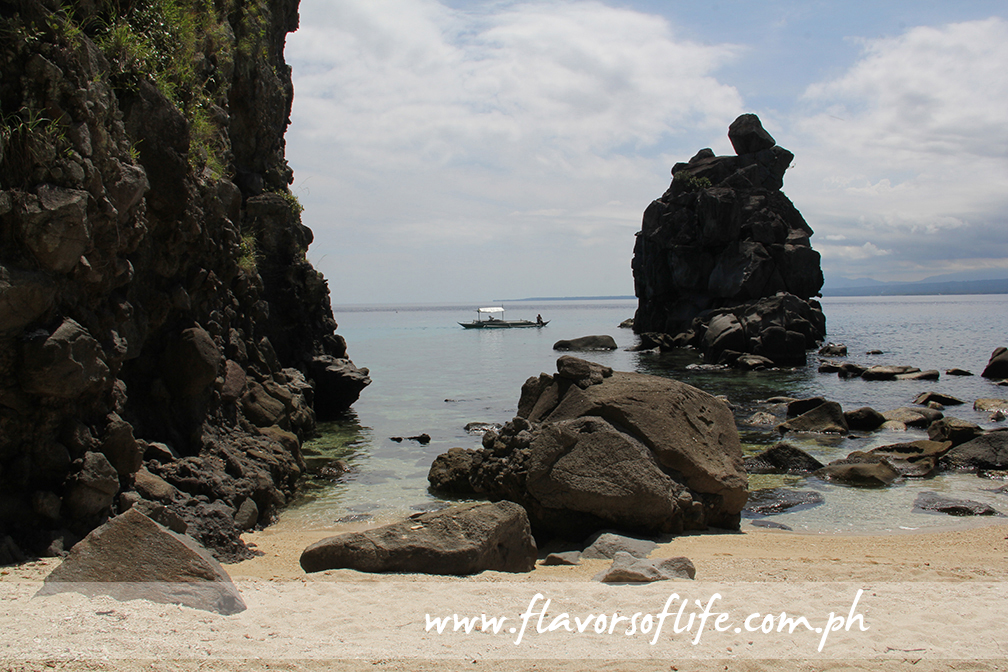
Breath-taking rock formations near the boat landing area of Apo Island
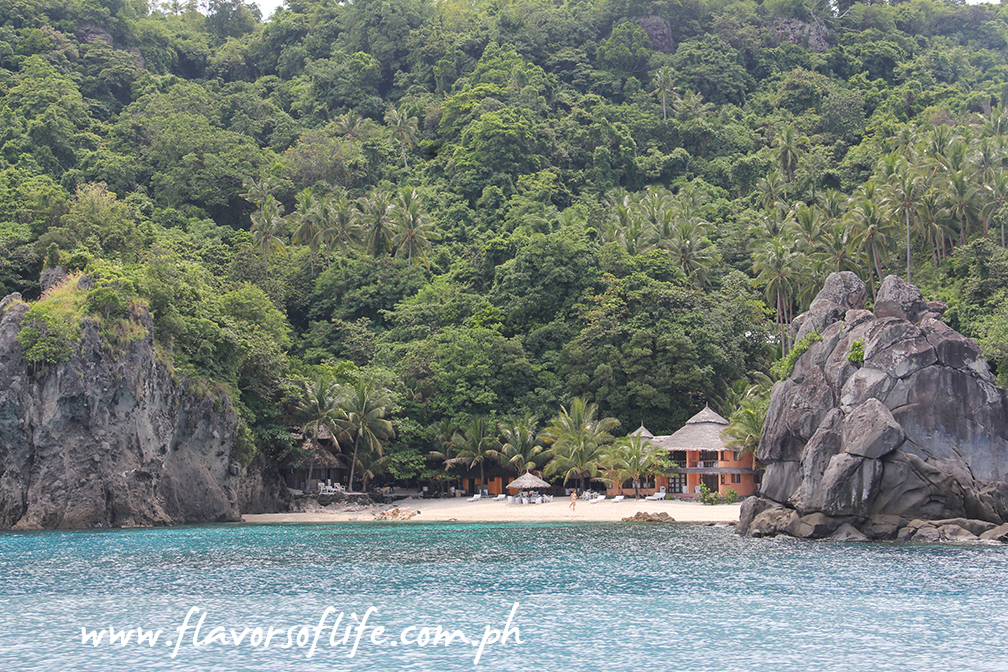
Entrance to the private resort area on Apo Island
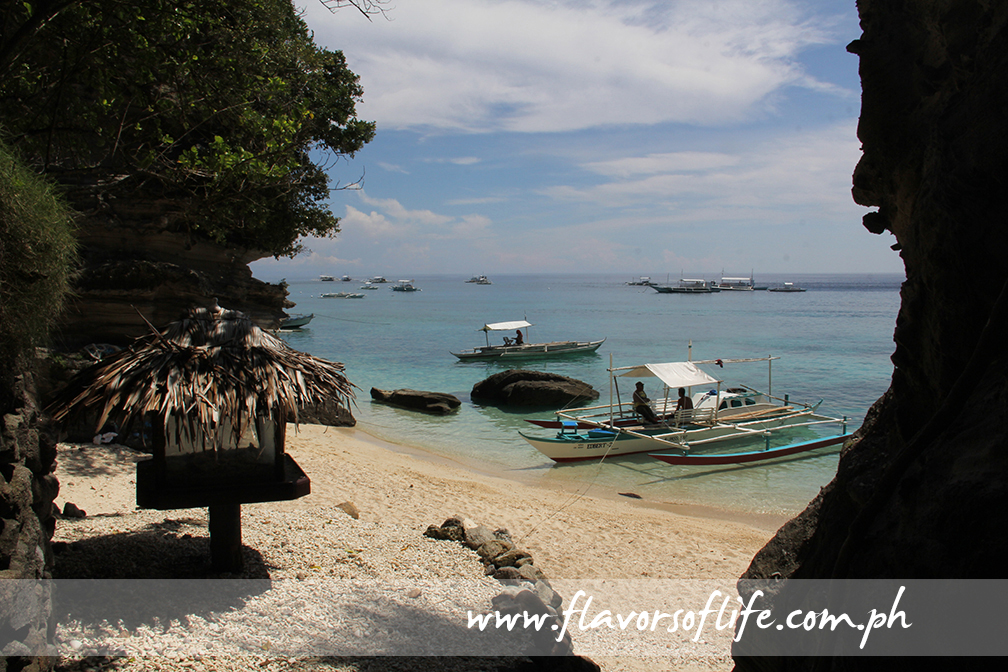
Beachfront of the private resort area
A private resort on the island is located in a cove
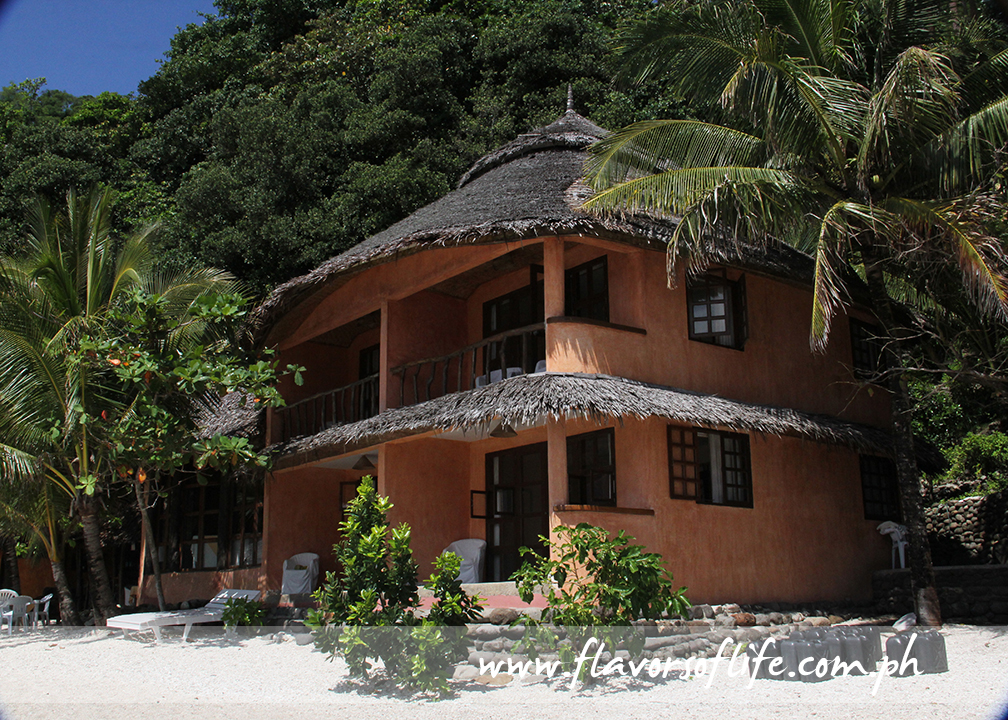
Rooms are available for guests who want to stay overnight
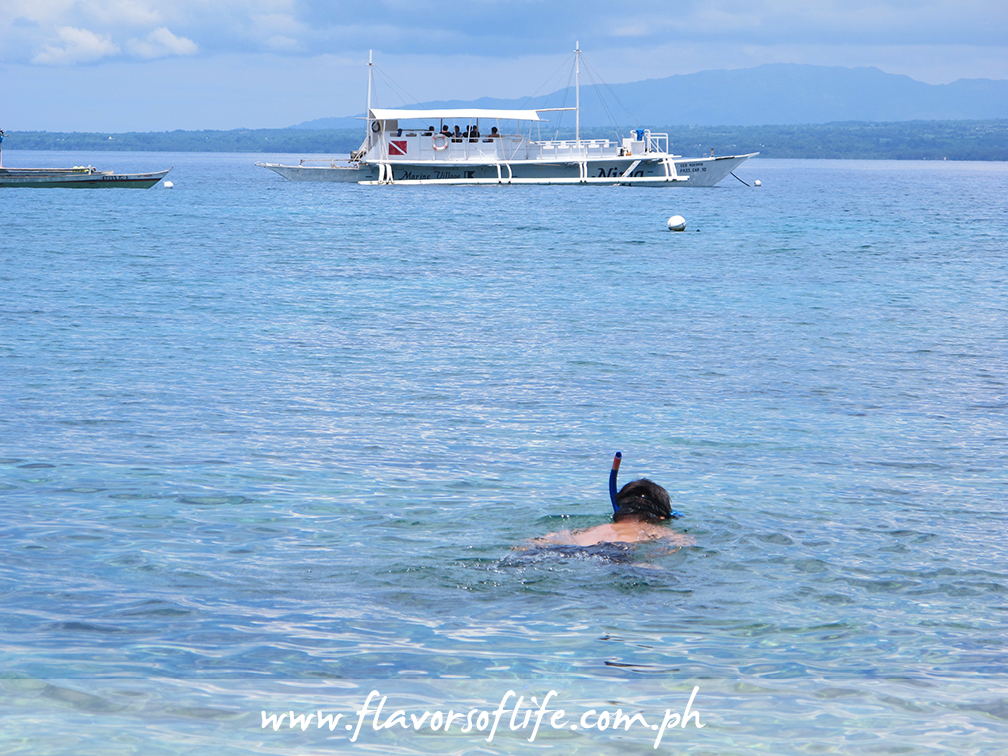
Snorkeling fun!
Breath-taking view of the sea from Apo Island
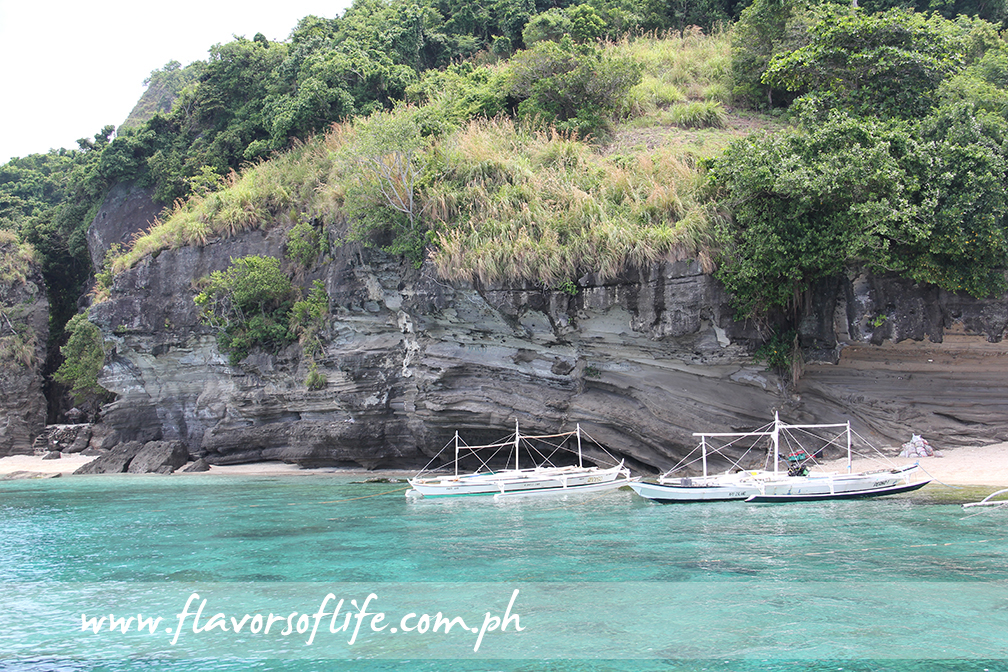
The boat ride gave us a chance to marvel at the breath-taking crystal clear, turquoise blue-green waters that have made Apo Island one of the world’s best-known dive sites and snorkeling destinations. The marine habitat around the island is a marine reserve which is protected by the National Integrated Protected Area Act (NIPA) and is under the jurisdiction of the Protected Area Management Board (PAMB). It is home to more than 650 documented species of fish and 400 species of corals. Its activities are well documented by the global science community, thanks to Dr. Angel Alcala, a marine scientist from the Silliman University Marine Laboratory, who started it all by introducing to the local fisherfolk the importance of creating a marine sanctuary in the area. After initial hesitation on the part of the locals, Dr. Alcala scored a breakthrough in 1982 when the local fishermen, assisted by the Silliman University Marine Laboratory staff, finally selected an area along 450 meters of shoreline and extending 500 meters from the shore as the site of the marine sanctuary.
Results of the creation of the marine sanctuary in the area became more evident as the boat neared the island. The water is so clear you can see the rocks underneath, and if you go snorkeling, you don’t have to go far from the shore to experience a close encounter with sea turtles. The turtles are so used to human encounters that they have become so friendly. With an underwater camera, which a lot of touch-and-shoot digital cameras now are, you can even have a selfie taken with the turtles.
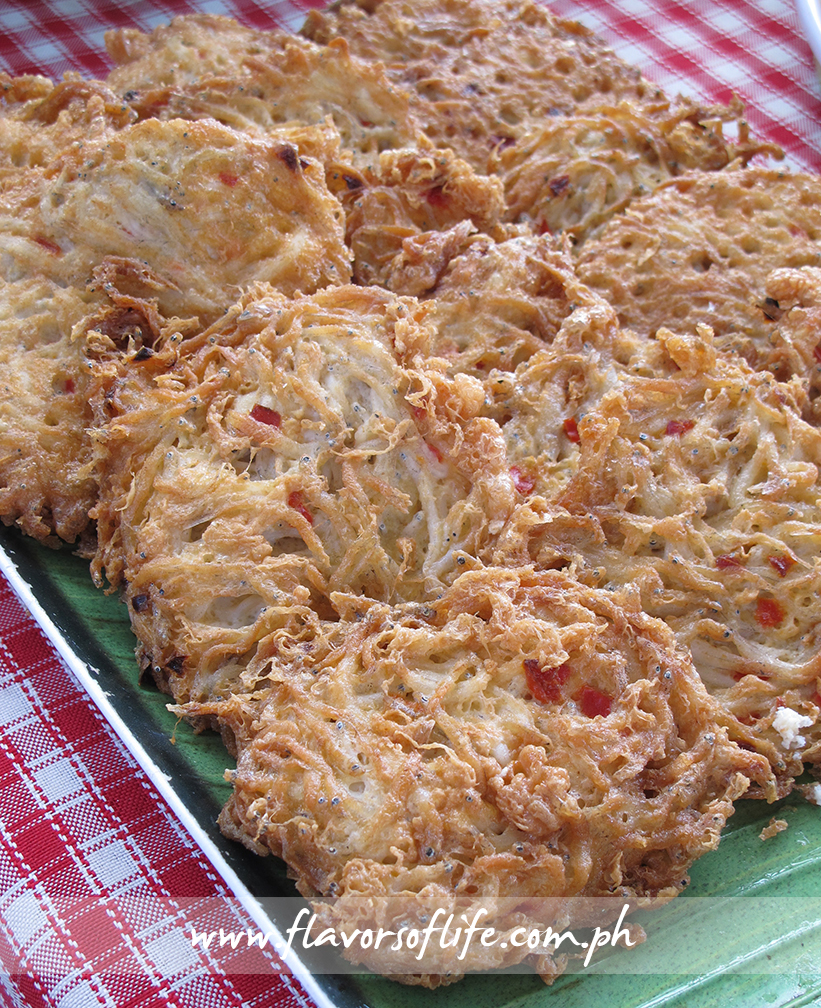
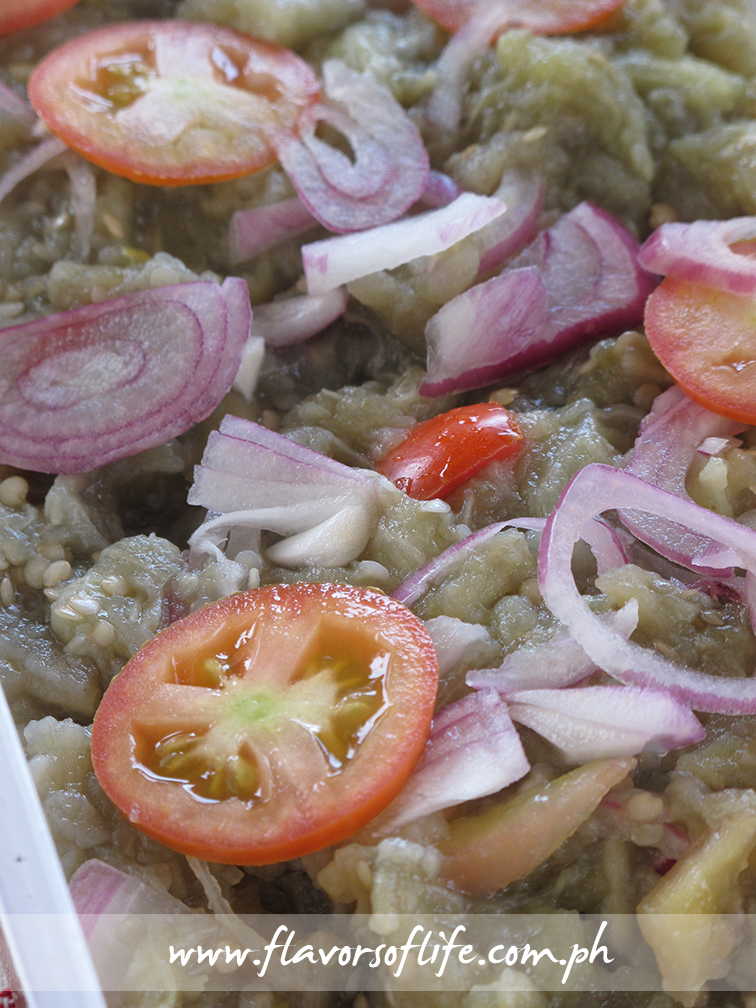
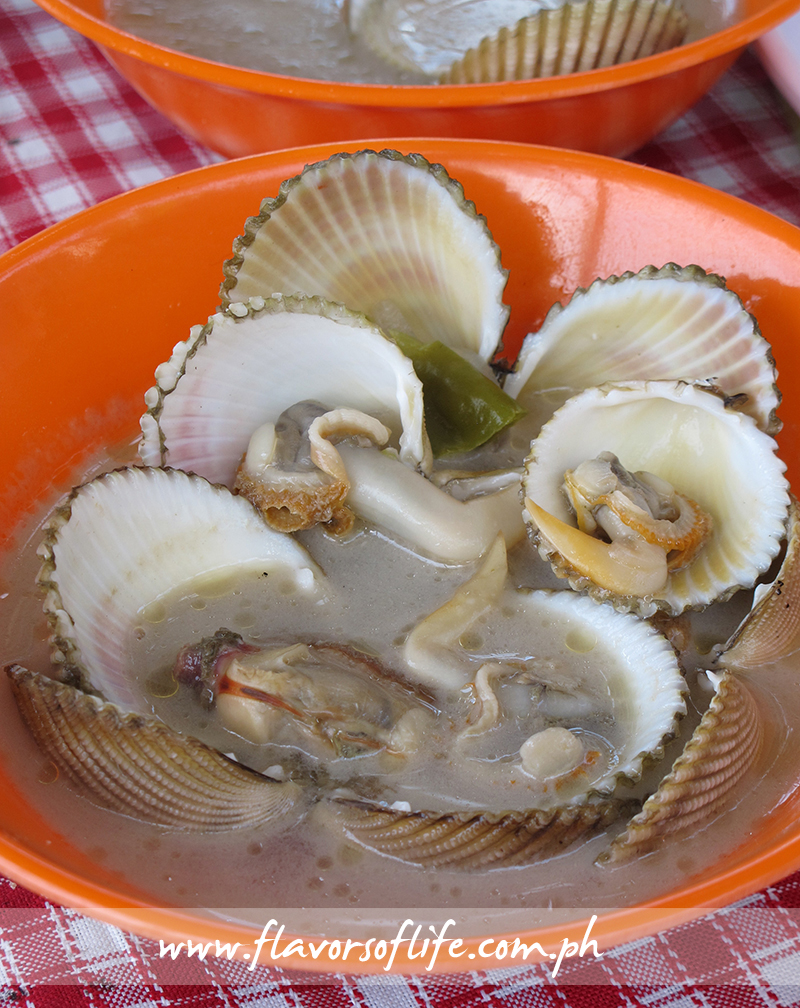
The island itself is beautiful, with interesting rock formations adding more character to it. Diving and snorkeling trips can be made more convenient when arranged with local tour guides like Angelo, who takes charge of arranging the snorkeling equipment (complete with life vests, booties and towels) as well as food for lunch. We had a great lunch by the beach, under the shade of nipa leaves, with a menu that included Fresh Lato (seaweeds), Dulong Okoy (crunchy patties made of tiny dulong fish and batter), Chicken Barbecue, Adobong Pusit, Sinuglaw (combination of sinugba or grilled pork and kinilaw or fish ceviche), Eggplant Ensalada,Clam Soup and Boiled Sweet Corn. The Lechon from Malatapay Market was laid out on the table as well.
Fresh Lato
Dulong Okoy
Chicken Barbecue
Eggplant Ensalada
Clam Soup
Boiled Sweet Corn
Apo Island has two resorts, Apo Island Beach Resort and Liberty’s Lodge, both of which have their own dive centers. Guests can actually stay overnight on the island, as there are room accommodations available, but electricity is only up to about 10:00 or 11:00 p.m. Most foreigners do not mind, as it reminds them of Boracay Island when it was still raw and relatively untouched. Some local tourists also sometimes choose to stay overnight and experience the island as it is — minus the trappings of modern living.
As for the group, we opted for a day tour, as there’s still plenty of other places in Dumaguete that we wanted to explore during our three-day stay. That — all that — we got to do, thanks to the generosity and awesome hospitality of Sta. Monica Beach Club, our cozy and comfy home in Dumaguete City.
TALK about Dumaguete City and what comes to mind are Silliman University, the promenade along the main road of Rizal Boulevard, and the signature pasalubong items from Dumaguete, Silvanas and Sans Rival.
During our recent stay in Dumaguete City, where Sta. Monica Beach Club served as our host and home for three beautiful days, my husband Raff and I, along with a group of media friends — Tribune’s Earl Bracamonte, Manila Standard’s Maan Pamaran, Philippine Star’s Lester Hallig, Manila Bulletin’s Ronald Jayme, Manila Times’ Sheila Mañalac, and View’s Glaiza Lee — we got to visit all these iconic places in Dumaguete and discover even more about the City of Gentle People.
SILLIMAN UNIVERSITY
First things first. After settling in Sta. Monica Beach Club and enjoying its food and amenities, it’s time to start exploring the city proper, and first thing on the agenda was a visit to Silliman University. It seems that everybody who hails from Dumaguete City has something to do with Silliman University because it is the prime educational institution in the city and has produced some of the country’s most brilliant literary minds.
Silliman University has produced some of the country’s most brilliant minds
The Promenade along Rizal Boulevard in Dumaguete City resembles the scenic Roxas Boulevard in Manila
One of the most photographed and photograph-able spots along Rizal Boulevard in Dumaguete
Sisters of St. Paul of Chartres along Rizal Boulevard
Silliman University is located right in the heart of the city, right along the main road of Rizal Boulevard, which is very similar to Manila’s Roxas Boulevard, as it stands right along the bay. In the case of Dumaguete’s Rizal Boulevard, it overlooks Tañon Strait and is lined with a scenic promenade that allows people to simply stroll along the boulevard, relax by the bench and marvel at the horizon, look out to sea and identify the neighboring island of Siquijor. The promenade — the long stretch of it — lined with lamp posts.
At one end of the promenade, visitors can find the “I Love Dumaguete” signage, a favorite place for tourists to pose for pictures. A little further on is the Tempurahan, an al fresco dining area where people enjoy bites of heavily battered, deep-fried tempura, which is Dumaguete’s signature street food.
The sprawling campus of Silliman University is within walking distance from the “I Love Dumaguete” sign and the Tempurahan. We talked to the guard and asked if we could enter and just take pictures, and he allowed us in. While there, we chanced upon some homecoming ladies who were placing floral arrangements at the foot of Silliman University founder Horace Silliman, Ll.D.’s bronze bust in the garden and having their pictures taken. Silliman University was celebrating its 113th founding anniversary that week, and a lot of alumni had come home to join in the celebration. We were to return to the campus that evening to check out the anniversary fair that was taking place in the campus grounds, as our travel companions, Earl Bracamonte and Ronald Jayme, hail from Negros Oriental and are alumni of Silliman University.
The camaraderie and the vibrant school vibe was so invigorating, it was impossible not to catch on.
SANS RIVAL AND SILVANAS GALORE
Sans Rival and Silvanas are familiar refrigerated desserts that can be found everywhere, but in Dumaguete, they have become iconic desserts—thanks to the following that Sans Rival Bakeshop and Bistro has attracted through the years. Its versions of these two desserts are so good that you’d want to take them back to Manila with you as pasalubong for your family, loved ones and friends even if they’re a little delicate to handle.
Sans Rival’s Sans Rival (layers of meringue mixed with ground cashew, held together by the creamiest of butter mousseline with a generous sprinkling of cashew nuts on top) has been made into loaves, which are sliced very thinly when served to bring out the crunch of the meringue and the buttery goodness of its icing. It sells at Php310 per loaf and Php26 per slice. As for its Silvanas (thin meringue wafers smothered with melt-in-the-mouth butter cream filling then rolled in cookie crumbs), these have been made into small flat circles that come in Original Butter and Chocolate flavors at Php 15 and Php20 per piece or Php125 and Php180 per pack of 10, respectively.
Sans Rival Bistro can be found along Rizal Boulevard, right across the Sisters of St. Paul of Chartres
Sans Rival
Spaghetti a la Puttanesca
Bistro Signature Burger with Crunchy Coleslaw
Spicy Chili-con-Carne Burger
Datiles con Chorizo
The bakeshop has spawned a bistro as well, so the place serves savory dishes apart from its Sans Rival, Silvanas and other delicious cakes. It has an extensive menu of burgers, pasta dishes, soups, salads, tapas, paella, pork, beef, chicken, fish and seafood entrées, and desserts. Making it to our table for snacks were Spaghetti a la Puttanesca (Php75), buttered noodles with green olives, mushrooms and anchovies in the sauce and topped with grated Parmesan cheese; Bistro Signature Burger with Crunchy Coleslaw (Php195), signature prime Wagyu beef burger served with crunchy coleslaw salad; Spicy Chili Con Carne Burger (Php60), burger topped with chili con carne plus an added bowlful to enjoy with tortilla chips; and Datiles con Chorizo (Php115), dates stuffed with chorizo and wrapped in bacon.
Sans Rival Bistro can be found right along busy Rizal Boulevard, just a stone’s throw away from Silliman University.
WAR MUSEUM
One important lesson to learn from World War 2 is that nobody wins in war. It is all destruction and pain, and nothing really good comes out of it. Glaring reminders of the war can be found at Cata-al World War 2 Museum, a private museum put together by private citizen Felix Cata-al in his backyard in Valencia, a town just off Dumaguete City. It consists of bombs, helmets, uniforms, medals, grenades, machine guns and magazines, and other war-time paraphernalia and mementos.
Part of the exhibit at Cata-al World War 2 Museum
American bombs
Japanese machine guns
Smaller bombs
Cata-al’s father, Porfirio Cata-al, was a policeman. When the Japanese arrived, his fatherwent up to the hills and lived the life of a guerilla.
Cata-al was 5 when he started collecting wartime memorabilia back in the 1960s. His collection began with his dad’s uniform and all equipment issued to him. The family’s tenant farmers started to unearth remains of Japanese soldiers as well as loads of Japanese wartime paraphernalia from their property in Valencia, and so he built his collection around that. The remains of the Japanese soldiers, though, were turned over to the Japanese government.
Although a private collection, Cata-al allows visitors to visit his museum as long as prior arrangements have been made, and quite a number of visitors in Dumaguete do make it a point to stop over and look at his vast collection when on a trip around the countryside.
“RED” WATERFALLS
Not too far from the Cata-al World War 2 Museum is Pulang Bato, Valencia, Negros Oriental, where two beautiful waterfalls can be found. What makes these waterfalls different is that the rocks around it are naturally colored red. This is because they’re located in the Red River Valley, where a Red Rock Hot Spring can also be found. What accounts for the natural red color is sulphur smoking out of a hill. There are a lot of roadside areas around the waterfalls where you can actually see small “mounds” of smoke steaming out of the ground.
Waterfalls at Pulang Bato, Valencia, Negros Oriental
SHOPPING FOR SOUVENIRS
For souvenir shopping, visitors in Dumaguete City usually hie off to the Negros Oriental Arts & Heritage (NOAH) in Bacong, Negros Oriental. It offers lots of lacquer jewelry boxes, artworks, woodcraft, local fashion jewelry and accessories, and table décor.
Negros Oriental Arts & Heritage (NOAH) for local handicraft and pasalubong items
Beautiful handmade jewelry boxes available at NOAH
Bongbong’s Piaya & Barquillos store at Robinsons mall in Dumaguete
Piayas are freshly made in the store
For food items to take home, visitors place advanced orders for Sans Rival and Silvanas with Sans Rival Bakeshop and Bistro, although others opt to go to the shopping mall and buy Piaya, Barquillos and other regional specialties. One such store that visitors frequent is Bongbong’s Piaya & Barquillos. The Piaya and Barquillos, plus Pinasugbu and other local delicacies, are not exactly from Dumaguete City. They are originally from Bacolod City, although they are now being made directly in the store so they’re freshly made and delicious when you buy them.
Sta. Monica Beach Club provides welcome respite for travelers in charming Dumaguete City
FINALLY! I have dreamt of visiting Dumaguete City since I was fresh out of college, where I finished a Literature degree as my second major. After all, Dumaguete is home to Silliman University, which has produced some of the country’s most brilliant literary minds and which hosts a regular literary workshop for budding creative writers. But, tough luck, I’ve never had the chance to visit Dumaguete all these years.
Well, last August (2014), that elusive opportunity finally came, with an invitation from Sta. Monica Beach Club, and so I grabbed it. My husband Raff and I joined a group of media friends — which included Tribune’s Earl Bracamonte, Maan Pamaran of Manila Standard, Glaiza Lee of View, Ronald Jayme of Manila Bulletin, Lester Hallig of Philippine Star and Sheila Mañalac of Manila Times — on a trip to Dumaguete to discover the sights and flavors of the beautiful principal seaport of Negros Oriental.
Home for the fun and ‘rowdy’ group for three awesome days was Sta. Monica Beach Club, which is just a 10-minute ride from Dumaguete Airport. Situated in Negros Oriental’s southern peninsula, the place immediately delighted me because it is located right in the city, and yet it overlooks the Dumaguete City Bay. We were right in the heart of the city, where all the modern conveniences that a traveler needs is within reach, and yet the place exudes a relaxing, laid-back feel and offers a breath-taking view of the sea. It’s a combination that’s not easy to find.
The rows of rooms at Sta. Monica Beach Club are surrounded by lush greens and tall palm trees
Cozy, comfy and serene Deluxe Room
The swimming pool of the resort
The Pool Bar stands right next to the swimming pool
The resort overlooks the Dumaguete City Bay
The Beach House
COZY ROOM ACCOMMODATIONS
What’s nice about Sta. Monica Beach Club is that it is a boutique hotel and beach resort set amidst nipa plantations in a quiet Dumaguete fishing village. It has no pretenses, just cozy room accommodations in a relaxing environment of lush green grass and palm trees.
Utilizing the finest local materials and craftsmanship, the property incorporates contemporary coastal design themes and a modern Filipino aesthetic. It has 18 deluxe rooms and lofts integrating seamlessly with the natural environment. There are 14 Deluxe Rooms furnished with either one King-sized Bed or two Double Beds, and four Family Lofts, which are two-level structures with one King Bed on the ground floor and a Single Bed and Double Bed on the second floor. Then there is the Beach House, a one-level structure with three bedrooms that have one Queen-sized Bed each and a communal living room ideal for families and groups of friends.
All these rooms are air-conditioned, and amenities include cable/LED TV, private toilet and bath, in-room safety deposit box, shower with hot and cold water, coffee and tea making facilities, and mini bar, plus wireless Internet.
While there are lots of things to do and places to go in Dumaguete, lots of guests opt to simply stay in the resort because it alone already provides a number of leisure options for guests who want to take it slow and relax. Sta. Monica has a nice swimming pool with a pool bar right beside it for refreshing drinks and delicious bites. It has plenty of lush gardens and open areas, where guests can choose to relax by communing with nature or taking advantage of its open view of the sea. For early risers, there is also the bonus of a breath-taking sunrise. And for the more adventurous, the resort provides free use of kayaks for those who want to check out the waters of the Dumaguete City Bay.
SUMPTUOUS FOOD
Food is never a problem at Sta. Monica Beach Club. The truth is that the food here is so good that guests often opt to stay in the resort and have meals at Lanai Restaurant, a pavilion-type 180-seater restaurant that looks out to sea. The kitchen staff, led by young and talented chef Syl Francis Malenab, has been trained at Panglao Island’s Amorita Resort, which is a sister property of Sta. Monica Beach Club under the One-Of Collection umbrella, to whip up plates upon plates of delicious food that is guaranteed to satisfy even the most discriminating taste of guests — from breakfast to lunch to dinner and snacks in between.
Lanai Restaurant is the resort’s main dining facility
Sinuglaw
Budbud Suman
Silvanas, here in Chocolate and Regular Butter flavors, are the signature dessert of Dumaguete City
Lanai serves both local dishes that Dumaguete and the rest of Negros Oriental are known for, such as Sinuglaw (a dish that combines sinugba or grilled pork and kinilaw or fish ceviche, cooked in vinegar and coconut milk), Budbud Suman (suman made from millet seeds) and Silvanas (the chilled dessert that Dumaguete is known for).
Pork Sinigang
Pinangat na Isda
Crispy Kare-Kare
Bagoong Rice
Ensalada Lanai
Crackling Lechon Belly
Pork Humba
Chicken Binakol
Chicken Adobo
The restaurant also offers its own take on other delicious regional specialties, such as the bagnet of Ilocos and the pinangat of the Bicol region. Chef Syl takes the bagnet and turns it into Pork Sinigang, where the deep-fried crispy pork gives the dish a crispy twist. As for the pinangat of the Bicol region, Chef Syl fills replaces the taro leaves with pechay leaves and stuffs packets of it with fish in his Pinangat na Isda. He also makes new interpretations of classic Pinoy dishes — Kare-Kare is Crispy Kare-Kare at Sta. Monica, with a delightfully golden Crispy Pata (pork knuckle) served deconstructed on wooden chopping board with a bowl of kare-kare sauce, a condiment of bagoong (shrimp paste) and a side of stringbean, eggplant and pechay salad, and it is perfect with an order of Bagoong Rice; Ensalada Lanai is no other than pakô (fiddlehead fern) salad with salted egg, deep-fried tofu cubes, tomato and onion; and Lechon Kawali is rendered in Crackling Lechon Belly that is very thinly sliced and served with atchara and soy dip. He does similar wonders with Pork Humba, Chicken Binakol and Chicken Adobo.
The talented young chef has also come up with his own interpretations of all-time favorite international dishes, including Singaporean Chili Crabs, Korean Chicken Barbecue and Green Mango Salad.
Singaporean Chili Crabs
Korean Chicken Barbecue on Kimchi Fried Rice
Green Mango Salad
Grilled King Prawns
Clam Soup
Grilled Tuna and Squid
And because Negros is an island bound by the seas and Sta. Monica Beach Club, in particular, is situated in a quiet fishing village in Dumaguete City, the resort takes advantage of the bountiful seafood available locally and serves platters upon platters of grilled seafood.
A WELL-ROUNDED EXPERIENCE
Cozy and comfy accommodations, delightful amenities and recreational facilities, and your fill of lip-smacking food that gives you a taste of local specialties and world flavors… Sta. Monica Beach Club strives to give these — and more — to its guests to ensure a truly enjoyable stay while in Dumaguete.
(Sta. Monica Beach Club is located at Barangay Banilad, Dumaguete City, Negros Oriental 6200; with telephone numbers +63906-4789018 and +6391-4694880. Manila Sales and Marketing Office is at Unit 701, The Infinity Bldg., 26th St., Fort Bonifacio, Taguig City 1694; with telephone numbers +632-5539549 and 856-1443.)
Sixteen-year-old Mignon Frances Dumanjog, 16, grand prize winner of this year’s Mama Sita’s Mga Kuwentong Pagkain, with judges Nancy Reyes-Lumen, Dr. Fernando Zialcita and Dr. Ed Lapiz
THE Mama Sita Foundation recently awarded the winners of its Mga Kuwentong Pagkain, a story writing contest with food as the central and compelling theme. Now on its second year, it was launched in 2013 in an effort to continue Teresita ‘Mama Sita’ Reyes’ practice of food writing and to add to the already rich literature on Filipino food apart from helping to record the evolution of the Filipino culinary culture in recent years.
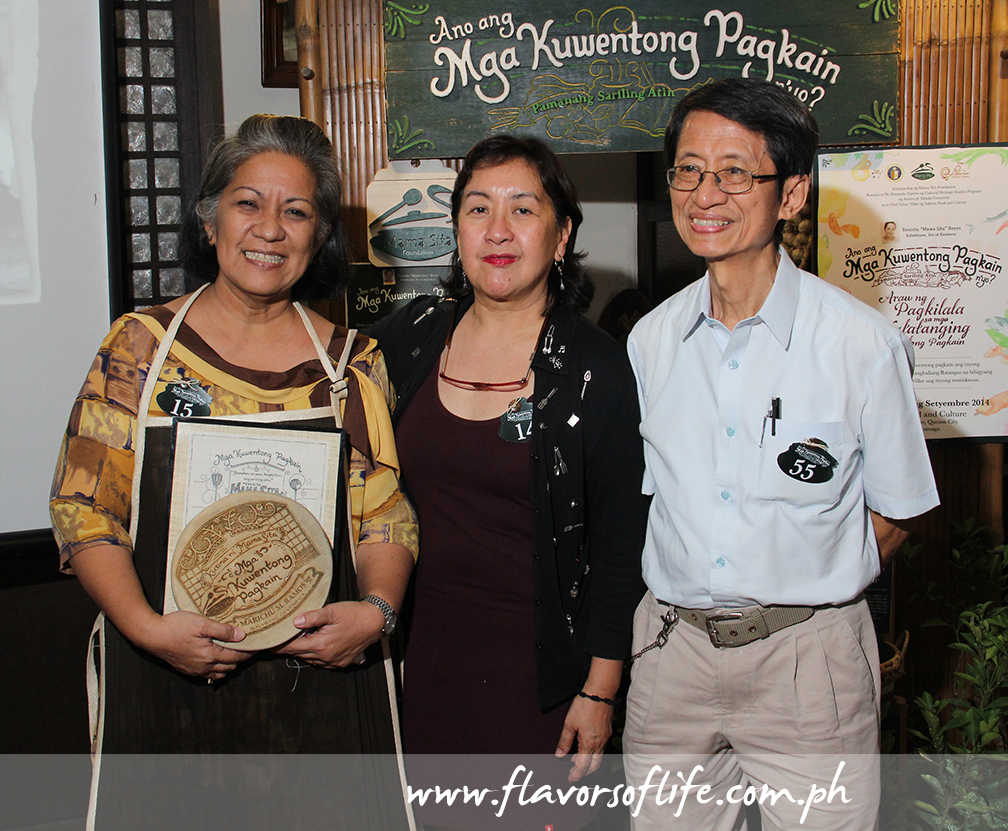
Taking the top prize was 16-year-old student Mignon Frances Dumanjog, whose entry, Dalawang Mangkok na Arroz Caldo, tells of a friendship that has survived time and space because of a common love for the filling flavors of Arroz Caldo. Taking second place was Marichu Ramos, who wrote about the painstaking way a woman and her family gains from the richness of the sea by producing salt from the Zambales sea in her entry, Harvesting the Sea. Rhodora Constantino’s 80th Birthday, a touching tribute to a mother who has fostered togetherness and bravely faced poverty through her culinary specialty, Adobo sa Kamatis, emerged in third place.
Second placer Marichu Ramos with judges Nancy Reyes-Lumen and Dr. Fernando Zialcita
Interactive poetry by a group of children from Malolos, Bulacan
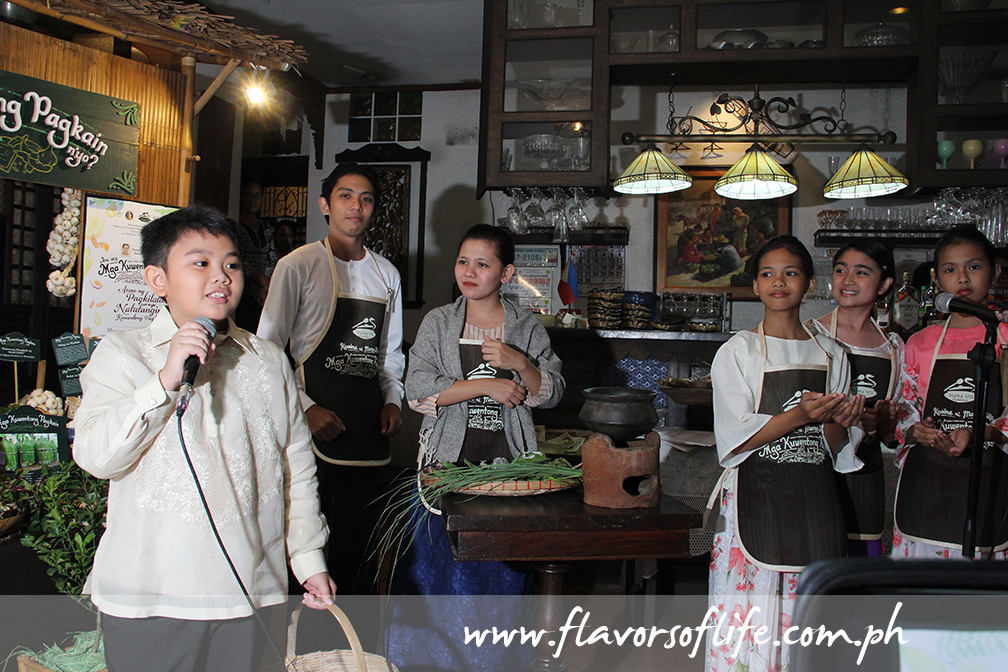
The children with writer-directorNely Azada (extreme left), Bong Enriquez (center, back row), and Kusina ni Mama Sita information officer Cecille Nepomuceno (extreme right)
Dr. Fernando Zialcita (left), Executive Chef Giney Villar of Adarna Food & Culture (center), and Cecille Nepomuceno (right)
Malolos, Bulacan’s Bong Enriquez and Mama Sita’s president Clara Lapuz, with Adobo Queen Nancy Reyes-Lumen (left) and Joyce Lapuz (right) and the team
The winners were selected by a distinguished panel of judges composed of author, TV host and self-proclaimed “Adobo Queen” Nancy Reyes-Lumen, Dean of the UP Diliman College of Home Economics Dr. Aurorita Roldan, head of Ateneo de Manila’s Cultural Heritage Studies Program Dr. Fernando Zialcita, and Kaloob Philippine Music and Dance Ministry founder and director Dr. Ed Lapiz.
The awarding rites took place at Adarna Food & Culture in Quezon City, which saw the performance of an interactive poetry or tula by a group of children from Malolos, Bulacan, headed by Bong Enriquez, with script written by former Mga Kuwentong Pagkain winner Nely Azada. The program opened on a joyful note, with a short story-telling session with Mama Sita’s son-in-law and true-blue Batangueño Rico Lardizabal, who recalled the story of how he wooed his future wife Rosie Reyes and his in-laws through their stomachs. Batangas’ lanzones, Balayan Lechon, cacao and kapeng barako helped him get their thumbs-up.
Lardizabal’s amusing account whetted everyone’s appetite on Batangueño food, which was the focus of the whole affair. The program proceeded with opening remarks from Dr. Zialcita and his students enthusiastically discussing their Batangas adventures and findings.
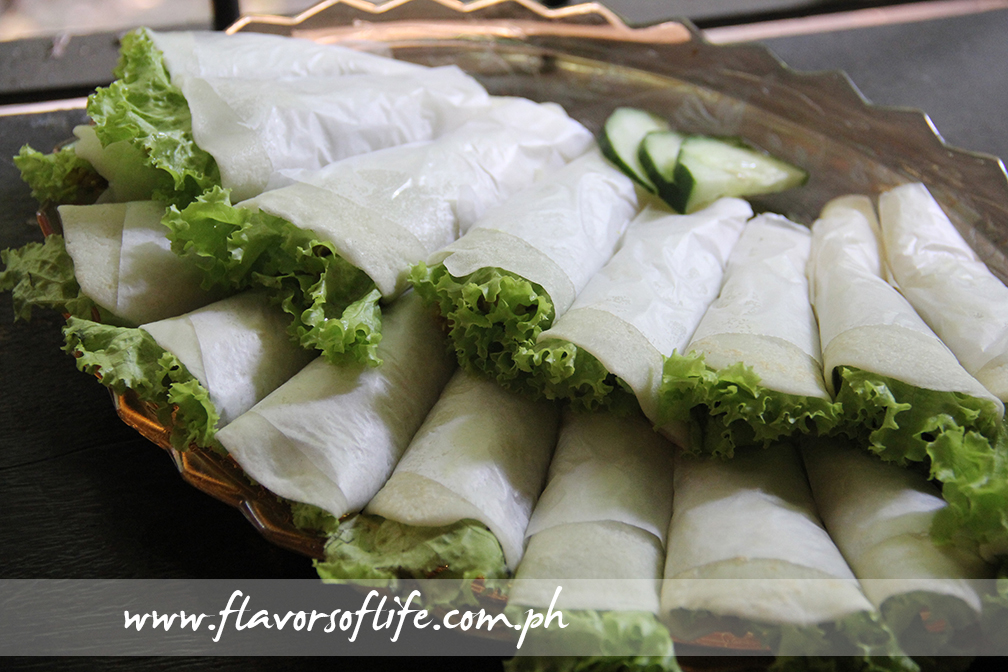
Highlight of the celebration was a feast of Batangueño specialties for lunch, as prepared by Chef Giney Villar of Adarna Food & Culture. Starters included Adobo sa Dilao, chicken and pork chunks braised in turmeric, vinegar, garlic and spices, and innovatively served rolled in fresh spring roll wrappers with lettuce like lumpiang sariwa; and Cora’s Salad, chunks of roasted eggplant, okra, tomatoes, onion, mango, salted duck eggs a la Nasugbu, tossed in vinaigrette with bagoong from Café Central, Nasugbu.
Adobo sa Dilao
Cora’s Salad
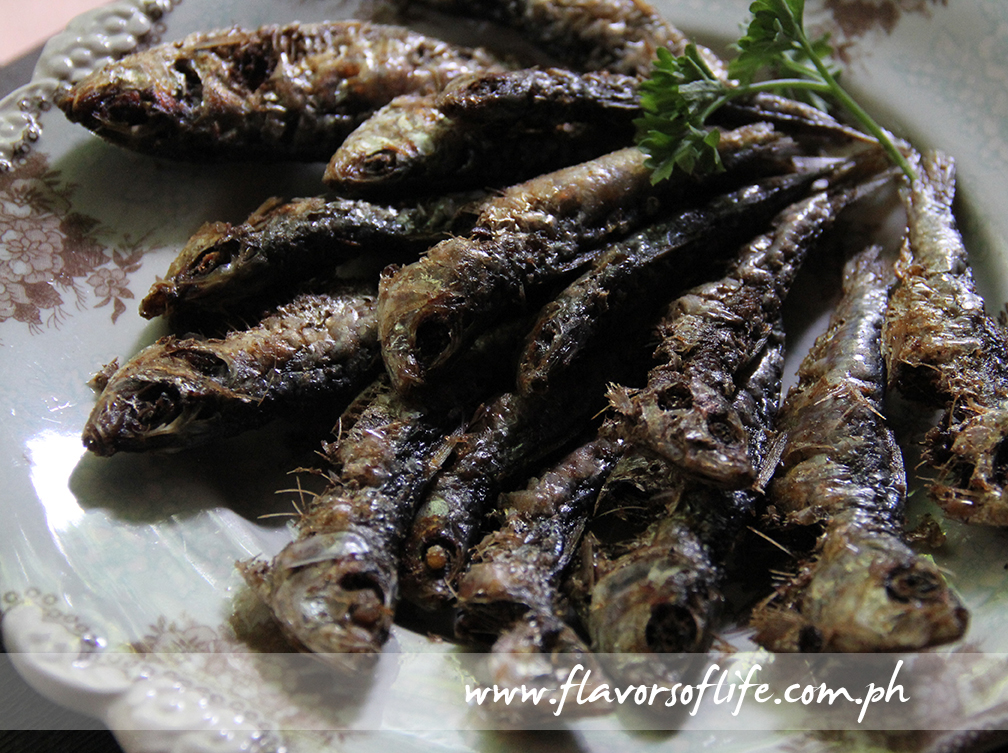
Fried Tawilis
Sinaing na Tulingan
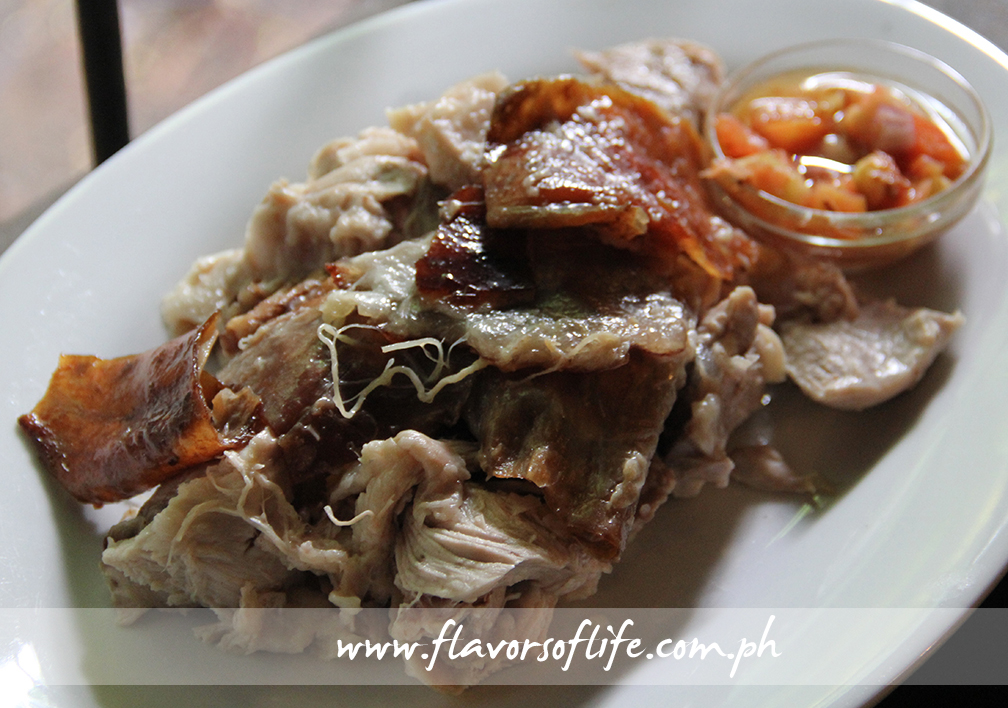
Lechon with Liver Sauce and Tomato-Balayan Bagoong Salsa
Kalderetang Baka
Bunuelos with Tablea Dip
Cold Tanglad Ginger Infusion
Then came the main dishes served with hot, steamed rice — Fried Tawilis, Taal’s wonder fish seasoned with salt, fried to a crisp, and served with a fresh tomato-coriander salsa and Mama Sita’s All Natural Spiced Tuba Vinegar; Sinaing na Tulingan, a Batangas classic of tulingan fish wrapped in banana leaves with dried kalamias and pork fat, cooked in a traditional clay pot, and served with its own patis; Lechon with Liver Sauce and Tomato-Balayan Bagoong Salsa, roast pork featured in the annual Parada ng mga Lechon of Balayan, Batangas; and Kalderetang Baka, Batangas beef smoked and braised in Mama Sita’s Tomato Sauce with carrots, bell pepper and potatoes cooked the Batangueño way.
Capping the meal was a dessert of Buñuelos with Tablea Dip, which are light buttery puffs rolled in butter and sugar, best enjoyed with a drizzle of chocolate syrup from another Balayan-based brand, Cacao Filipina.