Holiday Inn Manila Galleria along ADB Ave., Ortigas Center, Pasig City
IT’S always nice to check into a highly reputable hotel. You are able to get away from the grind of your everyday life, slow down and relax. You get to enjoy your room, the food in the hotel’s dining outlets, especially breakfast, and the other amenities that go with your overnight stay. But not often do you get to ‘experience’ three hotels in two days.
This was exactly what my husband Raff and I got to experience with a group of other media people recently when Holiday Inn, one of the world’s leading hotel companies, decided to treat media to a two-day Holiday Inn Experiential Tour of its three Philippine properties – Holiday Inn Manila Galleria in Ortigas Center, Holiday Inn Clark in Pampanga, and Holiday Inn & Suites Makati in Ayala Center, Makati City. No, of course we didn’t get to stay in all three properties overnight, but we got to sample all three properties’ food offerings and their own brands of hospitality.
The two-day experiential tour started with buffet breakfast at Holiday Inn Manila Galleria’s Fab Restaurant. Holiday Inn Manila Galleria is the first international mid-market hotel to rise in the business district of Ortigas. Just minutes away from premier institutions, such as the Asian Development Bank (ADB) and Philippine Stock Exchange (PSE), the hotel is directly connected to Robinsons Galleria Mall and has 285 deluxe rooms and suites that boast of floor areas of 32 to 234 square meters.
Holiday Inn Manila Galleria’s 2-Bedroom Suite
Kiddie Corner of the hotel
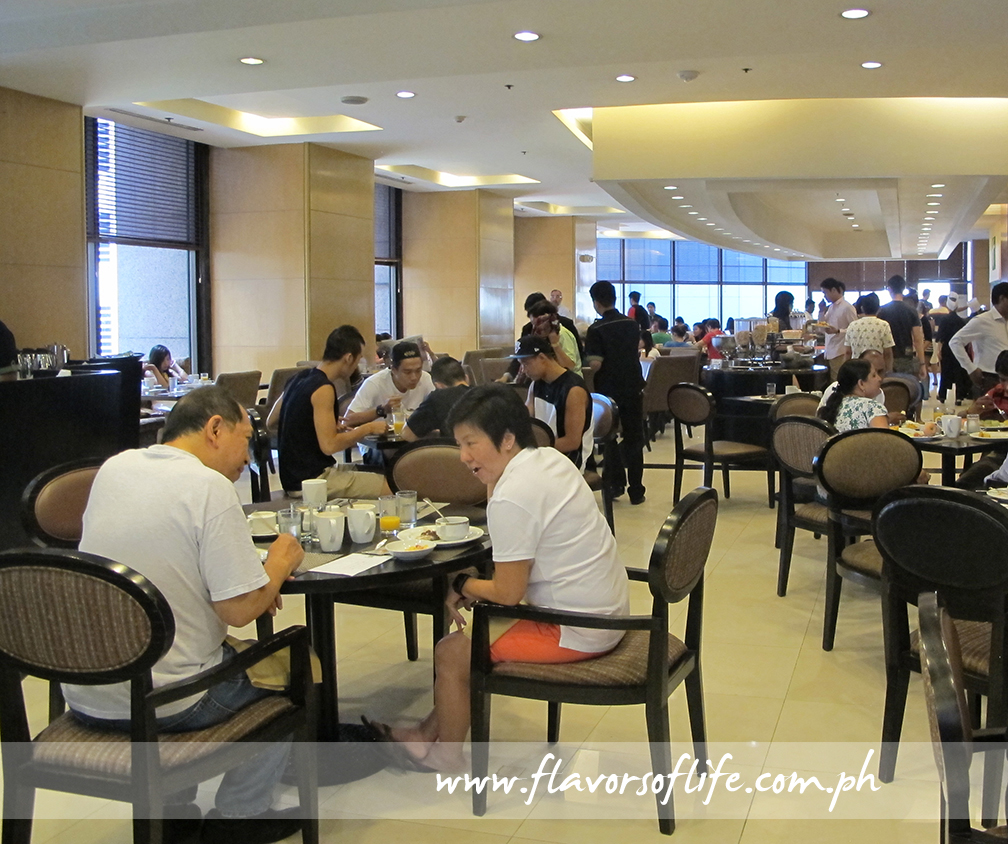
Main dining area of Fab Restaurant
Guests who check in at the hotel get to enjoy leisure amenities such as outdoor swimming pool, gym, kiddie corner and spa. An overnight stay also comes with a buffet breakfast for two at Fab Restaurant, which is the hotel’s all-day dining restaurant that offers buffet breakfast and a whole day a la carte menu that consists of local and international favorites.
On Day 1 of our recent Holiday Inn Experiential Tour, we got to enjoy its buffet breakfast at Fab, which was packed with diners, both in-house guests and walk-ins. The breakfast buffet spread was replete with appetizers, salads, soup, hot dishes on chafing dishes, breads with butter and various fruit jams, fresh fruits, juices and desserts. There’s an egg station, where you can have eggs prepared the way you prefer them, and other interactive cooking stations that make sure diners get to truly enjoy their breakfast. After all, breakfast is the most important meal of the day, as it jumpstarts your day and gives you energy to fuel you throughout the day.
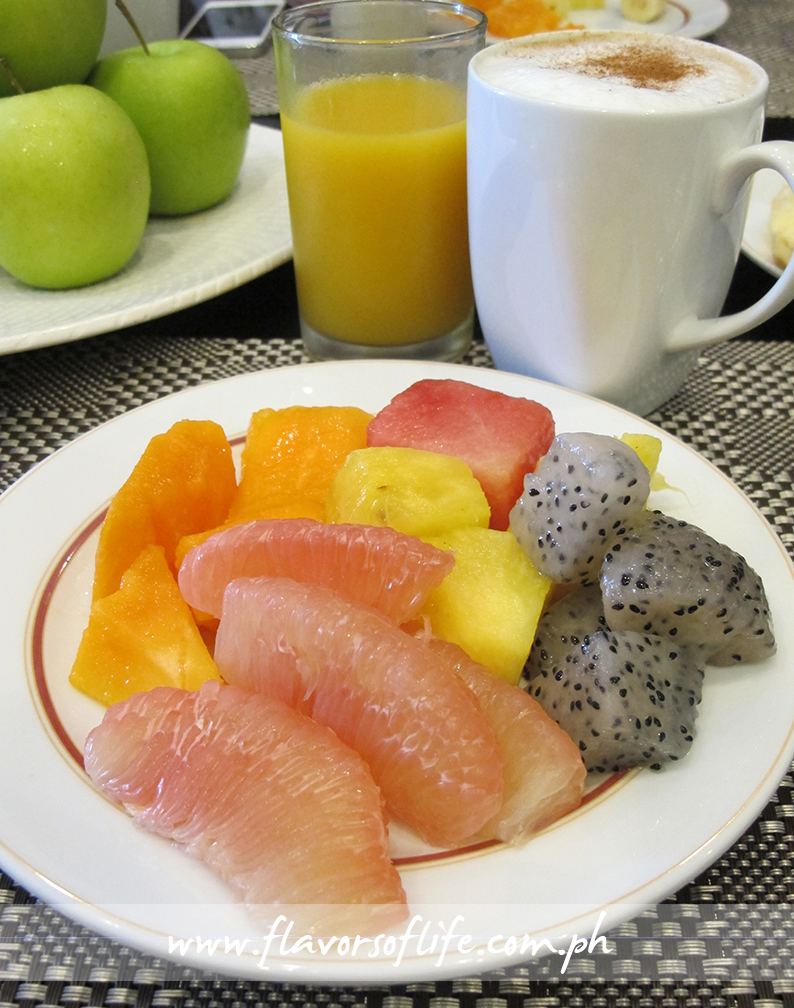
As usual, I started my breakfast with fresh fruits for a good load of fiber, paired with Cappuccino and fresh fruit juice
Croissant was among the bread selections
Pastries galore!
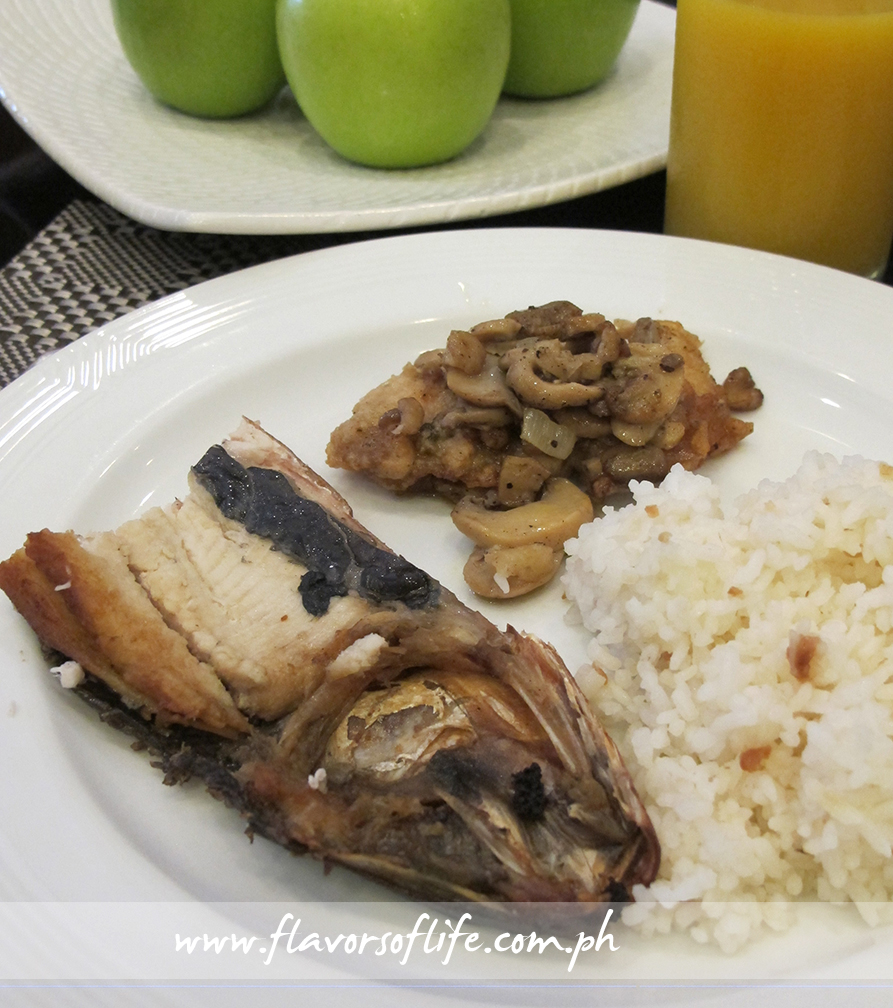
My breakfast platter of daing na bangus, fish fillet and garlic rice
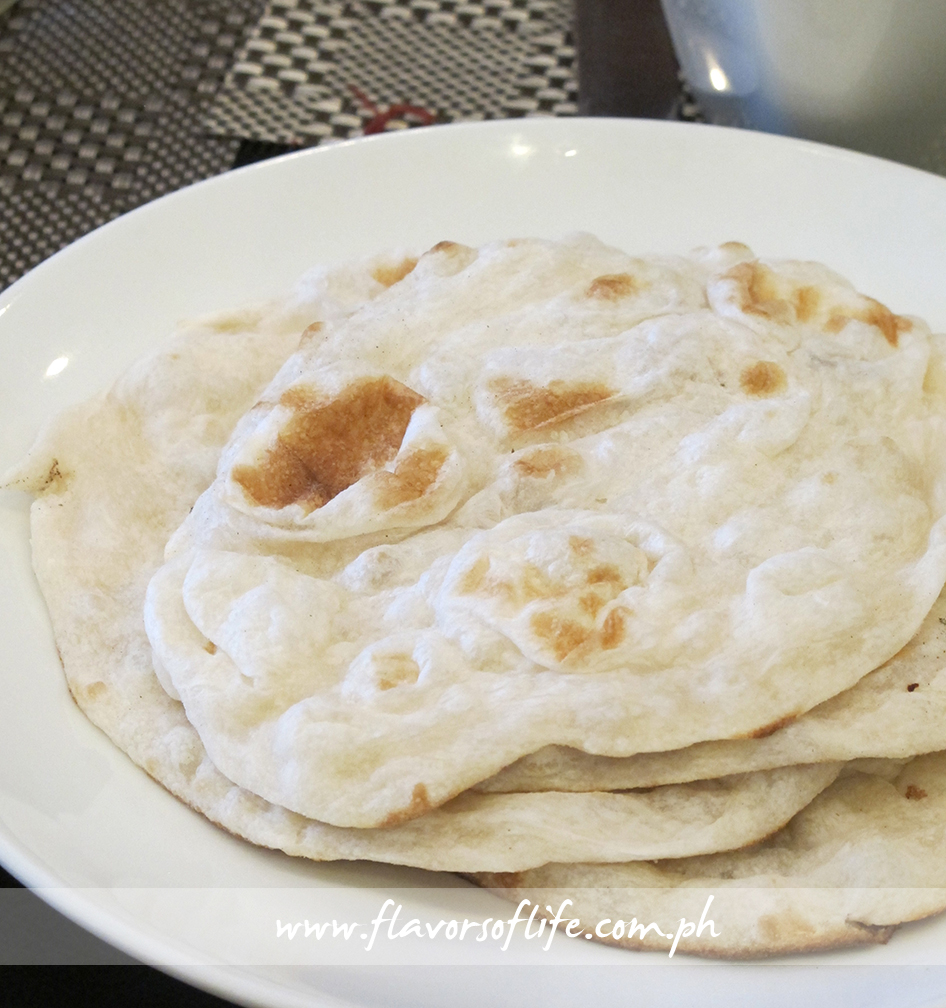
Roti
Taho!
I got excited when I found taho in the buffet spread. You often just get taho, which is freshly made soybean curd flavored with syrup and served with sago (tapioca), from a mobile vendor. It’s a favorite merienda of lots of Filipinos, and I’m no exception. I only found taho in the buffet breakfast spread of a five-star hotel in Alabang, Muntinlupa, and Holiday Inn Manila Galleria was only the second hotel that served taho for breakfast. It’s definitely lots of plus points for Holiday Inn.
Aside from Fab Restaurant, Holiday Inn Manila Galleria has Bar One, a fun and relaxing bar and lounge that serves food and cocktails perfect for after-work hours. It also offers a 24-hour room service featuring a selection of hearty dishes, comfort food choices and kiddie options.
For the recent Holiday Inn Experiential Tour, the group set off on our trip to Holiday Inn Clark right after having a hearty breakfast at Holiday Inn Manila Galleria.
– to be continued –
(Holiday Inn Manila Galleria is located at One Asian Development Bank Ave., Ortigas Center, Pasig City; with telephone number 633-7111.)
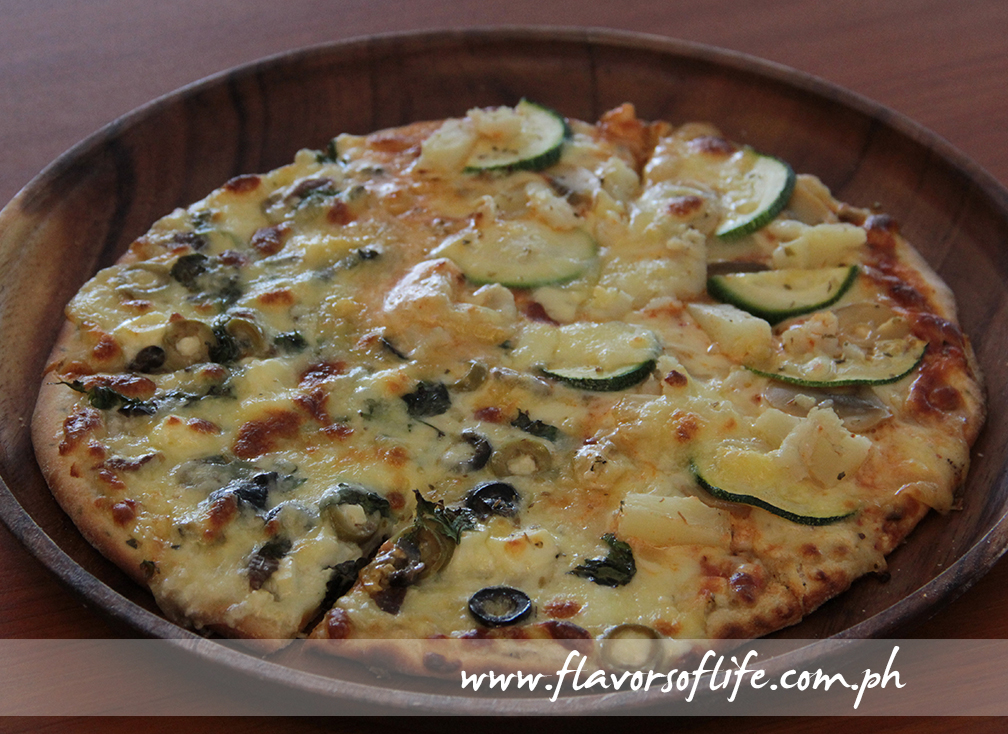
Pizza with spinach crust, Fra Diablo sauce, and mozzarella and Parmesan cheeses, zucchini, pineapple, green and black olives, fish fillet, anchovy, basil and oregano toppings
YOU love pizza, but you’ve been disappointed by so many pizzas in the past. Either the crust is too thick, the sauce tastes awful, or there’s too little topping for its price. Now you can have the exact crust you want, you can choose the sauce for it, and you can have all the toppings you want to fully enjoy your pizza.
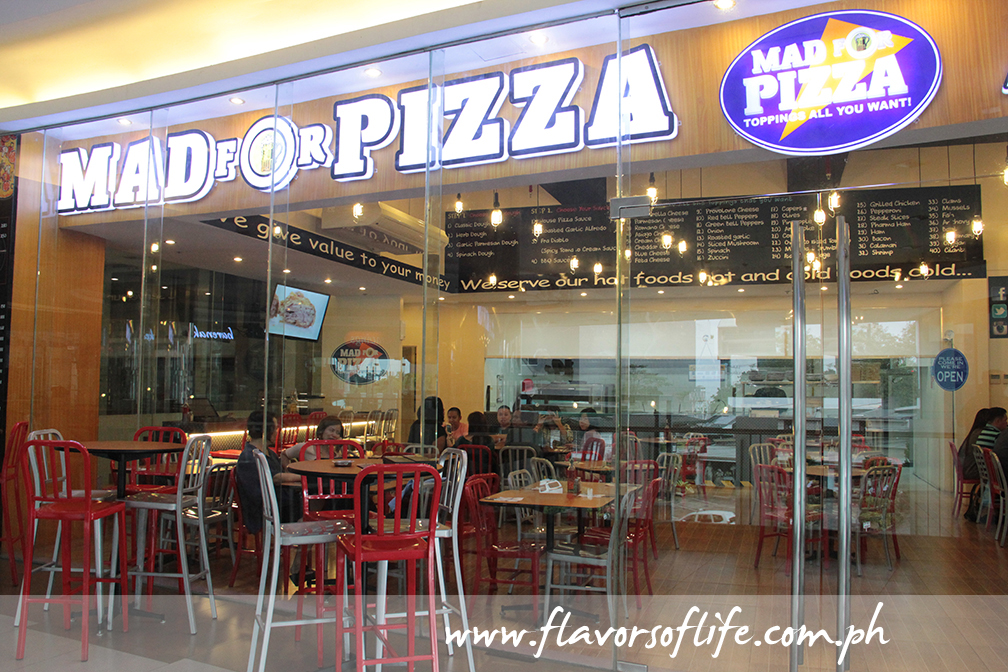
Mad for Pizza, a toppings-all-you-want pizza place located on the second floor of Il Terrazzo Bldg. along Tomas Morato Ave. in Quezon City, makes this possible by offering four types of pizza dough, four kinds of sauces to go on it, and 40 choices of all-natural toppings for your 10-inch pizza at an affordable Php280 per pizza.
Basically, what you, like other diners, do when you enter Mad for Pizza is choose your pizza dough among Classic, Herb, Garlic Parmesan and Spinach. Step 2 is picking the sauce, with House Pizza Sauce, Roasted Garlic Alfredo, Fra Diablo (Spicy Tomato Cream Sauce), and Barbecue Sauce as your selections. Then comes the most exciting part, which is pointing to all the toppings that you want your server to put on your pizza.
Mad for Pizza lets you have all the toppings that you want on your pizza
Pizza with Herb crust, Roasted Garlic Alfredo Sauce, and mozzarella and Parmesan cheeses, sliced mushroom, green and black olives, pineapple and corn kernels
The 40 choices for toppings: mozzarella cheese, Parmesan cheese, Romano cheese, Asiago cheese, cream cheese, blue cheese, Feta cheese, Provolone cheese, red bell pepper, green bell pepper, onion, roasted garlic, sliced mushroom, spinach, zucchini, capers, olives, pineapple, artichoke, corn kernels, oven roasted tomato, meatball crumble, Italian sausage, grilled chicken, pepperoni, steak slices, Parma ham, ham, bacon, calamari, shrimps, clams, mussels, fish, anchovy, basil, rosemary, oregano and cilantro.
Mad for Pizza VP and executive chef Cyril Reyes
The next step is to wait for the pizza, steaming hot from the oven, to be served at your table.
For diners who cannot make up their mind as to what toppings they want for their pizza, Mad for Pizza offers four standard pizzas to choose from: Justin’s Favorite (mozzarella, Parmesan, Cheddar, pepperoni, bacon, sausage and meatball crumble); Anya’s Creation (alfredo sauce, mozzarella, Parmesan, Cheddar, shrimps and roasted garlic); and Andross’ Choice (mozzarella, Parmesan, Feta cheese, ham and pineapple); all priced at Php250. Justin’s Favorite is named after Mad for Pizza vice president and executive chef Cyril Reyes’ business partner and Mad for Pizza president Justin Chua, and Anya’s Creation and Andross’ Choice have been named after Reyes’ kids Anya and Andross.
Spaghetti Carbonara
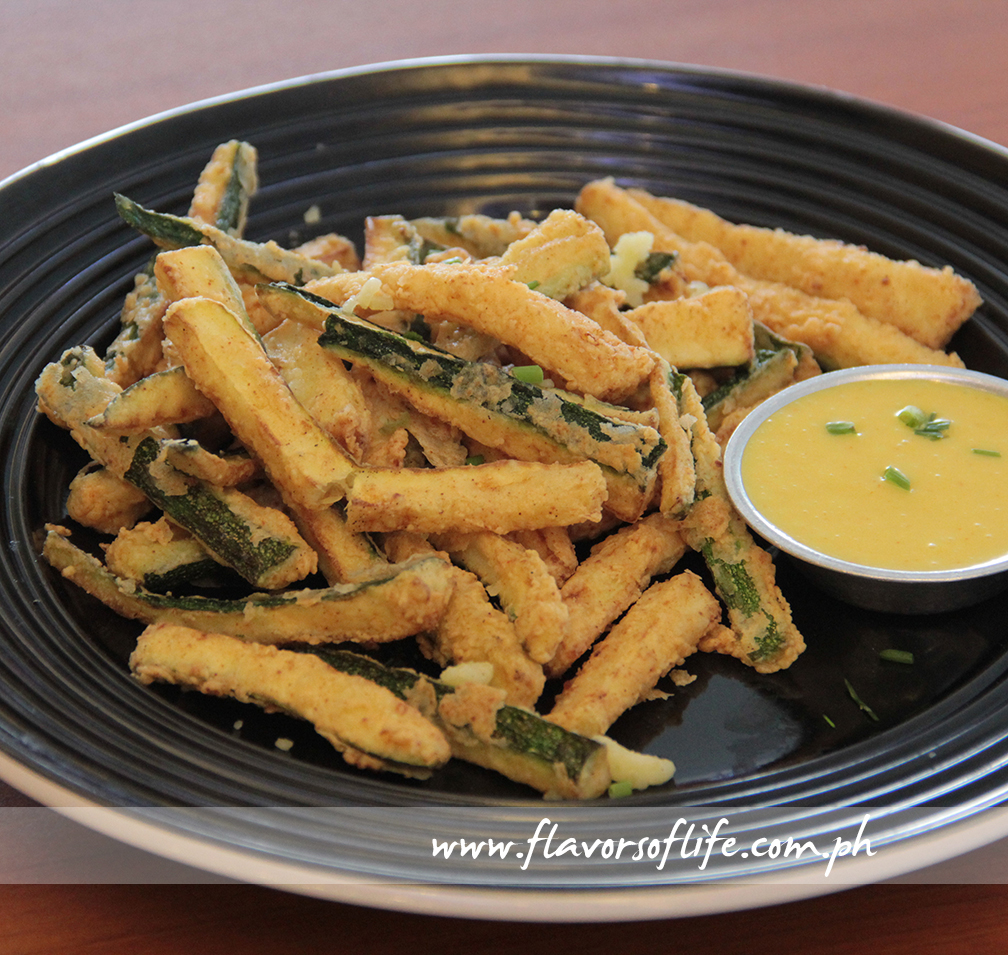
Fried Zucchini is a healthier alternative to the usual fries
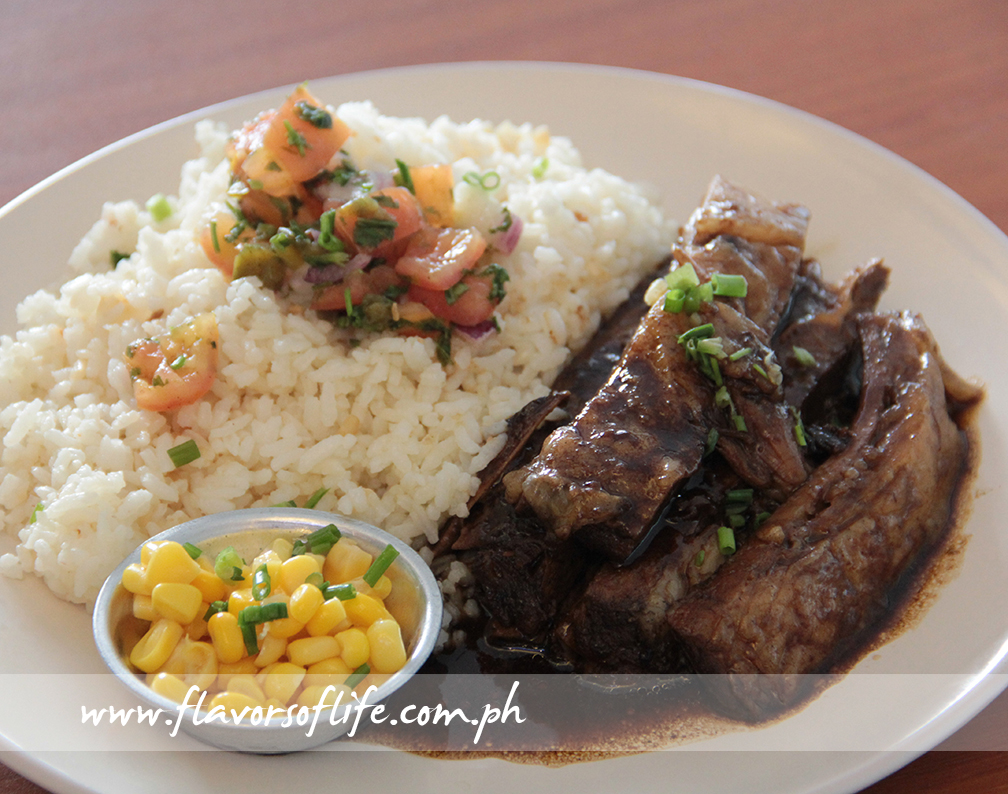
Amboy Angus Beef Belly in Adobo Sauce
Chicken Crispers
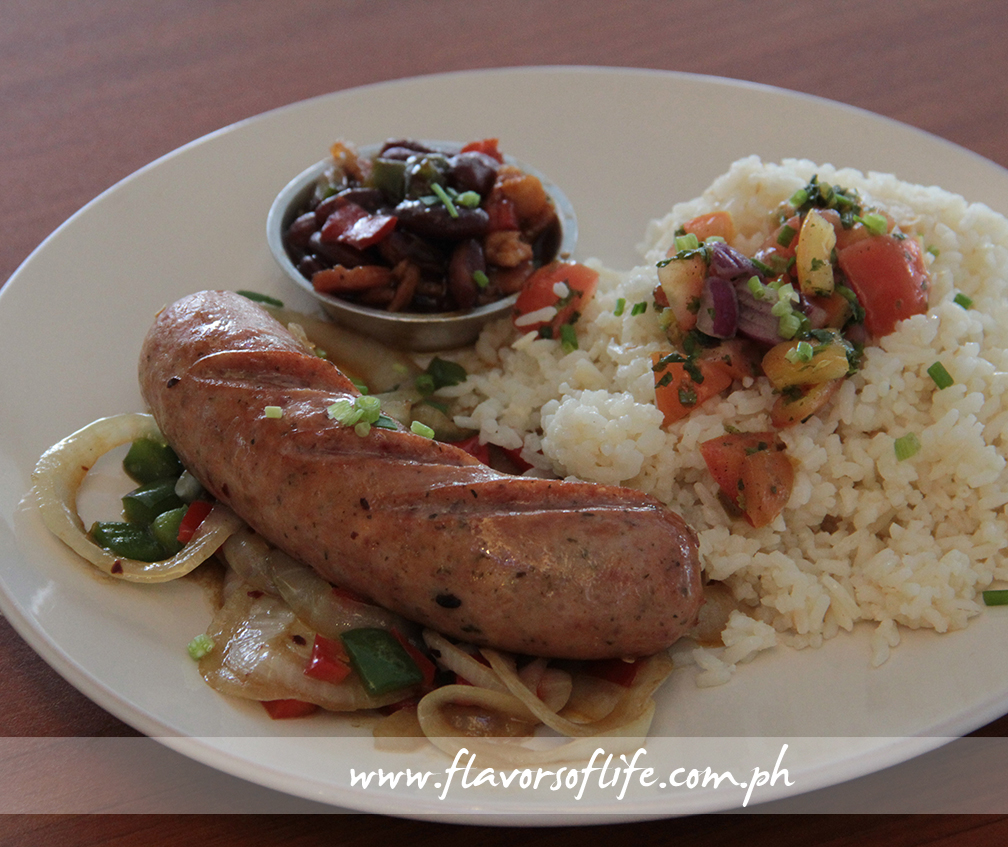
Kielbasa Sausage with Baked Beans
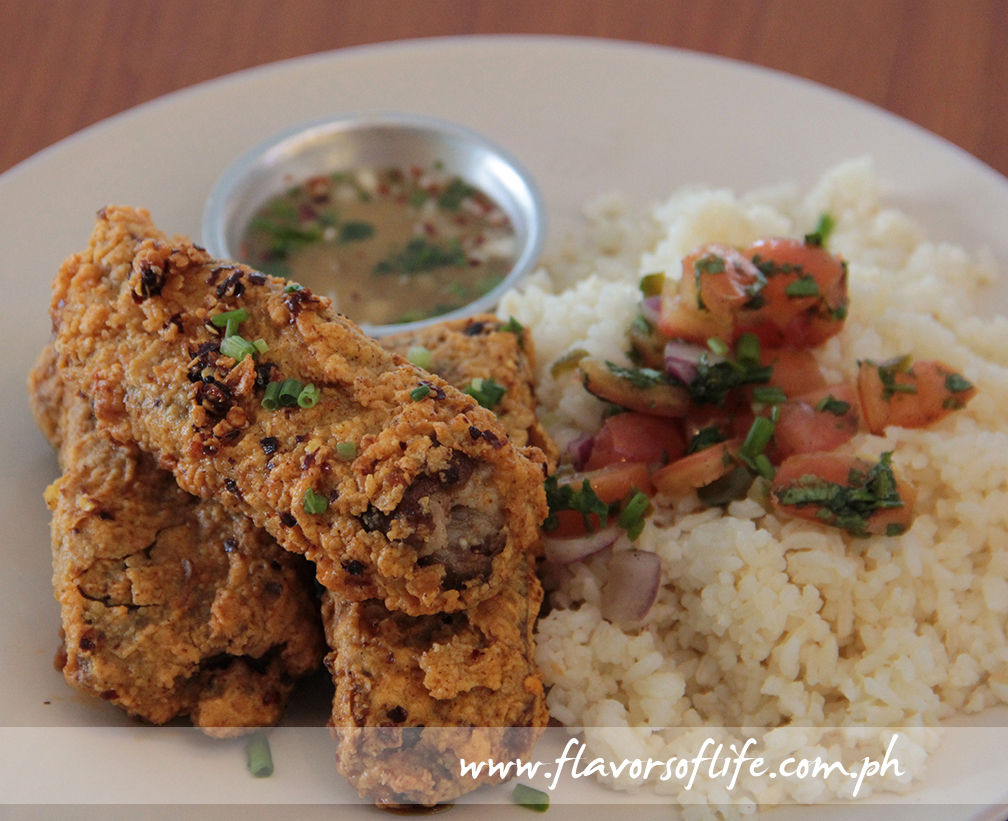
Spicy Fried Spareribs
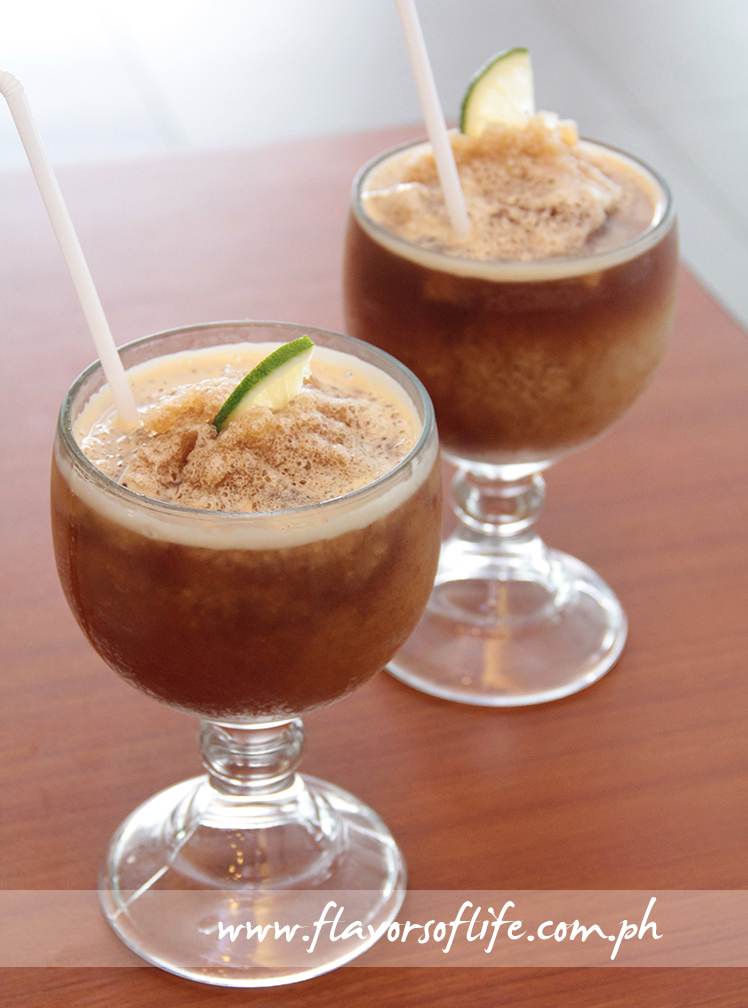
Frozen Iced Tea
While pizza is Mad for Pizza’s main attraction, the restaurant also serves a number of other dishes that are a combination of other restaurants’ best-selling items, including Buffalo Wings (Php268 for 1/2 kg.), Fried Calamari (Php18, Classic Fish and Chips (Php19, Spaghetti Bolognese (Php18 and Spaghetti Carbonara (Php18. There are also fries, nacho chips, salads and rice meals.
Must-tries at Mad for Pizza include Fried Zucchini (Php15, zucchini sticks wrapped in batter made of seasoned flour, deep-fried and served with homemade marinara and honey mustard dips; Amboy Angus Beef Belly in Adobo Sauce (Php21, beef belly marinated overnight for melt-in-the-mouth tenderness and texture; Tennessee Pork Spareribs (Php26, tender pork spareribs richly smothered with barbecue sauce and smoked; and the new Kielbasa Sausage with Baked Beans and Spicy Fried Spareribs, both served with rice.
When it comes to beverages, the restaurant is mighty proud of its Frozen Iced Tea (Php9, concentrated iced tea and pineapple with a calamansi tang; Salted Caramel Milkshake (Php9, vanilla ice cream and caramel sauce with salt infusion; and cocktail drinks such as Margarita, Sea Breeze and Mojito (Php180 per serving).
(Mad for Pizza is located at 2/L, Il Terrazzo Bldg., 305 Tomas Morato Ave. corner Sct. Madriñan St., Quezon City; with telephone number 351-2621.)
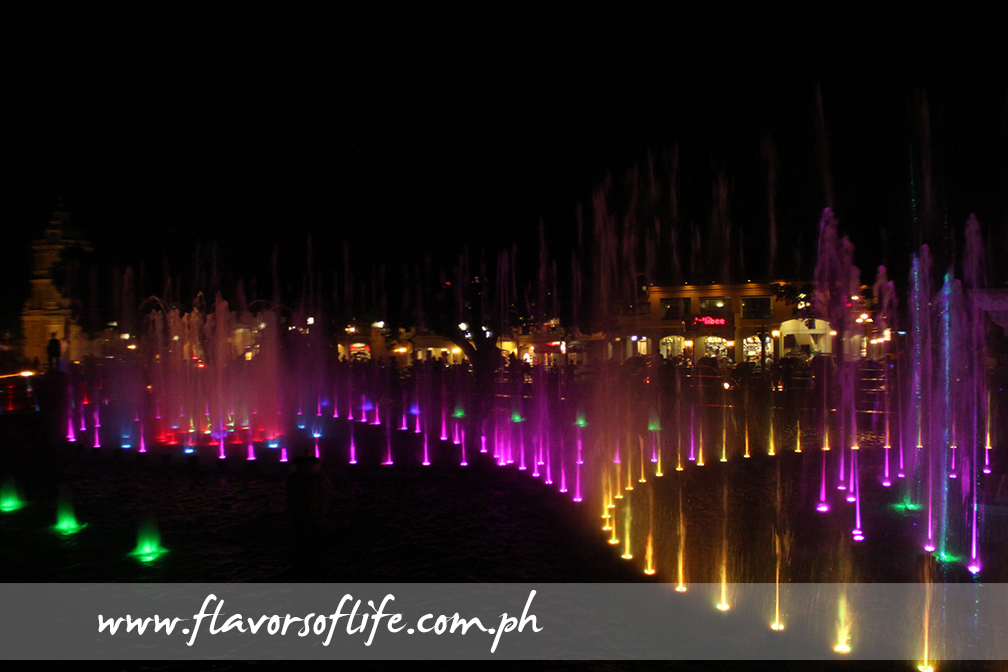
Fountain show at Plaza Salcedo of Vigan, Ilocos Sur
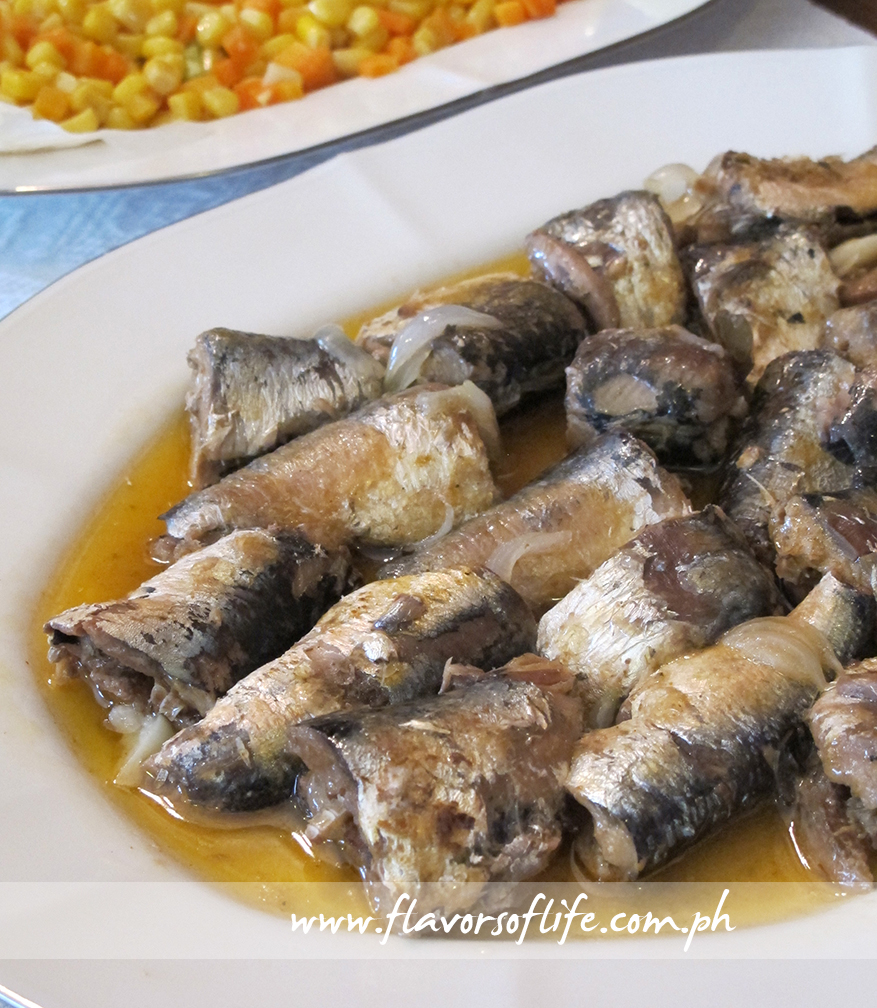
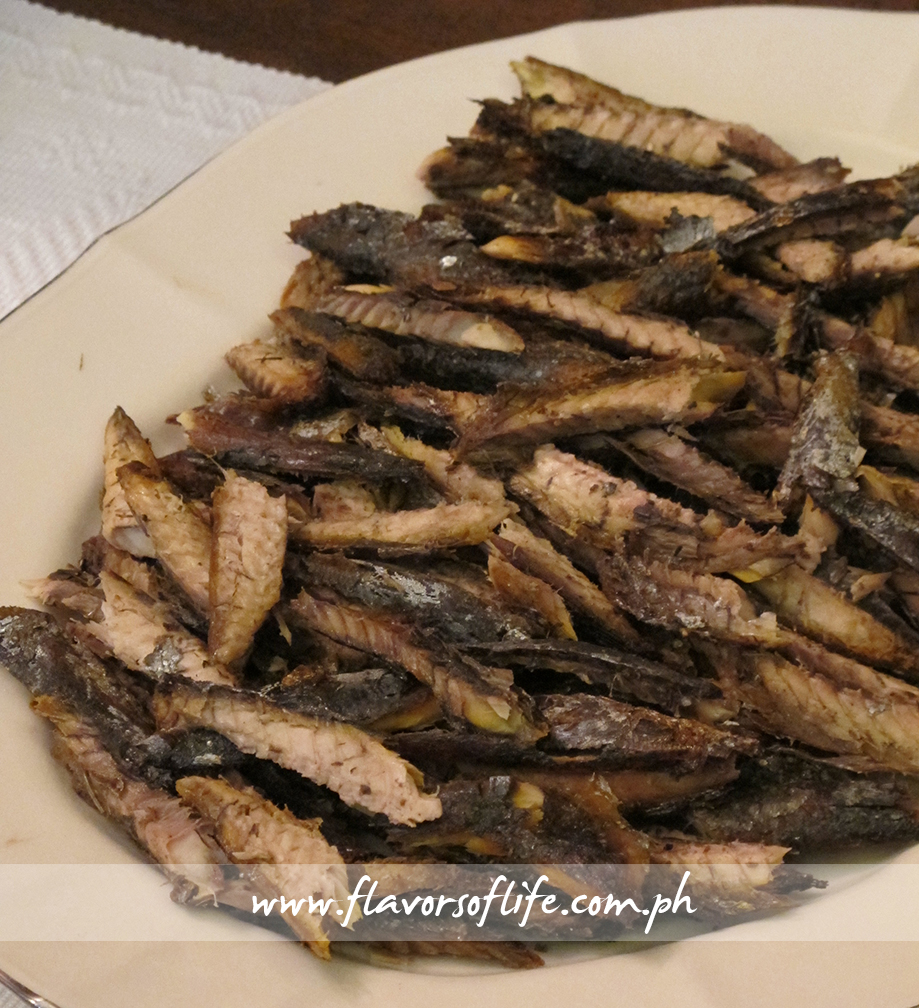
THE rains brought about by Typhoon Jose had considerably let up on our third day in the World Heritage city of Vigan in Ilocos Sur, so our group of Manila-based media people lost no time in covering lost ground. It was rise and shine early in the morning and, energized by a hearty breakfast of Spanish sardines, fried dried espada and sunny side up eggs with garlic rice, we set off on a tour of the remaining major attractions of Vigan that we hadn’t visited yet.
Spanish sardines for breakfast at Casa Caridad
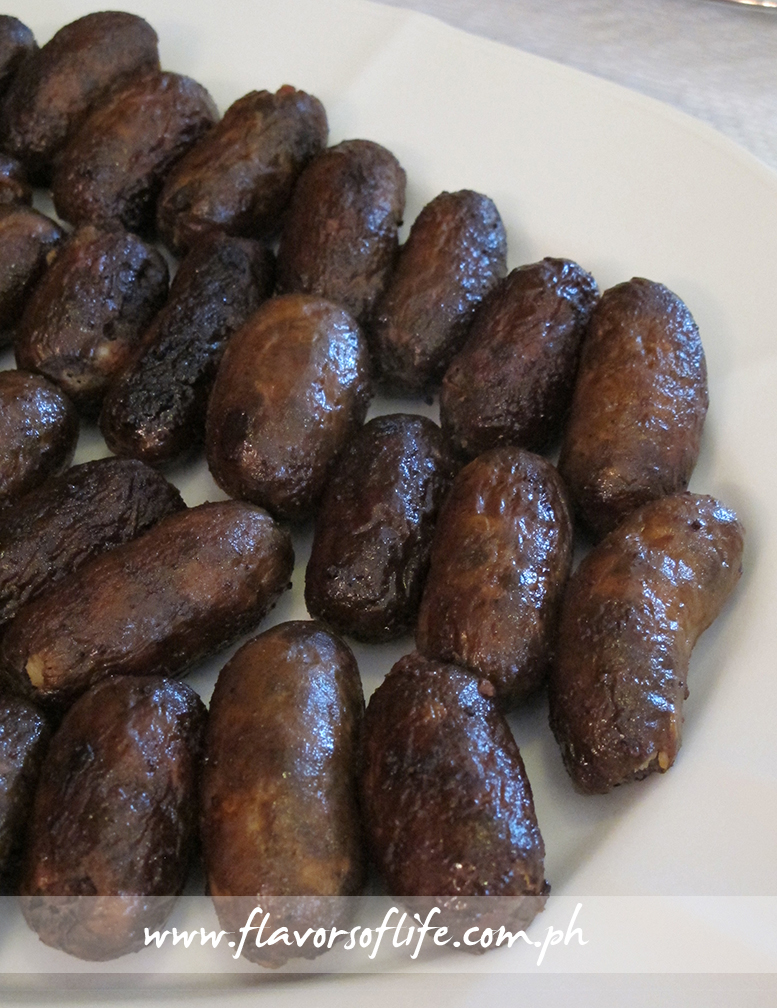
Vigan longganisa
Fried dried espada fish
My breakfast platter
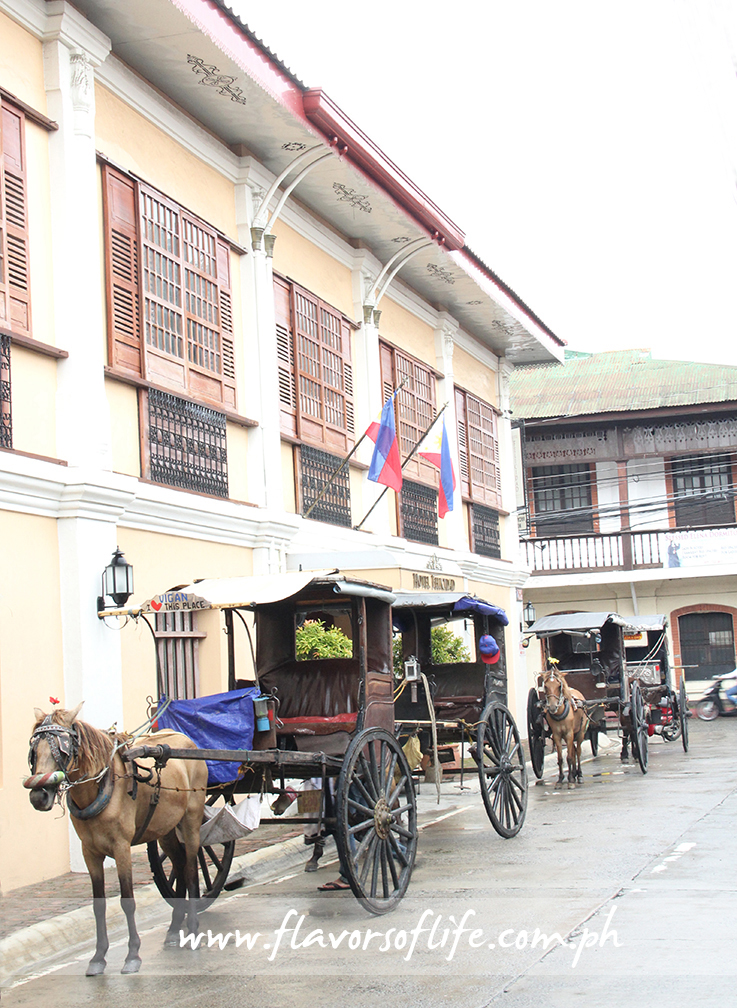
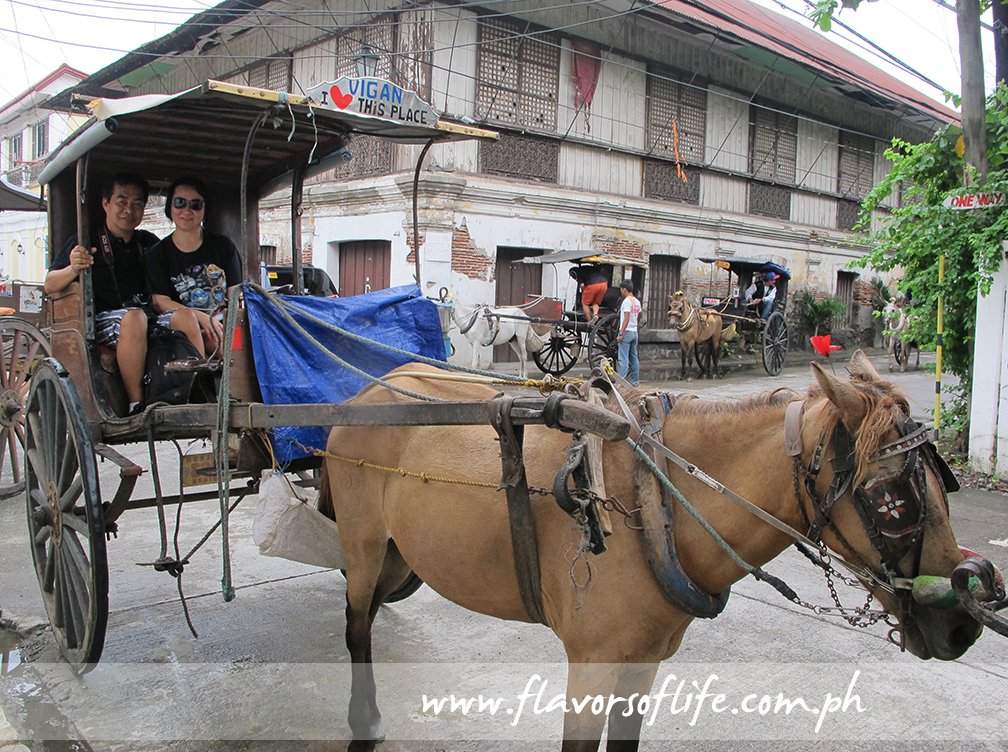
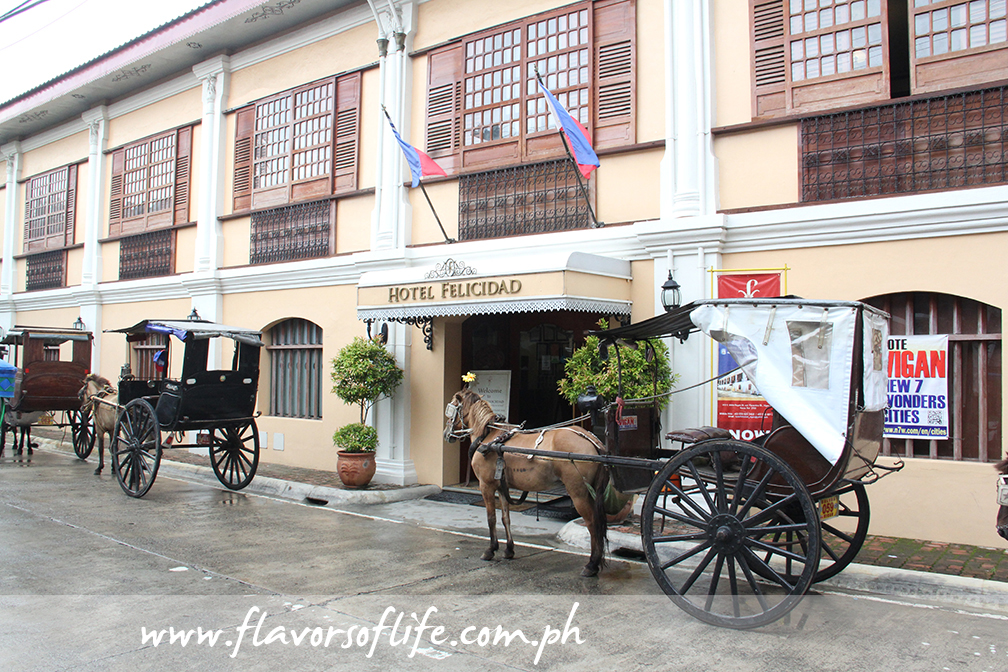
Calesas waiting in front of Hotel Felicidad
Walking back to our homebase, Hotel Felicidad, calesas (horse-drawn carriages that tourists can take a ride in for a tour of Vigan’s famous attractions) decorated with a single flower on each horse were waiting to give us an exciting and uniquely Vigan ride to one of the major attractions in the outskirts of the city, the Bantay Bell Tower and the Shrine of Our Lady of Charity beside it.
BANTAY BELL TOWER
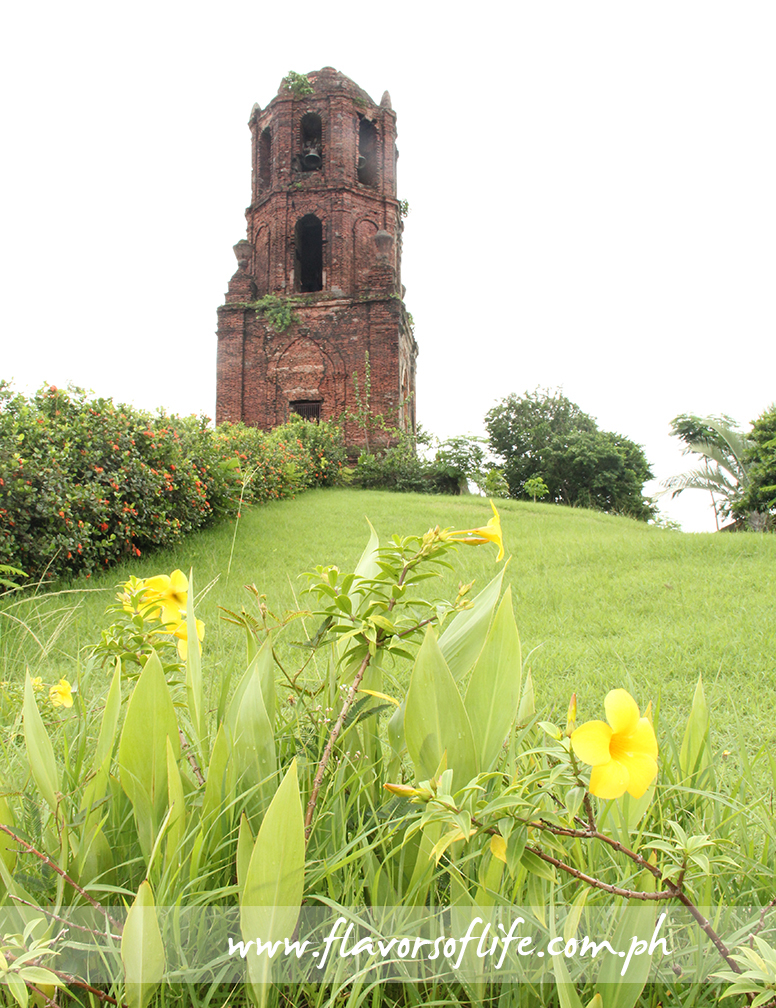
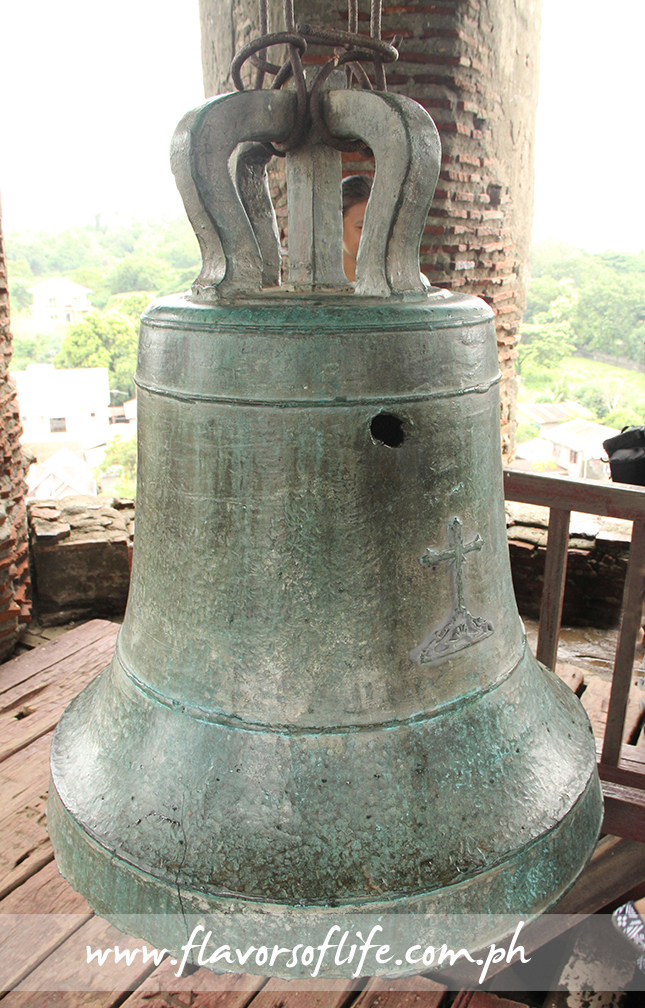
Bantay Bell Tower was where an important scene in the Panday movie of the late Fernando Poe Jr. (FPJ) was shot. It was the scene where FPJ, in his character as Flavio, a tinsmith, pulled out the ‘magical’ sword from the giant bell of the bell tower. It’s a bell tower set on top of a grassy hill and was built as the belfry of the Shrine of Our Lady of Charity and at the same time the watch tower of the town of Bantay.
Bantay Bell Tower in the neighboring town of Bantay, Ilocos Sur
The giant bell, which was used in the shooting of the Fernando Poe Jr. movie, Panday, can still be found at the belfry
Santuario de Nuestra Senora de Caridad
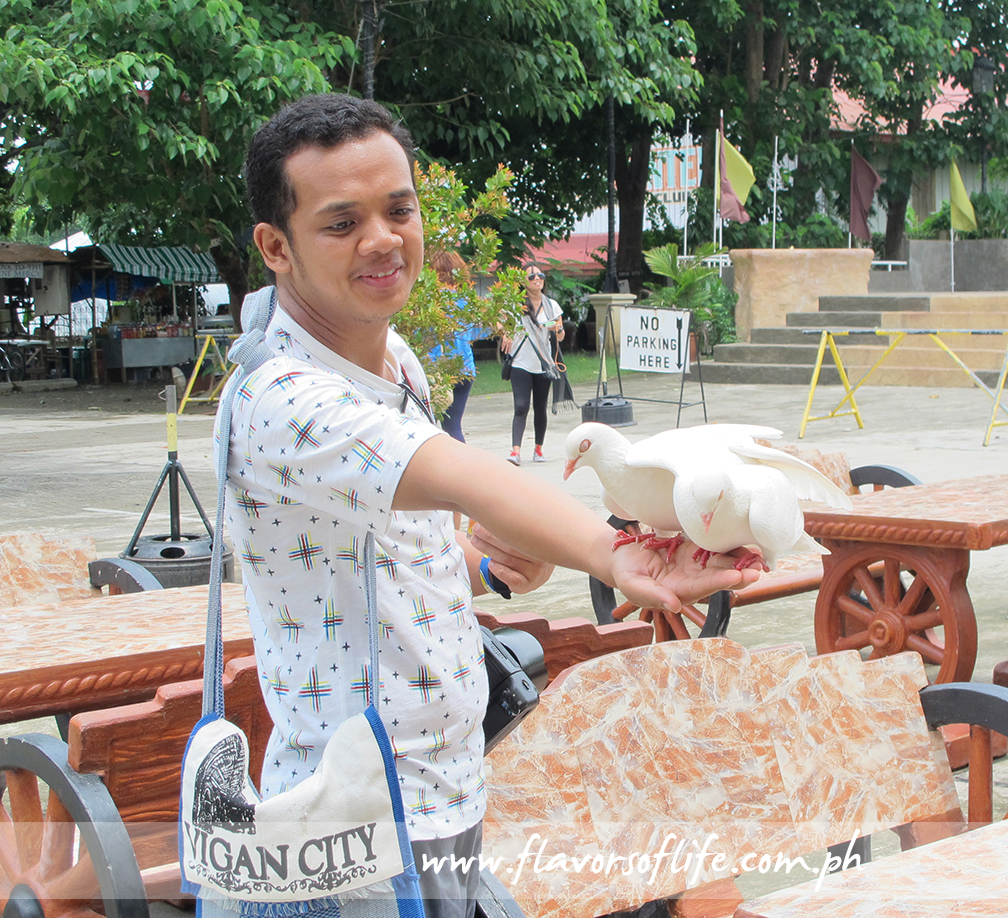
Philippine Star’s Gillian Gacuma feeding doves on the palm of his hand
Enjoying our calesa ride…
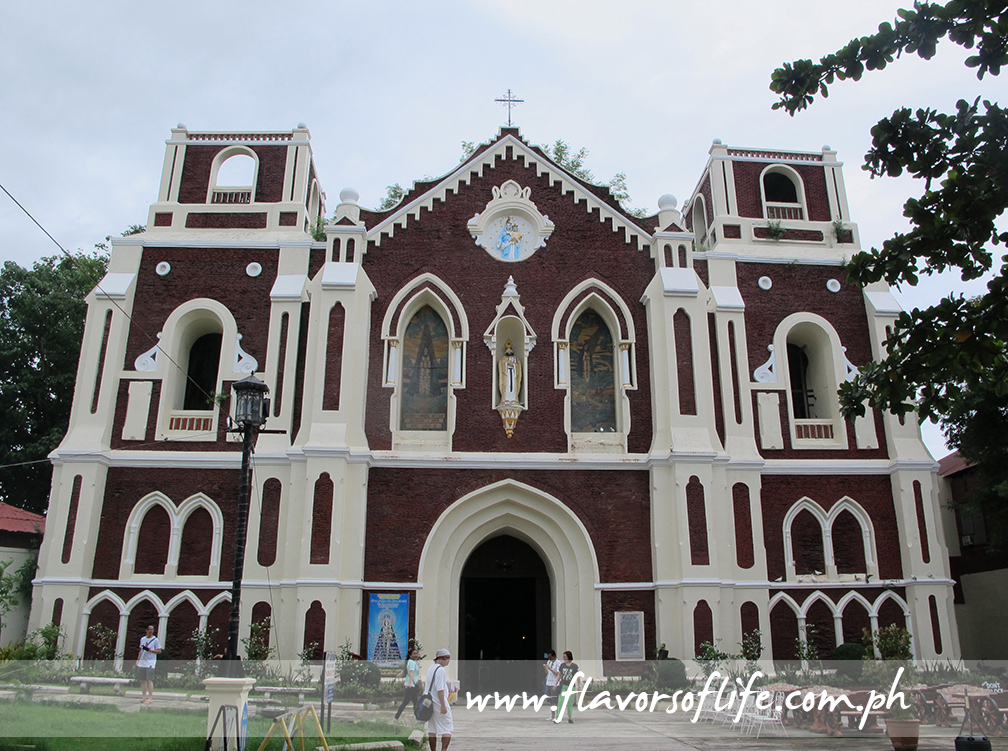
The church, also known as Santuario de Nuestra Señora de Caridad, St. Augustine Parish, is one of the oldest churches of Ilocos Sur. It was built in 1590, was damaged during World War 2 and reconstructed in 1950, with the restored facade taking on a Neo-Gothic design mixed with pseudo-Romanesque elements. The church became a shrine of Our Lady of Charity when the miraculous image was crowned as the patroness of Ilocandia by the Most Reverend Monsignor Vagnozzi, Papal Nuncio to the Philippines, in 1956.
Alighting from our calesas near the church grounds, the group walked up the stone steps to the Bantay Bell Tower, all the way up to the belfry, where the giant bell used in Panday still stands. Then we quietly made our way down to visit the Shrine of Our Lady of Charity to whisper a prayer to God and send it up to heaven. I was surprised – and, no, not lucky, but blessed – to have been singled out from the crowd of visitors by a church hand, who walked me to the back of the altar, where he instructed me to reach in and touch the foot of the miraculous image, pray for the fulfilment of my most fervent wish, and then walk back to the main area of the church with an even more positive disposition.
My husband Raff and I made our way out of the church afterwards to find a friend, Gillian Gacuma of Philippine Star, in the plaza feeding the doves on the palm of his hand. It was a beautiful sight to behold.
ARCE MANSION
When the group congregated once again, we got back onto our assigned calesas, which then took us on a leisurely trip to Arce Mansion, an ancestral house along Quirino Blvd., Vigan City, that has been converted into a tourist attraction where guests can dress up in colonial costumes and have their pictures taken in any part of the well-preserved house.
Upon entry, you are immediately escorted to the costume room on the ground floor, where you can choose from racks upon racks of colonial-style Ilustrado costumes for women as well as outfits of gobernadorcillos, military officers, illustrious mestizos, even religious attires for men. You pick the outfit that you like, change into it, and then walk up the stairs to enter the main house. Every nook or corner of the mansion is photogenic, and every shot taken will transport you back to the time of the Spanish colonial era.
Bookings can even be made for a lovely dinner at the Arce Mansion, with everyone garbed in costumes to simulate the turn-of-the-century times. The Arce Mansion is air-conditioned for such occasions.
As for our group of media people hosted by Hotel Felicidad in partnership with the Provincial Government of Ilocos Sur and the City Government of Vigan, we simply spent an hour or so having our pictures taken in our chosen costumes at the Arce Mansion, and then it was time to move on.
BALUARTE
From the colonial environment of the Arce Mansion, we headed for Baluarte, the home and the private zoo of former Ilocos Sur Governor Luis ‘Chavit’ Singson. We had a good Ilocano lunch and a long chat with Ilocos Sur Governor Ryan Singson at the veranda of the house, and then got to explore the Baluarte grounds.
Ilocos Sur Governor Ryan Singson
Baluarte is Vigan’s famous zoo and theme park
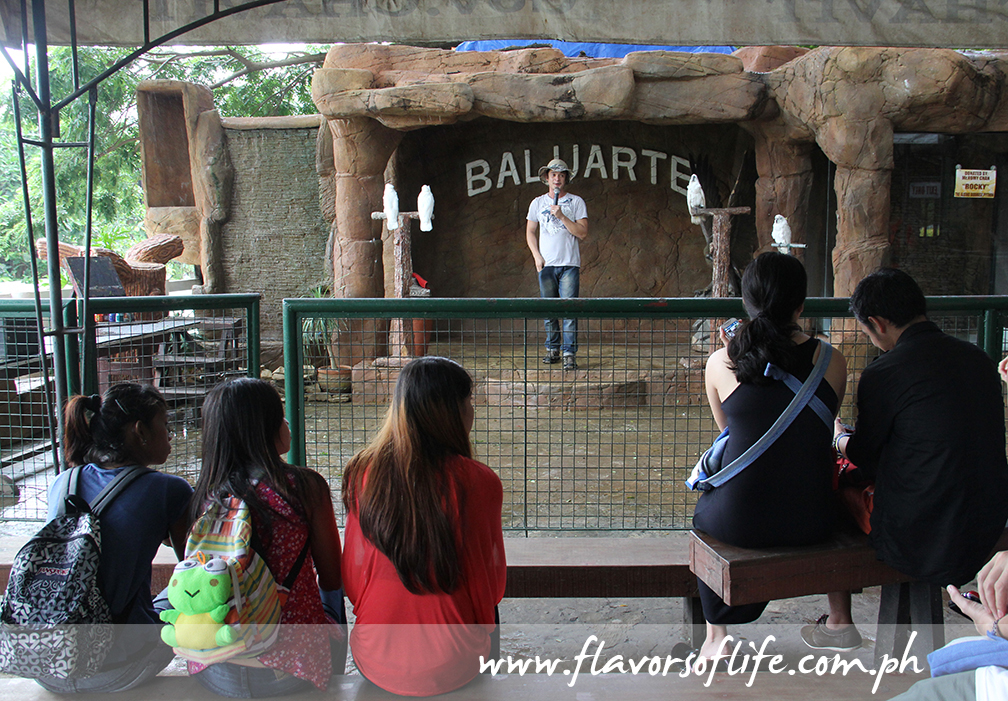
Animal encounter show at Baluarte
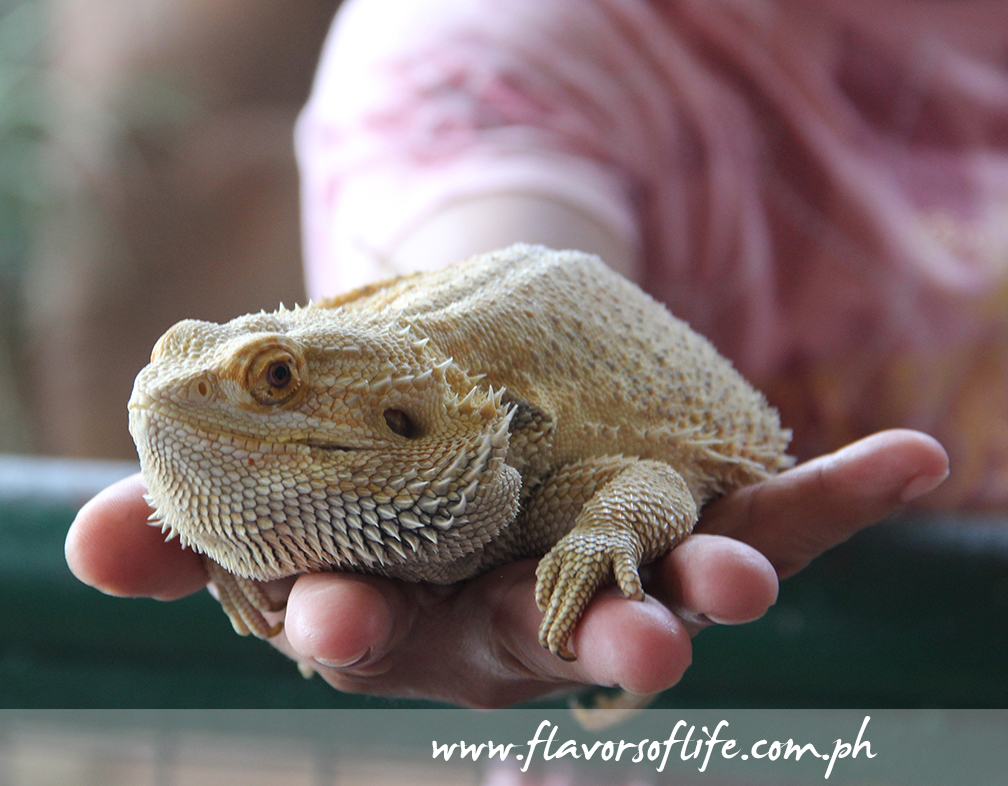
Easter bearded dragon
African python
Baluarte is like a huge private zoo of the Singson family that is at the same time open to the public. The place is so big and the animals so varied and plenty that it’s really like a theme park, more so since it held regular animal encounter shows. We caught one such animal encounter show which was just about to begin, and it gave the audience a chance to see and touch rare animals like an Easter bearded dragon, a corn snake, a Palawan bear cat, an iguana, an African python and a crested serpent eagle.
Then we walked over to the ‘BALUARTE’ sign, and in the company of the iconic concrete dinosaurs that ‘dominated’ the now famous Baluarte facade, we had wacky selfies and groupies taken.
Baluarte is a beautiful place because it’s open fields upon open fields of grazing deer and ostrichs. There, you can also gaze at exotic and colorful birds, get close to animals from the wild, albeit from a safe distance, and enjoy a free pony ride around the open area of the zoo.
The eight-level house of former Governor Luis Singson, located towards the more secluded back of the property, is kept private, of course, but it constantly serves as a venue for many parties and get-togethers hosted by the Singsons.
ABEL WEAVING
Next stop was a weaving factory for Ilocos Sur’s famous Abel Iloko in Caoayan, Ilocos Sur. We were met by the owner, Agustina Quitoriano, who had been in the loom weaving business for 20 years now. She first oriented the group with the process of Abel weaving – starching, spooling the thread into bamboo spools, warping to combine colors of thread according to the thread guide of the pattern to be followed, beaming or putting the threads into the wooden loom frame, heddling, reeding, weft winding, and then the actual weaving.
Ilocos’ famous Abel Iloko
We walked around to watch the weavers at work, and then congregated around the lovely Abel Iloko placemats, table runners and shawls, which sold at amazingly affordable prices.
AND THERE WAS MORE
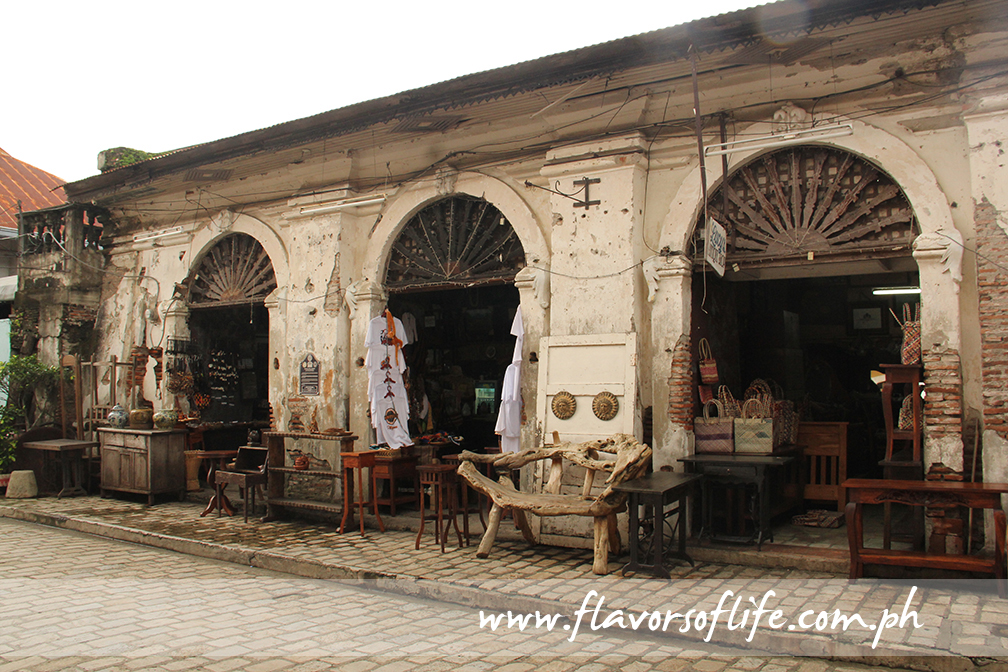
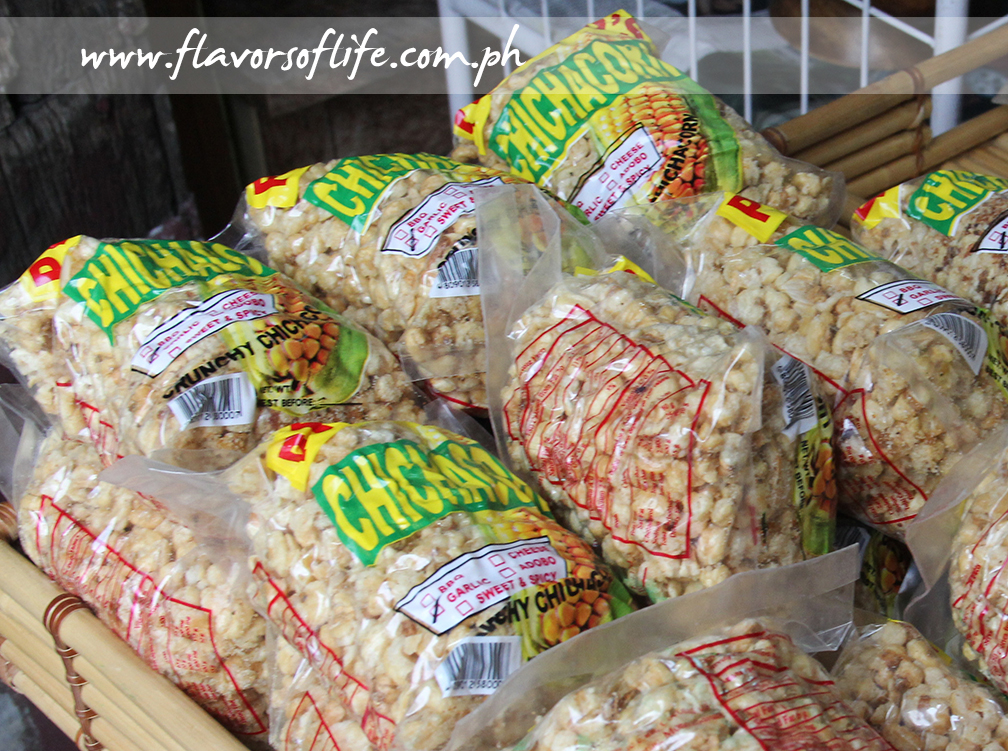
Since the group was leaving Vigan on a land trip back to Manila that evening, the rest of the afternoon was free time for us. Raff and I got down from the van at Calle Crisologo so we could take good pictures of the iconic heritage street and get to buy souvenir items, such as Ilocos’ signature chichacorn (corn kernels cooked to a crisp with garlic, and seasoned with salt), which usually comes in garlic, cheese and barbecue flavors. The shophouses were lined with Vigan souvenir shirts, refrigerator magnets and keychains, Abel Iloko placemats, antique furniture items and décor, bags, woodcraft, novelty items, and food products.
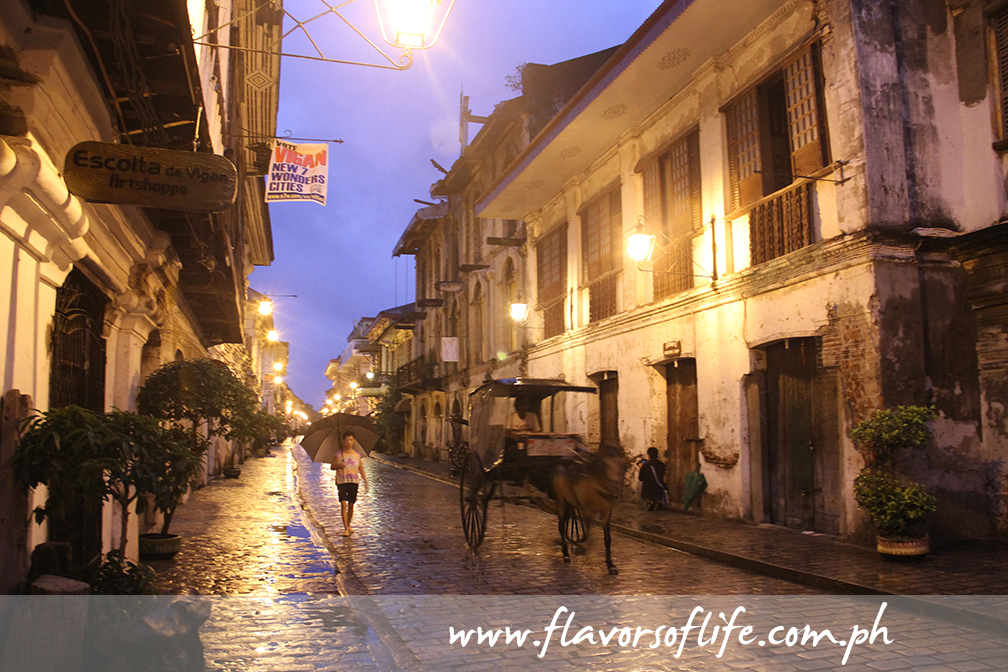
No trip to Vigan is ever complete without a visit to Calle Crisologo
Shophouses along Calle Crisologo sell souvenir items
Woodcraft
Chichacorn!
From Calle Crisologo, we walked further on to the plaza area for another round of shots of St. Paul’s Cathedral, also known as the Vigan Cathedral, and crossed the street to the Tongson’s Royal Bibingka store for a few boxes of Royal Bibingka to take home. Then we headed back to Hotel Felicidad, which served as our home during our stay in Vigan. With plenty of time to spare before the van was to take us to Plaza Salcedo to watch the musical fountain show, we packed up at a leisurely pace.
When dusk fell, we ‘trickled down’ to the hotel lobby one by one, until the group was complete.
A breath-taking fountain show takes place at Plaza Salcedo regularly
The musical fountain show at Plaza Salcedo was an awesome sight to behold. Lasting about 45 minutes, the show was of a world-class theme park calibre. Whether to the tune of pop tunes like Psy’s Gentlemen or classical masterpieces, the “colored” water spurts of the fountain danced to every beat of the music playing. The people of Vigan are so lucky to have such a spectacular light-and-sound fountain show to enjoy as part of their evening routine.
Vigan-style Miki
Royal Bibingka
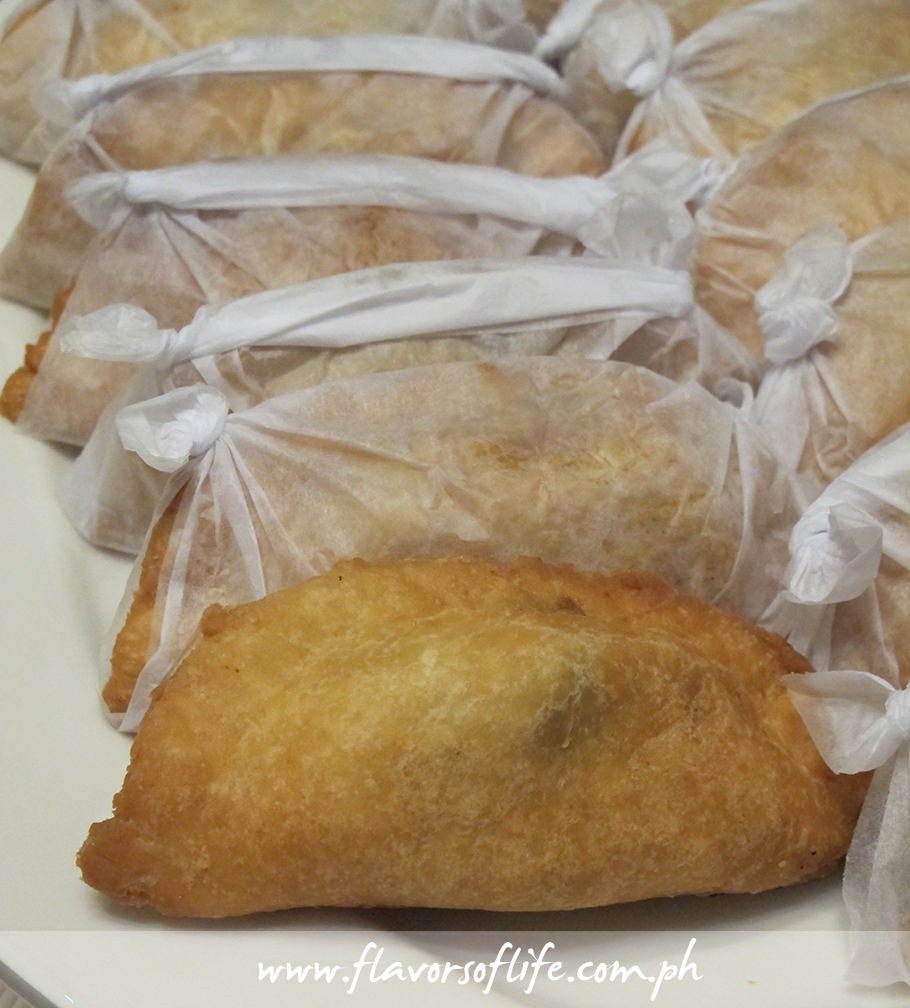
Empanada
From Plaza Salcedo, we headed for our host Hotel Felicidad consultant Jose ‘Bonito’ Singson’s Casa Caridad one last time for a light dinner of Vigan-style Miki, Royal Bibingka and Empanada. We hung around the place, which had become like a real home to the group, until it was time to set off for Manila.
It was difficult to say good-bye to Vigan. Having been to Vigan twice before, the heritage city had grown on me. It was also very close to my heart because I had spent my childhood summer vacations in my mom’s hometown Tayug, Pangasinan, an Ilocano-speaking area of Pangasinan, and Vigan spoke the same language. This – besides the fact that we had great hosts who made us feel right at home.
I know I shall be back.
(Hotel Felicidad is located at 9 V. delos Reyes corner Florentino St., Vigan City, Ilocos Sur 2700 Philippines; with telephone numbers +63 77 7220008, +63 77 6740232 and +63 77 6740227.)
OUR second day in the heritage city of Vigan, Ilocos Sur, was our fullest day ever in terms of grounds covered – despite it being besieged by a heavy downpour that just wouldn’t let up. Typhoon Jose was rampaging at that time, and its playground was the Northern tip of the country, thus bringing Southwest monsoon rains to the Province of Ilocos.
It started very early for my husband Raff, who woke up before dawn to join good friend Fernan Nebres of Philippine Star in taking pictures of Calle Crisologo as it transformed from night to dawn to day.
Breakfast was at Casa Caridad, the home of our host, Hotel Felicidad consultant Jose ‘Bonito’ Singson. We took a leisurely walk from Hotel Felicidad, located at the corner of V. delos Reyes and Florentino Streets, to the nearby ancestral home of the Singsons, and was greeted by a sumptuous breakfast buffet spread in the dining room. There were platters of deboned tuyo with capers in olive oil, smoked fish, egg white omelette, sinanglaw (a flavorful soup of beef innards) and steamed rice.
Sinanglaw
Deboned Tuyo with Capers in Olive Oil
Deboned Smoked Fish
After being fully “charged” by a hearty breakfast, the group got on the way on its tour of Vigan’s heritage sites and tourist attractions.
SYQUIA MANSION
Since it was still raining, our itinerary first focused on indoor attractions in the city, such as the Syquia Mansion. Constructed in 1830, it was the ancestral home of Doña Alicia Syquia, who married the Philippines’ second president, President Elpidio Quirino, in 1921. Thus, this house, also known as Bahay na Bato, became the home of the Philippine president and was considered as the first Malacañang of the North.
Syquia Mansion
This karuwahe in the Syquia Mansion dates back to 1840
One portion of the spacious receiving area of the Syquia Mansion
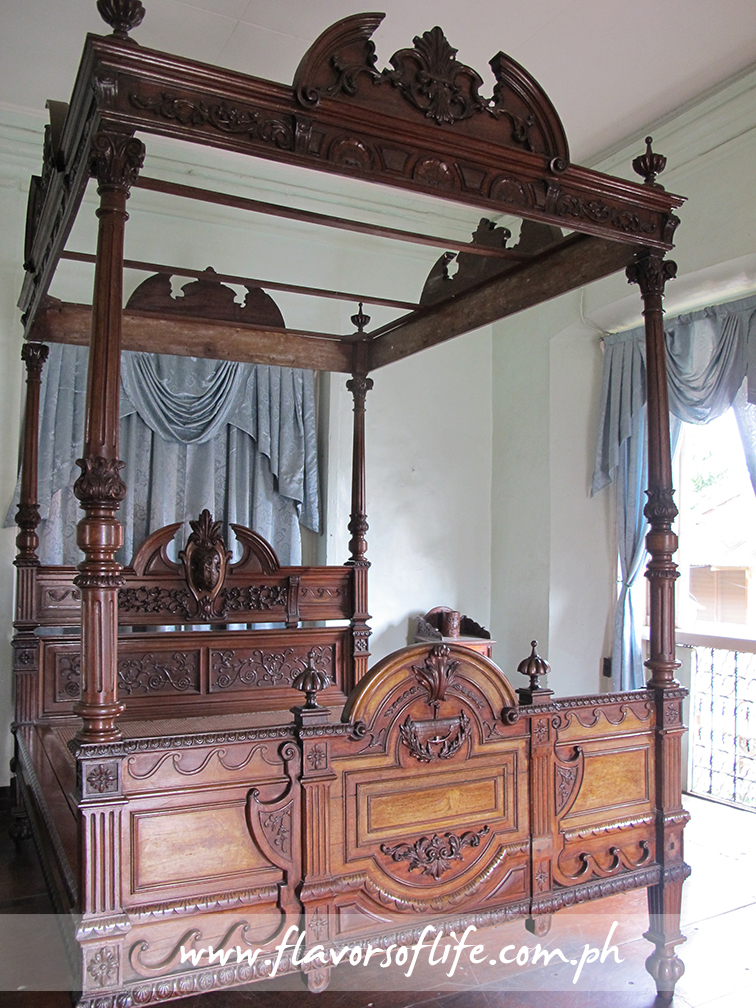
This intricately carved wooden bed has no nails
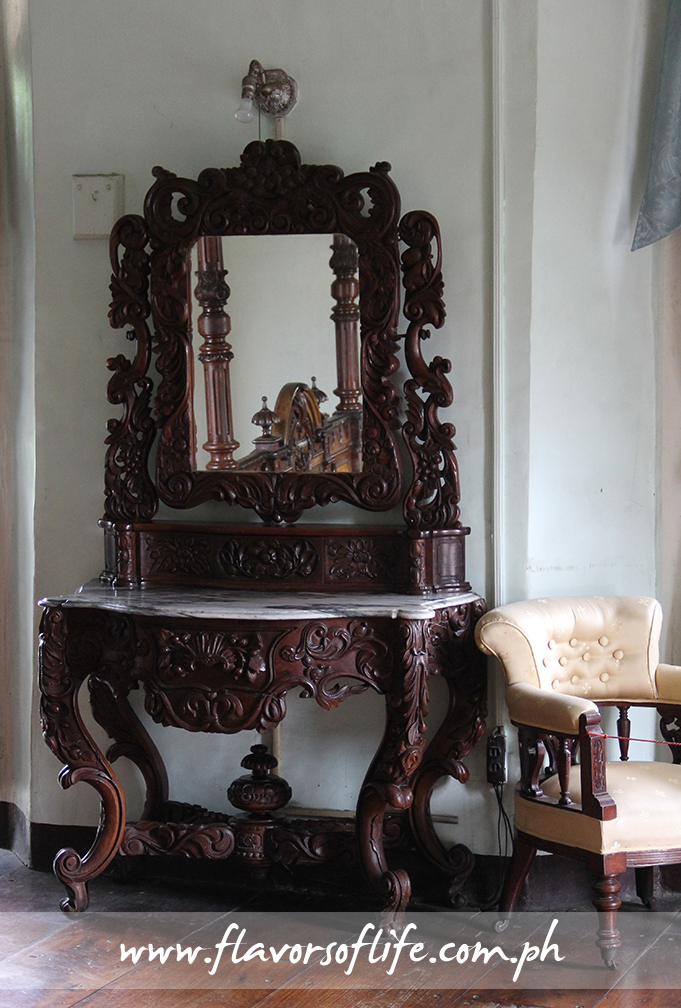
A dresser in the Syquia Mansion
Located at the corner of Calle Quirino and Calle Salcedo, the Syquia Mansion is still basically the original structure that it used to be, lined with piedra China rocks or stones from China that were used to balanced ships, and American machuka tiles. Like other ancestral homes of prominent families during that time, the house had peeping holes in the ante-sala to give the owners of the house a look at guests who are at the door and decide whether or not they want to let the guests in. Lining the walls of the receiving area are replicas of Juan Luna paintings done by Luna’s sister in 1910, including the Blood Compact and Spolarium. The grand piano, which dates back to 1910 and is still in good playing condition, has keys made of ivory.
The bedroom of the house is one of the most interesting places of the house, as it showcases an intricately carved wooden bed that had no nails.
ADVENTURE ZONE
When the rain let up a bit, our tour companions, Mia and Kat of Hotel Felicidad, took advantage of the improving weather and brought the group to the Adventure Zone, which is located to the South of Vigan.
Adventure Zone
Ziplining across the Abra River in a seated position
Ziplining back in a Superman position
A mountainous area of Ilocos Sur facing Abra, with the Abra River crossing it, the Adventure Zone features a zipline and wall climbing facilities. The zipline crosses the river, first in a seated position, then coming back in a Superman position, so that you cross the river twice on zipline. You also have the option of launching off alone or in a tandem, but coming back is a strictly one-person-at-a-time affair.
PINAKBET FARM
It was drizzling again when the group left the Adventure Zone, and the coaster headed West to bring us to Caoayan, Ilocos Sur, where we were to have lunch at The Pinakbet Farm.
The Pinakbet Farm has been gaining a good following from tourists, both foreign and local, in recent months because it offers a sumptuous lunch at a price that offers good value for money. The restaurant has a pavilion-type al fresco dining area lined with long wooden tables and benches. For Php200 per head, Pinakbet, a medley of vegetables cooked in bagoong (shrimp paste) and is a classic Ilocano dish, is served in a long bamboo container at the table. Diners also get to enjoy grilled chicken, liempo and tilapia with seaweed salad, rice and soda in unlimited amounts. Although the food is not laid out on a buffet table, diners can ask the servers to replenish their food and ask for more rice, chicken, liempo or tilapia.
The hall-type al fresco dining area of The Pinakbet Farm in Caoayan, Ilocos Sur
Pinakbet served in a bamboo container
Seaweed Salad
The Pinakbet Farm’s staff put together a cultural presentation
Caoayan Mayor Germy Singson Golart and Hotel Felicidad consultant Jose ‘Bonito’ Singson at The Pinakbet Farm
The fishing area of The Pinakbet Farm
At the end of their meal, a cultural show is presented by the staff in native costumes. The cultural show tells a story of courtship and marriage in songs, starting with novelty songs such as Pinakbet Song, Ti Ayat Ti Maysa Nga Ubing and Manang Biday to love songs like Pamulinawen, Hello Love, Abalayan, Isem and Dungdongwen Kanto to more contemporary pieces that include Awitin Mo at Isasayaw Ko and Kahit Maputi Na ang Buhok Ko. Towards the end, the performers present a dance number, tinikling, and ask for audience participation.
The Pinakbet Farm also features a fishing area, where diners can go fishing for tilapia and have their fresh catch cooked.
CRISOLOGO MUSEUM
Next stop was the Crisologo Museum right in the heart of Vigan. Just a stone’s throw away from Calle Crisologo, the Crisologo Museum is the ancestral house of the late Congressman Floro Crisologo. Founder of the Social Security System (SSS), the late congressman was shot and assassinated at the St. Paul Cathedral, where he instantly expired, in 1970.
Office at the Crisologo Museum houses the memorabilia of the late Congressman Floro Crisologo
A corner on the upper floor of the Crisologo Museum
A native of Vigan, Crisologo was among the brave fighters who subdued the last remaining rampart of Japanese resistance in Bassang Pass, Cervantes, Ilocos Sur.
His house was transformed into a museum to house his memorabilia after his death.
PLAZA MAESTRO CONVENTION CENTER
After leaving the historically rich confines of the Crisologo Museum, we made a quick stop at the Plaza Maestro Convention Center along Florentino St. in Vigan. A newly constructed venue for parties and conventions, including weddings, reunions and debuts, Plaza Maestro Convention Center is a two-story structure made up of ballrooms and function rooms of different sizes to meet the various venue needs of Ilocanos in Vigan.
Plaza Maestro Convention Center will now play host to private parties on special occasions
.
LONGGANISA MAKING
Aside from bagnet (crispy pork belly double fried to a golden crisp), Vigan longganisa is the other iconic food product that the city is very proud of. While different regions in the country boast of their own versions of longganisa, the Vigan longganisa is known for being very garlicky and flavorful. So the group stopped by the longganisa factory of Jeannie Piamonte Criste, who learned how to make longganisa from her grandmother and has been personally making longganisa for 12 years now. She and her staff make Vigan longganisa in her home as a backyard business, and she sells her products at the Vigan Public Market at Php120 per dozen of the big linkages and Php100 per dozen for the smaller longganisas.
Longganisa-making demo in the home-based longganisa factory of Jeannie Piamonte Criste
The longganisa filling is forced into washed and cleaned pig’s intestines to make segments
Cooked Vigan longganisa and ready to serve…
Criste obliged to our request for a demo on how to make Vigan longganisa, at the end of which she had a generous amount of her longganisa cooked for everyone to try.
CULTURAL PLAY
From the longganisa factory, the group headed back to the city proper, straight to the Vigan Cultural and Trade Center, where Vigan City Mayor Eva Marie Medina invited us to watch Tres Patrimonio (or Three Patrimonies).
Presented by the City Government of Vigan under the direction and script of Joseph ‘Sonny’ Cristobal, with music by Ato del Rosario and choreography by Gerard Mercado, Tres Patrimonio takes on the zarzuela form in a musical trilogy that touches on the salient chapters in the lives of spouses Diego and Gabriela Silang, Leona Florentino and Fr. Jose Burgos. The three-act play centers on the story of Diego and Gabriela Silang and their involvement in the revolt against the Spanish colonizers and their subsequent execution in the First Act. The Second Act shows the sorry state of women during the Spanish colonial period in Philippine history and how feminist poet and writer Leona Florentino contributed to the emancipation of Filipino women with her writings. The Third Act follows the life story of Father Jose Burgos (one of the Gomburza triumvirate of priests executed during the Spanish era) and his La Loba Negra, a novel where the Vigan-born priest created the character of Doña Maria Luisa Bustamante who assumes the person of a warrior-leader called La Loba Negra or Black Dog in the Philippine Jungle to fight the abusive Spanish friars.
Act 1 of Tres Patrimonio traces the lives of Diego and Gabriela Silang
Act 2 of the play showcases the life and times of Leona Florentino and her struggle to achieve women’s emancipation
Act 3 revolves around the La Loba Negra work of Father Jose Burgos
Vigan-style Miki served after the theater production
Desserts
Vigan City Mayor Eva Marie Medina
What’s even more amazing about Tres Patrimonio is that its stars are all employees of the City Government of Vigan, and they can all sing. The story is told in song numbers, and the performers sing like pros in a Repertory Philippines theater production.
By producing Tres Patrimonio, Vigan transcends its boundaries and explores the city’s historical links with neighboring provinces who also cradled prominent men and women in Philippine history.
The cultural presentation ended with a buffet dinner reception.
Hotel Felicidad is one of the hotels in the heart of Vigan
I HAVE always been fascinated with Vigan. I am awed by the fact that Vigan, acknowledged to be the third oldest Spanish settlement in the Philippines, has managed to preserve its turn-of-the-century colonial look and feel. The cobblestone pavements remain, and the old ancestral houses and buildings have stayed relatively untouched. Some of them have even been converted into museums, while others have been declared as heritage houses by the National Historical Institute. The core of the colonial architecture of the glorious era that it represents have been kept intact despite being converted into shophouses along the famous Calle Crisologo in the heart of Vigan.
Small wonder Vigan, the capital city of Ilocos Sur, is the only city in the Philippines inscribed in the list of UNESCO World Heritage Sites and Monuments and is now making a bid to make it to the New 7 Wonders-Cities of the World roster.
Two weeks ago, my husband Raff and I joined a rather big group of media people who embarked on a road trip to Vigan to discover – or rediscover – the delicious tastes and beautiful sights of the heritage city.
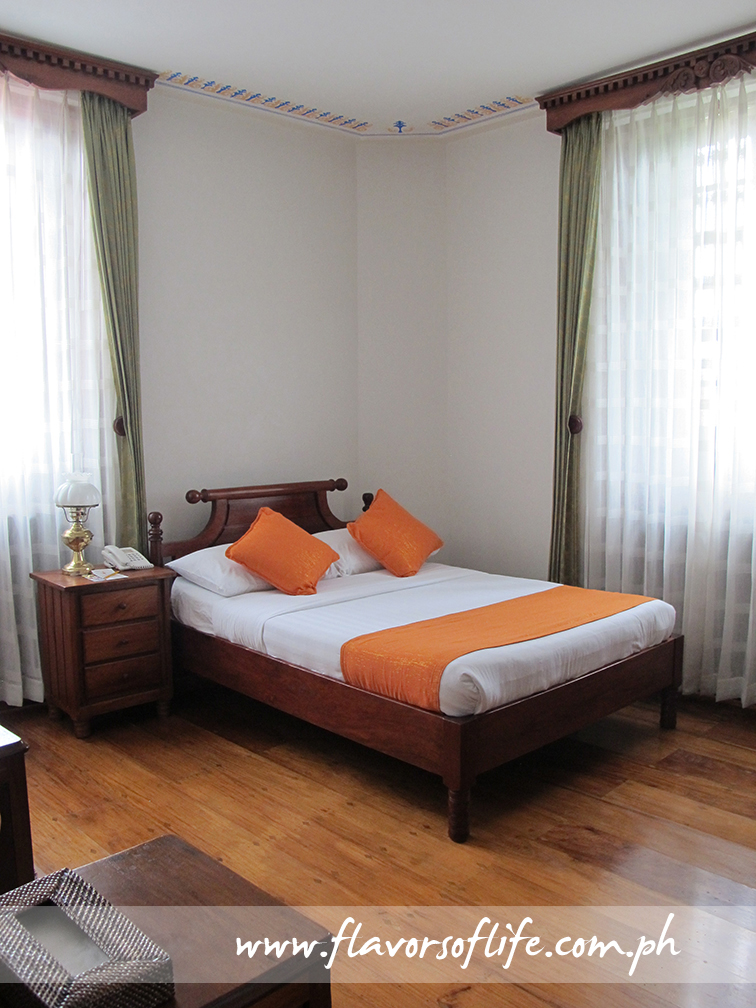
Standard Room at Hotel Felicidad
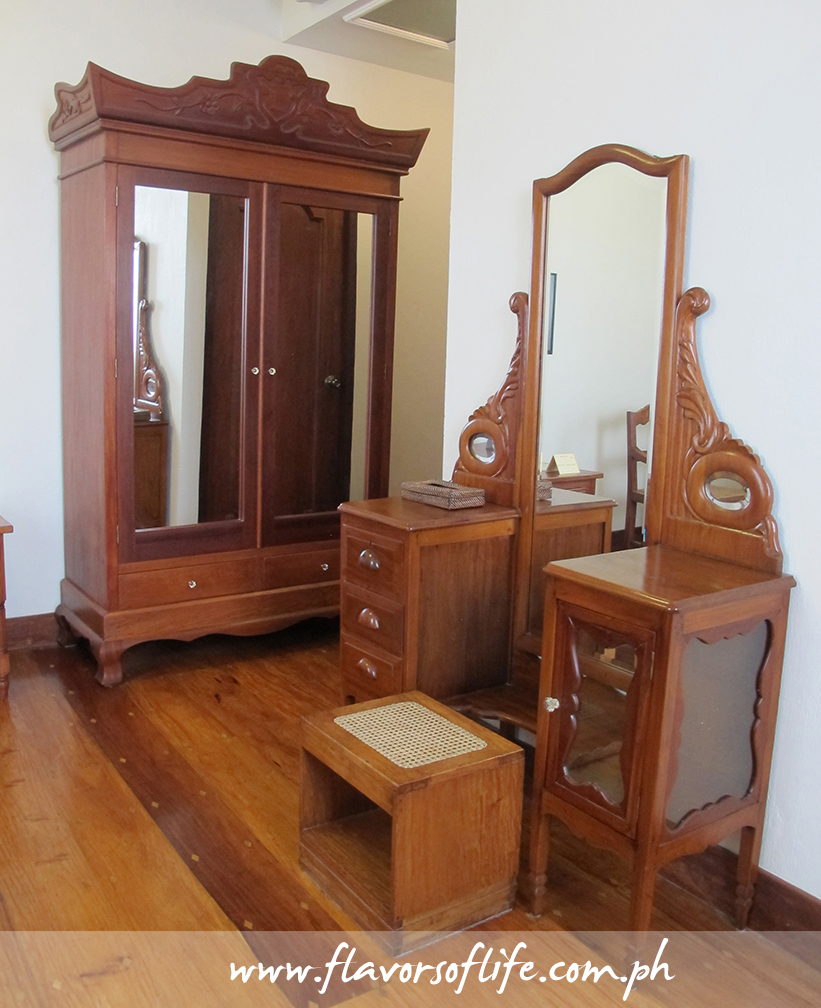
Cabinet and dresser in a Standard Room
The road trip from Manila to Vigan took some eight hours, leaving our pick-up point in Quezon City at a little before 12 midnight to make it to Vigan in time for breakfast. We got to Hotel Felicidad, located at the corner of V. delos Reyes and Florentino Sts., which is just a stone’s throw away from the famous Calle Crisologo, at about 8:00 a.m., where a simple but awesome Ilocano breakfast buffet was waiting for us. We dug into the daing na bangus, Vigan longganisa, fried eggs, sliced tomatoes and rice, and washed down the tummy-filling breakfast with freshly brewed coffee, before proceeding to our rooms and taking a short nap. We stayed awake most of the night, since you really cannot sleep well in a seating position, and we all really needed a short but sweet shut-eye.
When we met up at the lobby a few hours later, we were all recharged. What a short nap can do for you!
CASA CARIDAD
It was time for lunch, and so we took a short trip to Casa Caridad, the residence of our host, Jose ‘Bonito’ Singson, who also happened to be the consultant of Hotel Felicidad. Casa Caridad, named after Singson’s mom, could be found right along V. delos Reyes St. and was just a short walking distance from Hotel Felicidad, our home for the next three days, but since it was raining hard as Typhoon Jose went beating hard in the North, the hotel shuttle took us there. In our succeeding stops at Casa Caridad, we would insist on talking a walk instead.
The courtyard of Casa Caridad
The main house on the upper floor
One of the receiving areas of the house
Another receiving area in the house
Ar-arosep Salad
Igado
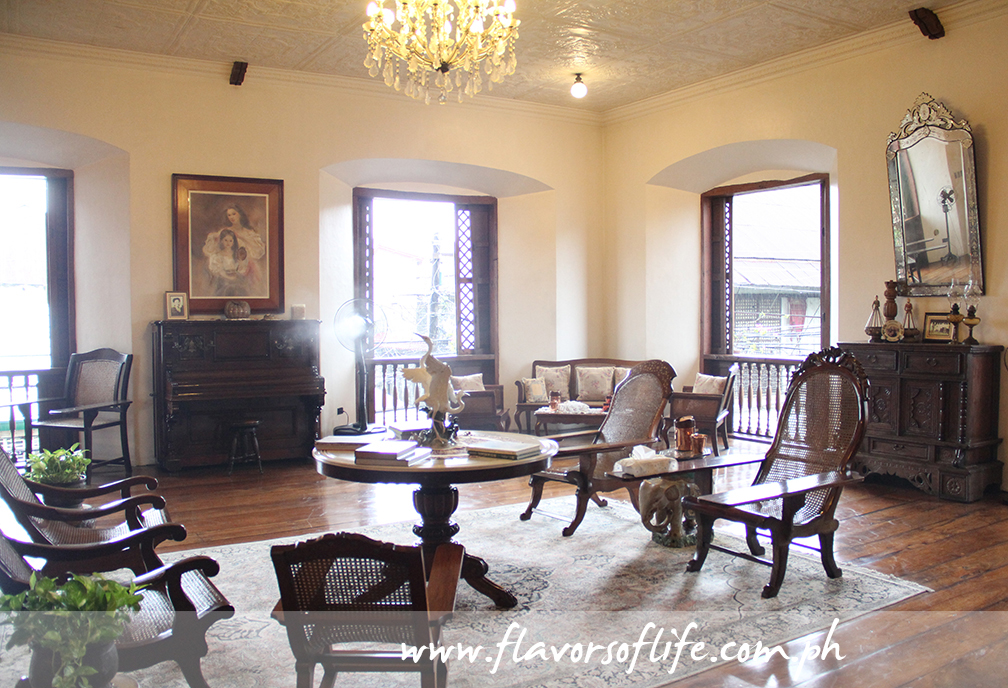
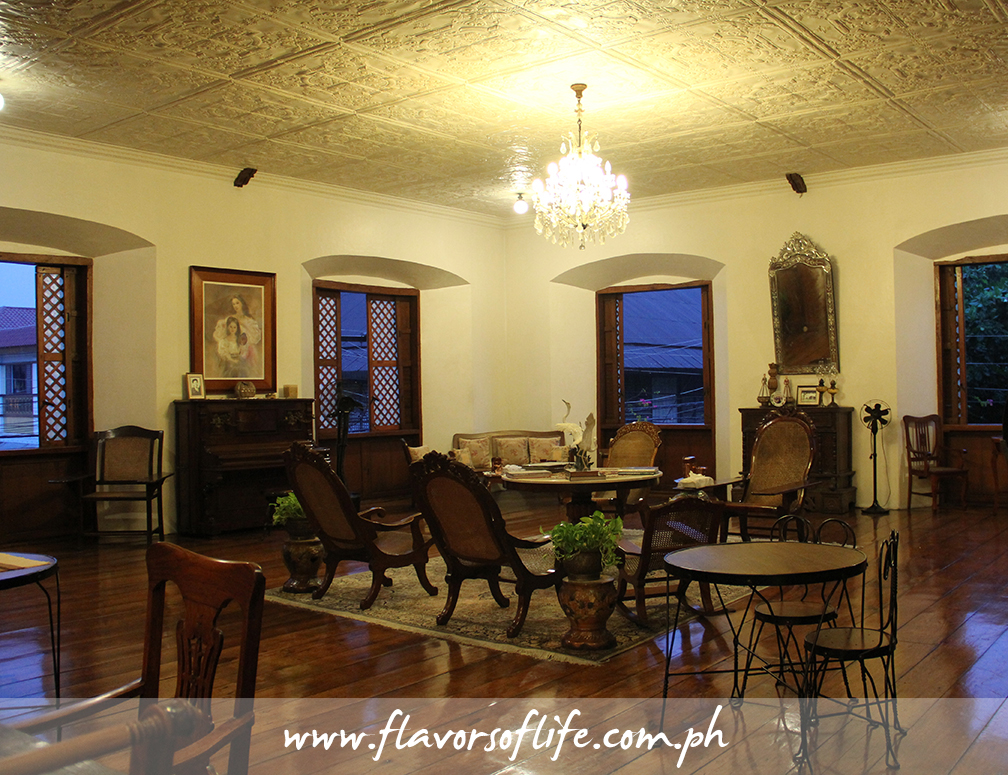
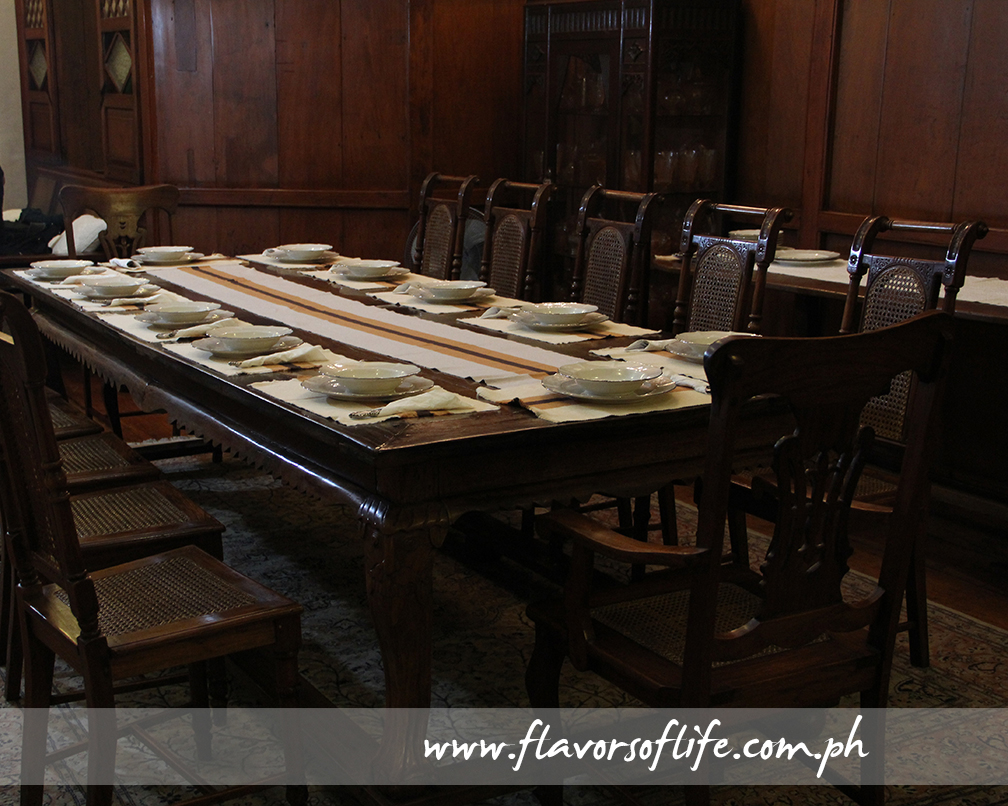
A typical ancestral house, Casa Caridad opened up to a courtyard, garage and storage area, and wide wooden staircase that led to the main house on the second floor. Our host met us downstairs and led us up to the main house, whose main hall, like other ancestral houses of its era, was a wide area with small receiving areas that stood next to each other. It led to the dining room, where a long wooden table with intricately carved wooden chairs was the centerpiece. Singson gave us a quick tour of the house, including an awesome kitchen with wood-burning stoves and a high ceiling.
We had a sumptuous lunch of Ar-arosep Salad (fresh seaweed with tomatoes), Poque-Poque (an eggplant dish with tomatoes, onion and egg), Igado (a stew made with pork innards) and Bagnet (Ilocos’ famous crispy, deep-fried pork belly, twice cooked to a crispy and golden perfection). I’m not a big eggplant lover, but Poque-Poque is one Ilocano dish that I really love. I could have just that and rice, and be happy with my meal.
After lunch and pleasant conversation, our host sent us off on a city tour.
ST. PAUL CATHEDRAL
We made our first stop at St. Paul Cathedral, which stood right in the heart of the city, fronting Plaza Salcedo and Plaza Burgos. Both the Vigan City Hall and the Ilocos Sur Provincial Capitol, as well as the Archbishop’s Palace and Museo Nueva Segovia, are just in the vicinity.
St. Paul Cathedral
Inside St. Paul Cathedral
Also known as the Cathedral of Vigan, the church was built in 1641 and became a cathedral in 1758 when the seat of the Diocese of Nueva Segovia was transferred from Lal-lo, Cagayan, to Vigan, Ilocos Sur. The two side altars in the cathedral are dedicated to Apo Nazareno on the north side and Apo Birhen del Rosario on the south side. Juices of trees, molasses and egg whites were used to put the structure together, and the original materials, especially of the façade, still remain, although these have been paved with concrete so that the bricks are no longer exposed and erosion is therefore no longer a point of concern.
BALUARTE
From St. Paul Cathedral, we visited Baluarte, the home of our host’s brother, former Ilocos Sur Governor Luis ‘Chavit’ Singson, and is known as a private zoo and theme park that’s open to the public. Baluarte was a huge property, which a number of exotic animals now call home. It has, for its facade, huge dinosaur figures with the word BALUARTE spelled out. Deer and ostrichs freely graze in the vast and verdant fields, and there are donkeys, horses, tigers, birds and snakes, even crested serpent eagles, iguanas and Easter bearded dragons, to see while there.
Seldom-used dining table by the lobby of former Ilocos Sur Governor Luis ‘Chavit’ Singson’s house at Baluarte
Part of former Governor Luis ‘Chavit’ Singson’s elegant home
The elevator and stairs area of the house at Baluarte
Baluarte is named so because it is like a fort. The multi-level residential building where the former governor lives can be found towards the back of the property. It is circular in shape, and the only way to get from one place to another is through a private elevator, although there’s stairs as well.
PAGBURNAYAN
Next stop was Pagburnayan, a burnay-making factory owned by Fidel Go. The owner is also the master burnay artist, and in his hands, making the water containers out of clay seems so easy. Having mastered the art of making burnays or clay pots, Go obliged to our request for a burnay-making demo, where he shaped a big burnay out of Bantog clay from Barrio Bulala on a spinning pottery-making device.
Pagburnayan’s master burnay artist Fidel Go making a burnay
Burnay jars
Go began making burnays at age 22, taught the art of pottery by his father. He explained that getting the clay ready for burnay-making is a tedious four-hour kneading process by carabao before anything else. Contrary to popular belief that the thicker the clay pot is, the stronger and more sturdy it is, Go says that when it comes to burnay jars, thinner is actually more preferred because it lasts longer.
At Pagburnayan, Go and his staff does not have to make perfect burnay jars all the time. Sometimes they consciously make imperfect burnays because they will break them anyway. Yes, broken jars can still be sold, and they command a good price because salt makers and fishpond owners actually order broken burnays on a per kilogram basis because they use the broken jars to line the salt beds and the fishponds.
BACK TO CASA CARIDAD
After the burnay-making demo, the group headed back to Casa Caridad for dinner. After having bites of Okoy and Vigan Empanada, Singson’s trusted cook, whom he fondly called Manang Tita, allowed us into the kitchen, where we watched as she prepared two Ilocano heirloom dishes, Chicken Pipian and Vigan-style Arroz Caldo.
Casa Caridad at night
The lovely kitchen
Vigan Empanada
Okoy
Manang Tita demonstrating how to prepare Chicken Pipian
Dining area of Casa Caridad
Vigan-style Arroz Caldo
Chicken Pipian is a soup-y dish where the chicken is cooked in an achuete-colored sauce made with ground toasted rice, kamias and ginger, and what lends it extra flavor is the inclusion of a leafy ingredient called pasotes. Pasotes, known as epazote in Mexico, is used in a similar Mexican Pipian dish. Raff and I followed each step taken by Manang Tita and took digital shots for a feature in my Weekend Chef column in TV5’s online portal, www.interaksyon.com.
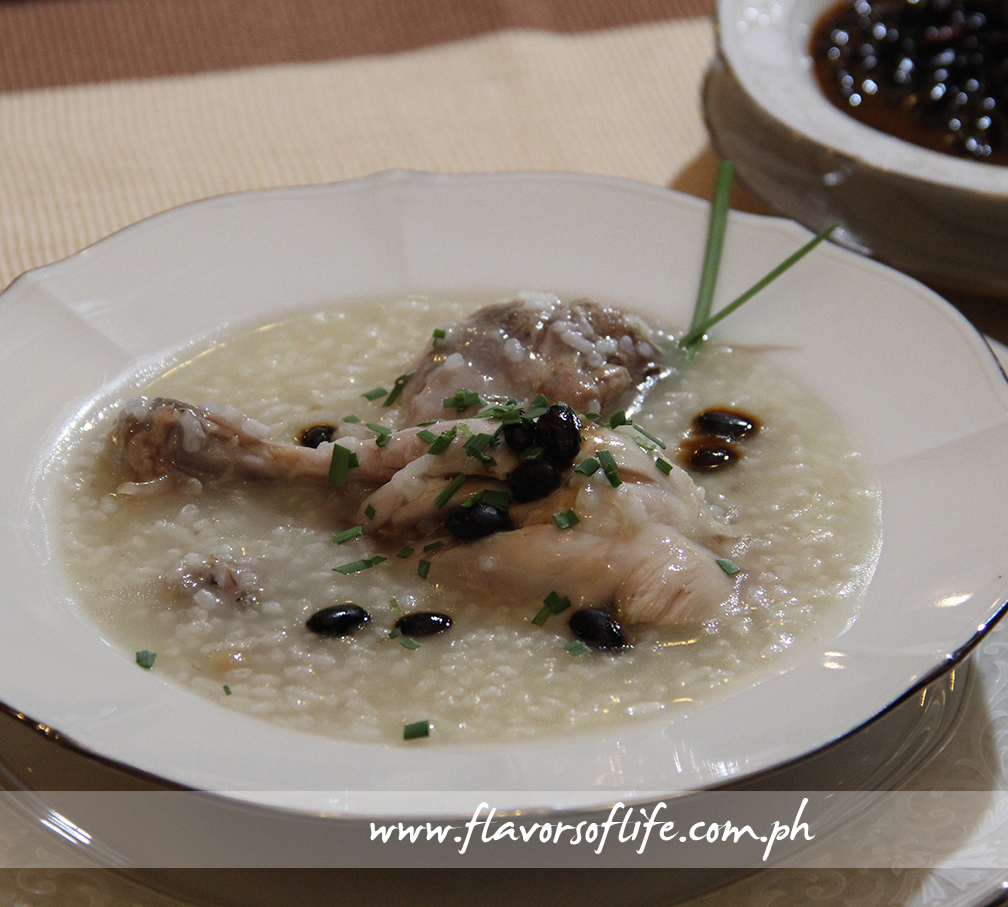
Vigan-style Arroz Caldo is quite like regular Arroz Caldo, but it is richer and thicker, and is served with a teaspoon of black beans on top.
Joining us for dinner was Vigan Mayor Eva Marie Medina, now on her third and final term as mayor of Vigan City. She shared with us Vigan’s efforts to make Filipinos aware of the heritage city’s bid to make it to the New 7 Wonders-Cities of the World list and encourage them to actually vote for Vigan. Voting, she said, could be done through international phone voting and through the Internet. She also talked about how Vigan is continuously developing new attractions to make the city more attractive to both foreign and local tourists.
After a good chat with the mayor, we called it a day. It was early to bed for a group that had very little sleep the night before but eager to wake up early the next day to discover – or rediscover – more tastes and sights that only Vigan could offer.