IF you’re wondering what South African cuisine is all about, the best way to find out is simply to have a taste of it. No need to go all the way to South Africa to do so. Ongoing at the Makati Shangri-La Hotel (located at the corner of Ayala Ave. and Makati Ave. in the Central Business District of Makati City) until Saturday (April 27, 2013) is A Taste of Rainbow Cuisine: Celebrating South Africa, a hotel-wide South African food promotion that involves the hotel’s four dining venues – Circles Event Café, Red, Conway’s and Lobby Lounge.
Featured at Circles Event Café is a daily dinner buffet of exquisite South African dishes, including Beef Frikkadels with Tomato Chutney, Steamed Saldannah Mussels in Creamy White Wine and Herb Sauce, North African Chicken with Tomato and Coriander, Garlic and Rosemary-infused Karoo Leg of Lamb and Cape-style Traditional Bobotjie with Peach Chutney. Circles is also hosting an exclusive cooking class on South African cuisine on Wednesday (April 24), with a team of guest chefs who jetted in from South Africa’s leading luxury hotel, Emperors Palace specifically for the South African food promotion will be personally teaching guests who sign up for the class how to prepare South African dishes. Interested guests can already make reservations for a slot in the class, since only limited seats are available.
Over at Red, guests get to enjoy a plated dinner paired with South African wines on Thursday (April 25). Some of the special a la carte dishes that will be served at Red are Seared Venison Carpaccio Served with Grilled Goat’s Cheese, Curried Apple and Butternut Soup with Coconut Milk and Lemon Zest, Sautéed Asparagus Tip and Ginger Hollandaise, Char-grilled Ostrich Fillet Served with Caramelized Sweet Potato with Walnuts, Marula Pickles, Swiss Chard and Red Wine Jus, and Cumin, Lime and Coriander-rubbed Salmon with Rooibos-infused Prawn Risotto.
For the duration of the week-long food festival, Conway’s is offering a traditional Braai spread, complemented with South African beer. Braai, in African language, means “barbecue” or “grill,” and so it’s grilled South African meats, including boerewors, sosaties, kebabs, marinated chicken, pork and lamb chops, that will be the highlight of the menu. These will be served with samp (dried corn kernels), chakalaka (spicy vegetable relish) and pap (a kind of porridge made from finely ground corn that is traditionally eaten with meat). Incidentally, braai also refers to a casual social event where families and friends gather to dine in South Africa, so expect Conway’s to be a venue for bonding among families and friends while enjoying grilled South African food together.
As for The Lobby Lounge, which is always abuzz with diners, there is a South African high tea going on every day from 3:00 to 6:00 p.m. African teas will thus be paired with such South African delicacies as Smoor Snoek Sandwich, Amarula Chocolate Truffles and Cape Malay Koeksisters. The latter is a type of doughnut with ginger, anise, cardamom, cinnamon and coconut flakes. To make afternoon tea, South African style, even more exciting and enjoyable, a 14-piece classical orchestra provides soothing music the whole afternoon through.
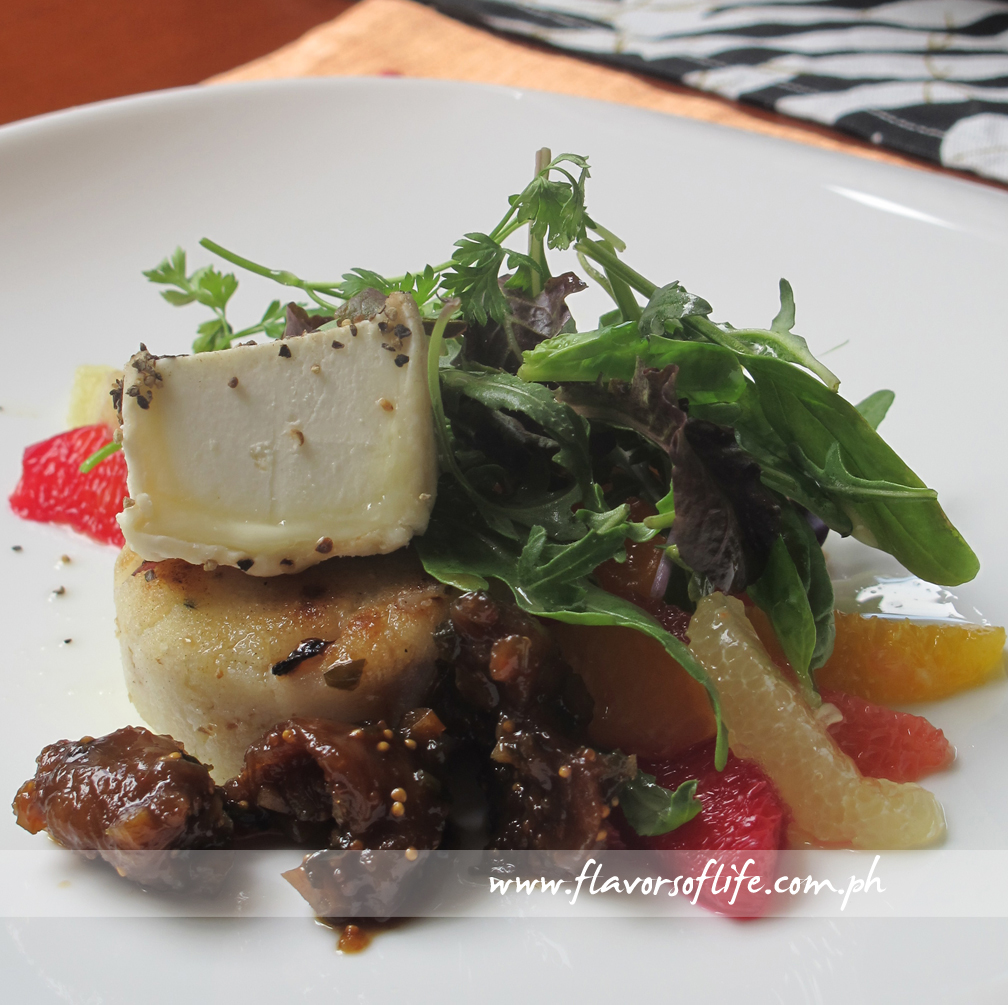


Over lunch at Circles today (April 22, 2013), I got to join some media friends in having a taste of South African cuisine. The sit-down menu consisted of Grilled Pap and Biltong Cake Topped with Peppered Goat’s Cheese Served with a Petit Citrus Salad and a Red Onion, Kumquat Ginger Marmalade for starters. Biltong (or South African pork jerky) was ‘sandwiched’ in the grilled pap cake, which went well with the peppered goat’s cheese. The marmalade was a bit too sweet, although it did add an entirely different flavor dimension to the salad.
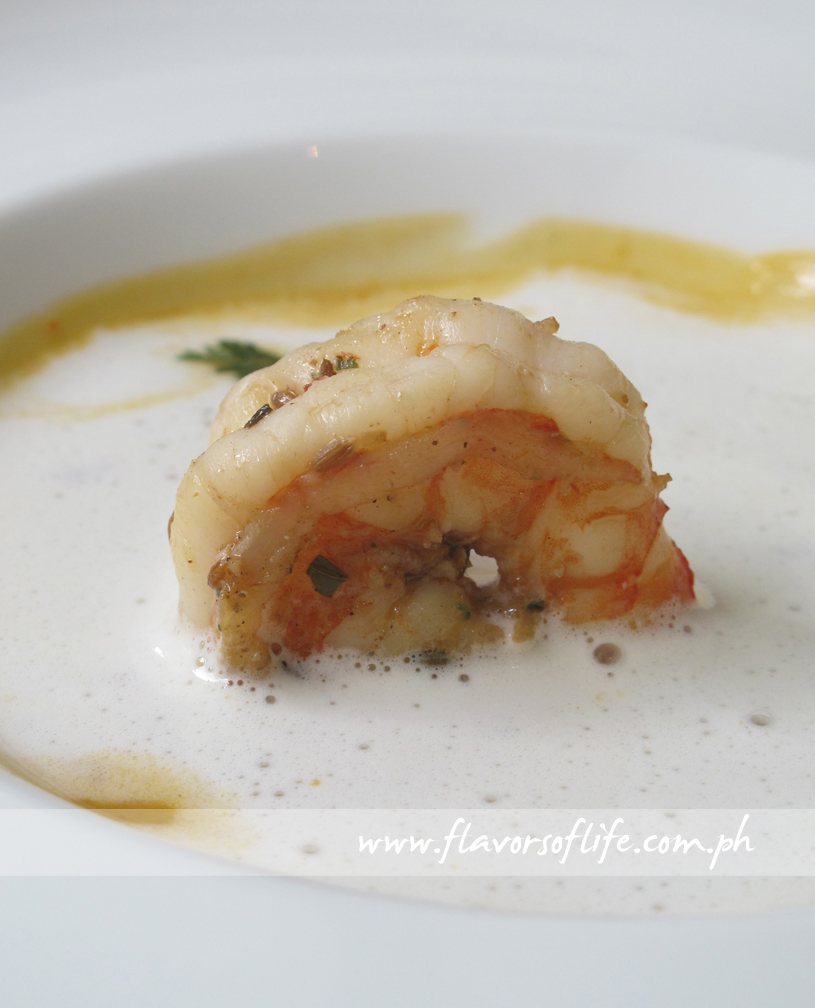
This was followed by North African Prawn Bisque with Harissa Whipped Cream for the soup course. The soup was exquisite. Seafood lovers like me would love it. It’s flavorful but not too strong or overpowering, with the Harissa whipped cream foam taming it down. Incidentally, Harissa is a kind of paste that comes from North Africa but which is widely used in South African cooking, as well, and it’s made of different kinds of seeds, including caraway, cumin, coriander and garlic.
The main course was called a South African Duo. It’s a combination platter of Chicken Supreme Stuffed with Smoked Chicken and Apricot Mousse and Beef Fillet Medallions Served with Swiss Chard, Buttered Samp Cake, Red Onion and Chili Pickle and a Sweet Curry Sauce. I finished my Chicken Supreme and Swiss Chard. The samp cake was refreshingly good. I took a bite of the Beef Fillet Medallions, but I’m not really a big fan of steaks, or beef, in general, for that matter.
Dessert came in the form of a Trio from the Cape. It’s a dessert sampler that consisted of Cape Malay Koeksisters with Coconut and Lemon Zest, Cape Brandy Pudding with a Raisin Relish, and Amarula Flavored Cheesecake Layered with Berry Compote and Crushed Almonds. South Africans share something in common with Filipinos – they like their food sweet,too, and this shows in their desserts.
Come to think of it, South African cuisine is popularly known as Rainbow Cuisine simply because it showcases multicultural influences as a result of the country’s colonization and immigration of various peoples to the land. Makati Shangri-La Hotel’s executive assistant manager for food and beverage puts it aptly when he describes South African cuisine as “exactly as its nickname, ‘rainbow,’ describes it – a combination of spices introduced by the Dutch East India Company, early Malay settlers, French wine farmers, Indian sugar laborers, British gold diggers, German immigrants and, of course, the local African community.”
Have a taste of South African cuisine. It’s not often that you get to do so in Manila.